

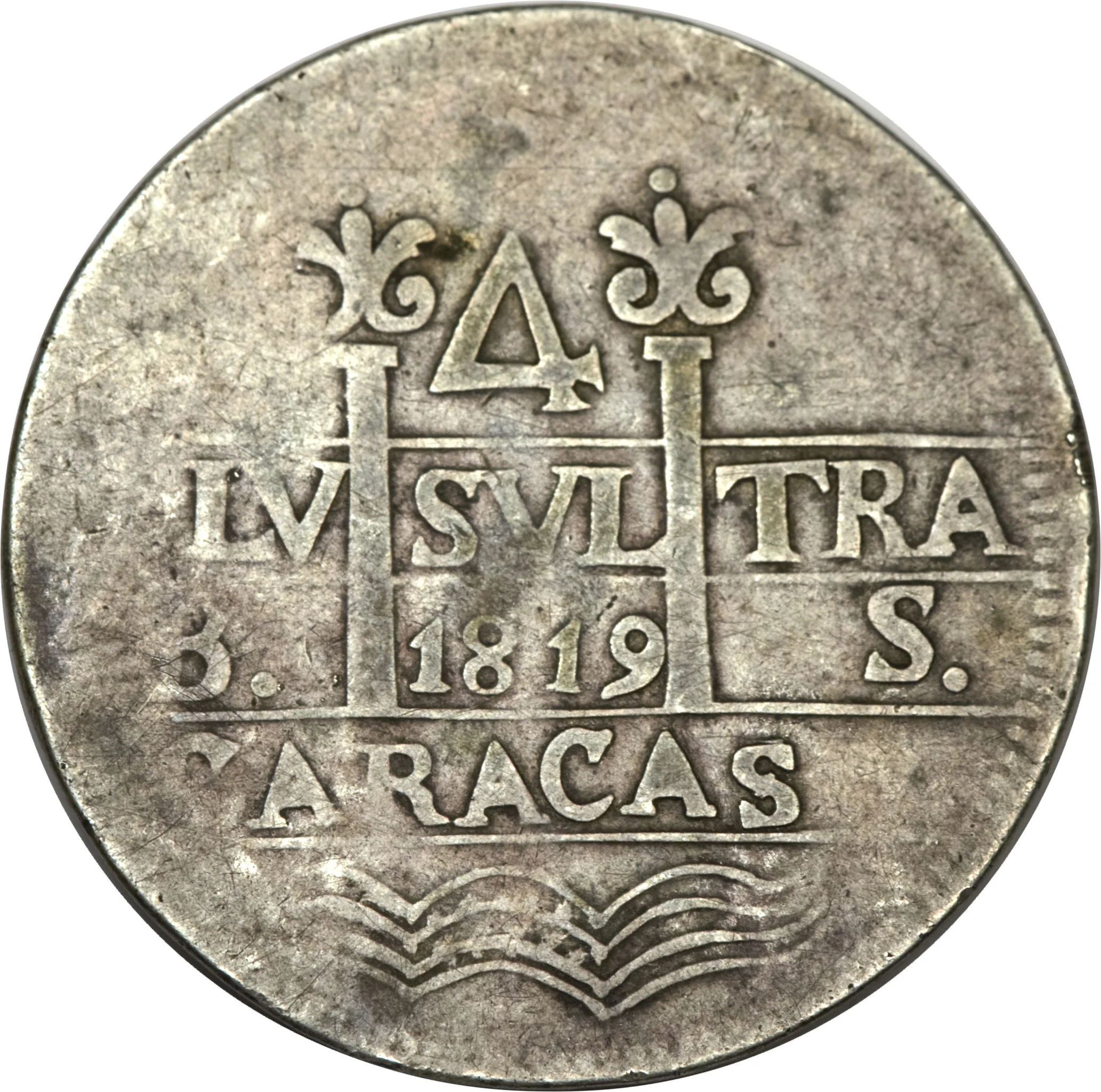
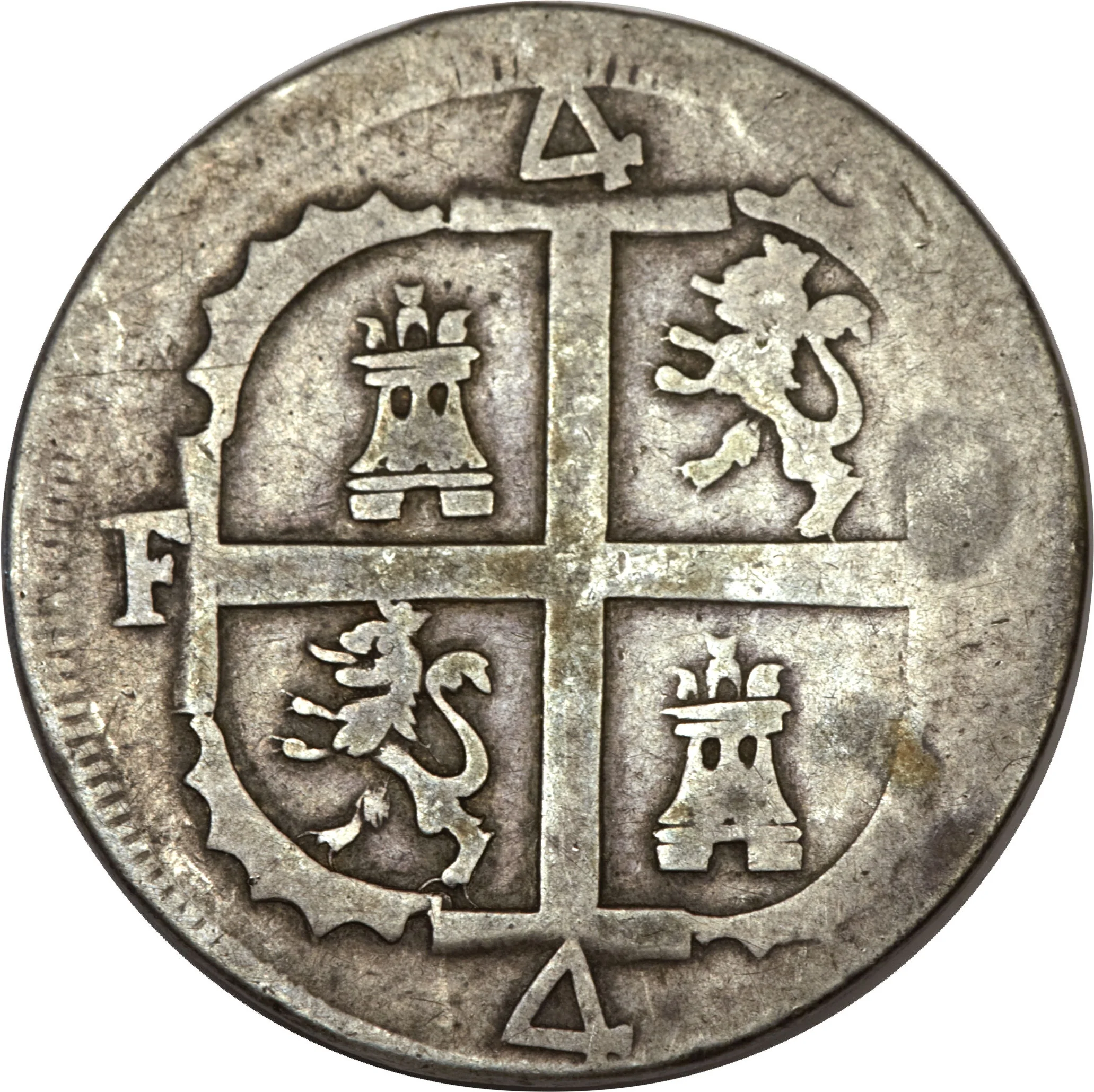
4 reales – Caracas
Add to wishlist
Venezuela
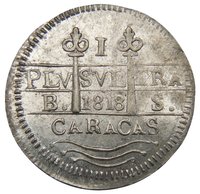
Obverse
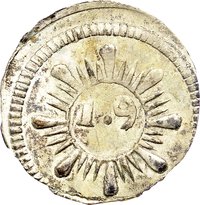
Reverse
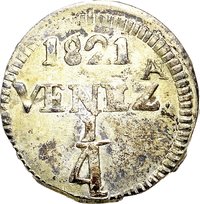
Edge
Mintings
| Year | Mint Mark | Mintage | Quality | Collection |
|---|---|---|---|---|
| 1819 | BS | 18,000 | ||
| 1820 | BS | 29,000 |
Historical background
In 1819, Caracas existed within a vortex of monetary chaos, a direct consequence of a decade of brutal warfare. The Venezuelan War of Independence had shattered the colonial economic system, leaving the capital cut off from the authority of both the Spanish Crown and the fledgling republican governments. The royalist forces, controlling the city, faced severe fiscal isolation as patriot forces dominated the countryside and key ports. This stranglehold severed the inflow of specie from Spain and regional trade, creating a critical shortage of sound currency like silver pesos and gold escudos, which remained the trusted benchmarks of value.
The vacuum was filled by a bewildering array of substitute currencies, each depreciating rapidly. The most prevalent were the paper billetes issued in vast quantities by both Simón Bolívar’s patriot government (the República de Colombia) and the Spanish authorities under Pablo Morillo. These promissory notes, intended to fund the war efforts, were largely discredited due to lack of public confidence and insufficient backing. Alongside this paper, clipped and debased coinage circulated, as well as private tokens and even goods used in barter. The result was rampant inflation, where prices for basic necessities in Caracas could be astronomical and quoted in a confusing mix of reales, pesos fuertes, and various paper denominations, all with wildly different actual values.
This monetary anarchy was more than an economic inconvenience; it was a core strategic vulnerability for both sides. For the royalists in Caracas, the inability to pay troops reliably or procure supplies undermined their hold on the city. For Bolívar, establishing monetary credibility was essential to funding his campaign to liberate New Granada and ultimately Venezuela. Thus, the currency situation in 1819 Caracas was a microcosm of the war itself: a fractured and contested landscape where control of wealth was as critical as control of territory, and where the ultimate victory would require not just military triumph but the establishment of a new, stable economic order.
The vacuum was filled by a bewildering array of substitute currencies, each depreciating rapidly. The most prevalent were the paper billetes issued in vast quantities by both Simón Bolívar’s patriot government (the República de Colombia) and the Spanish authorities under Pablo Morillo. These promissory notes, intended to fund the war efforts, were largely discredited due to lack of public confidence and insufficient backing. Alongside this paper, clipped and debased coinage circulated, as well as private tokens and even goods used in barter. The result was rampant inflation, where prices for basic necessities in Caracas could be astronomical and quoted in a confusing mix of reales, pesos fuertes, and various paper denominations, all with wildly different actual values.
This monetary anarchy was more than an economic inconvenience; it was a core strategic vulnerability for both sides. For the royalists in Caracas, the inability to pay troops reliably or procure supplies undermined their hold on the city. For Bolívar, establishing monetary credibility was essential to funding his campaign to liberate New Granada and ultimately Venezuela. Thus, the currency situation in 1819 Caracas was a microcosm of the war itself: a fractured and contested landscape where control of wealth was as critical as control of territory, and where the ultimate victory would require not just military triumph but the establishment of a new, stable economic order.

✨ Legendary