

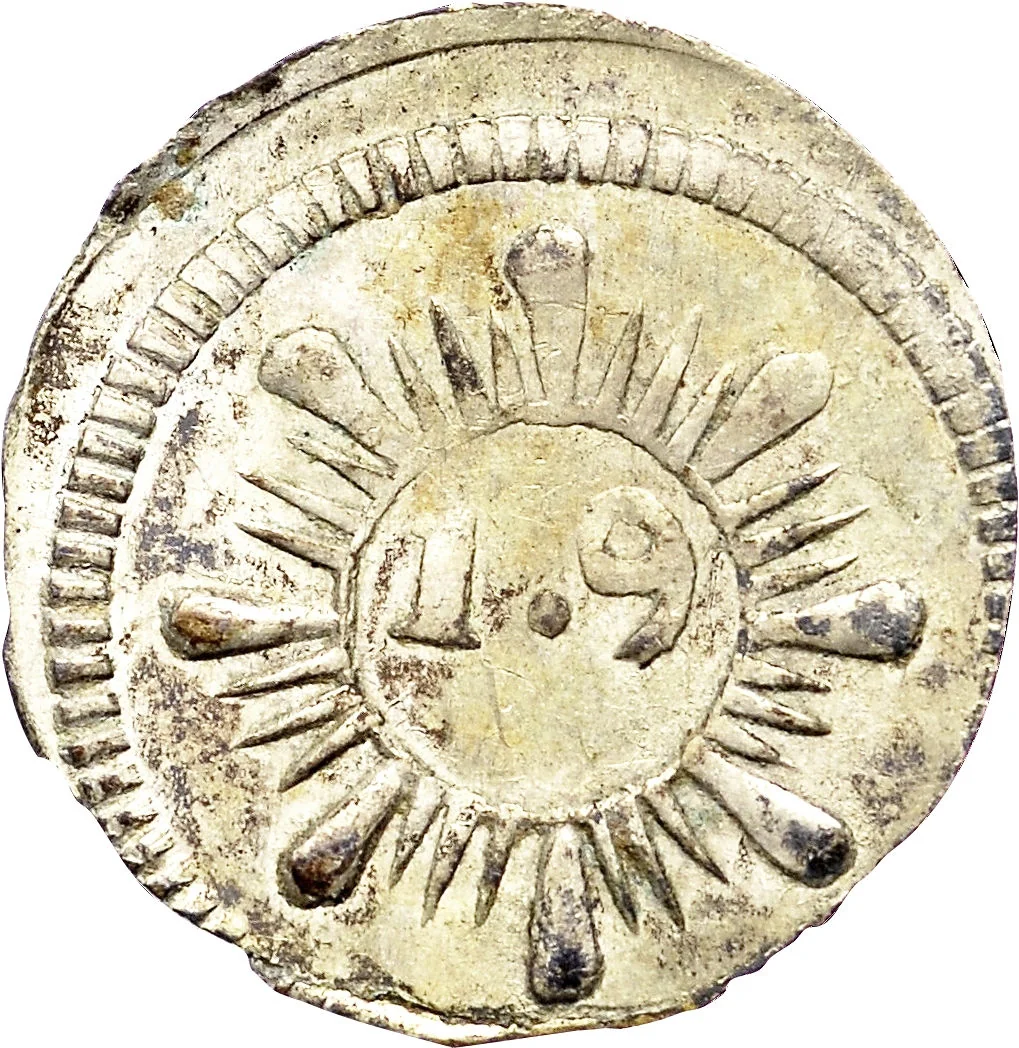
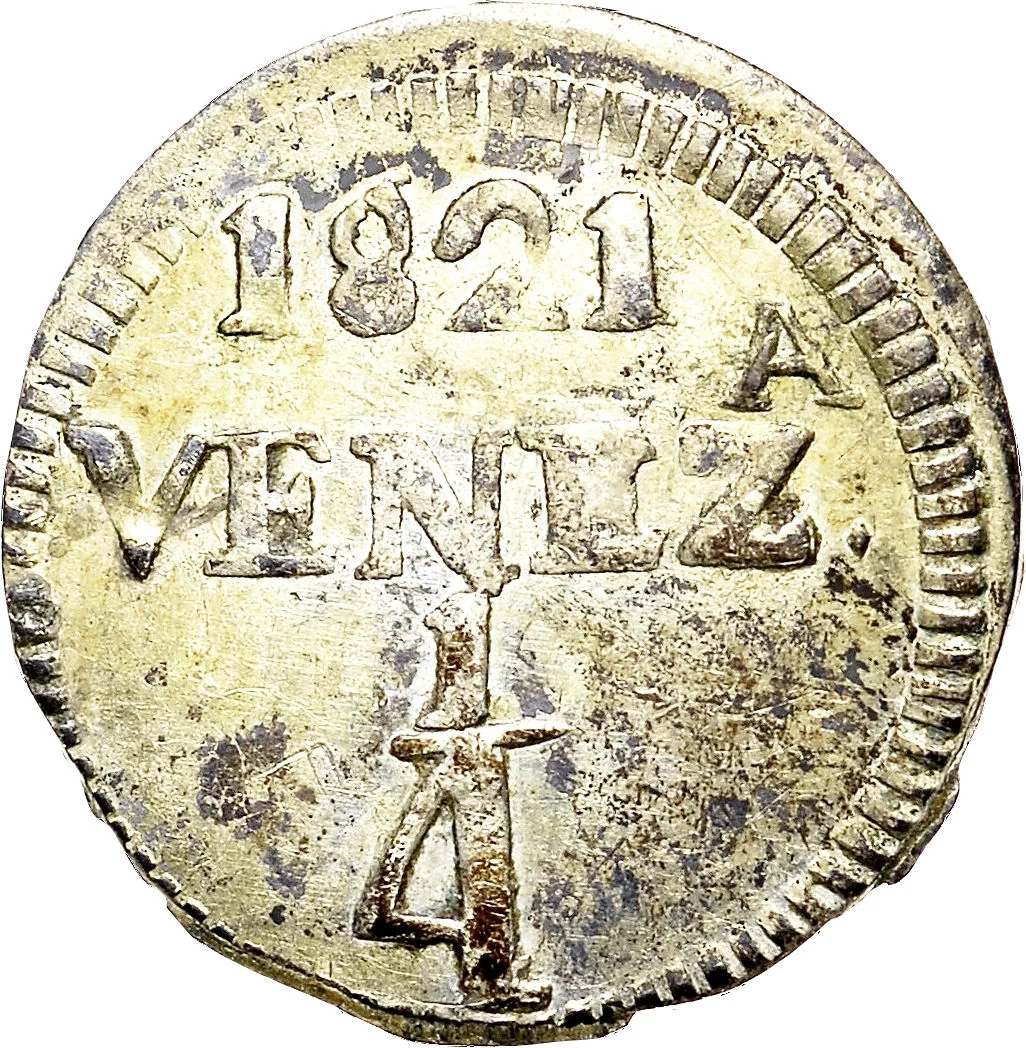
¼ real – Caracas
Add to wishlist
Venezuela
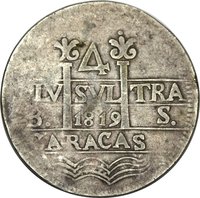
Obverse
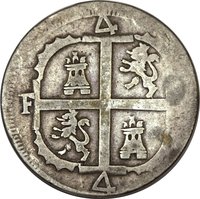
Reverse
Edge
Mints
| Name | Mark |
|---|---|
| Caracas | — |
Mintings
| Year | Mint Mark | Mintage | Quality | Collection |
|---|---|---|---|---|
| 1821 | — | 90,000 | ||
| 1822 | — | 540,000 |
Historical background
In 1821, Caracas existed within a complex and fractured monetary landscape, a direct legacy of the Venezuelan War of Independence. The conflict had shattered the colonial financial system, and the fledgling Republic of Colombia (Gran Colombia), proclaimed just two years prior, had not yet established a unified national currency. Consequently, the city’s commerce operated on a confusing multiplicity of coins. The most trusted and abundant were still Spanish colonial pieces, particularly silver pesos (reales) and gold escudos, which remained the de facto standard for large transactions due to their consistent weight and purity.
Alongside these, a flood of debased and irregular coins circulated, eroding trust. These included "macuquinas" (clipped and chopped colonial cobs), low-quality provincial mintings from other regions, and a significant influx of foreign coins from trade with the British Caribbean and other nations. The revolutionary government itself had issued copper coinage to fund the war effort, but these "moneda de necesidad" (necessity coins) were often poorly minted and heavily discounted by the public. This proliferation of currencies of varying intrinsic value created a chaotic environment where everyday trade required constant negotiation and expertise in assaying metal content.
The fundamental challenge for authorities in Caracas was the severe shortage of precious metals, as the war had disrupted mining and drained resources. This scarcity, combined with the lack of a central bank or credible paper money, meant that deflationary pressure for sound coinage coexisted with the inflationary effect of debased currencies. Simón Bolívar’s administration recognized this monetary anarchy as a major obstacle to economic recovery and national unity, laying the groundwork for the eventual creation of a centralized Gran Colombian mint and currency system in the years immediately following 1821.
Alongside these, a flood of debased and irregular coins circulated, eroding trust. These included "macuquinas" (clipped and chopped colonial cobs), low-quality provincial mintings from other regions, and a significant influx of foreign coins from trade with the British Caribbean and other nations. The revolutionary government itself had issued copper coinage to fund the war effort, but these "moneda de necesidad" (necessity coins) were often poorly minted and heavily discounted by the public. This proliferation of currencies of varying intrinsic value created a chaotic environment where everyday trade required constant negotiation and expertise in assaying metal content.
The fundamental challenge for authorities in Caracas was the severe shortage of precious metals, as the war had disrupted mining and drained resources. This scarcity, combined with the lack of a central bank or credible paper money, meant that deflationary pressure for sound coinage coexisted with the inflationary effect of debased currencies. Simón Bolívar’s administration recognized this monetary anarchy as a major obstacle to economic recovery and national unity, laying the groundwork for the eventual creation of a centralized Gran Colombian mint and currency system in the years immediately following 1821.
✨ Legendary