

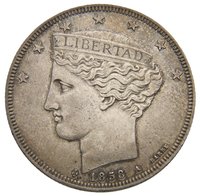
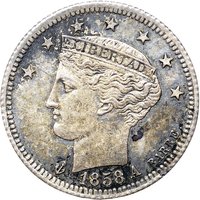
Obverse
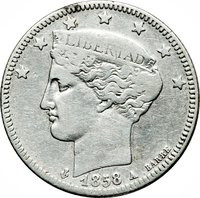
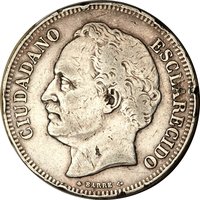
Description:
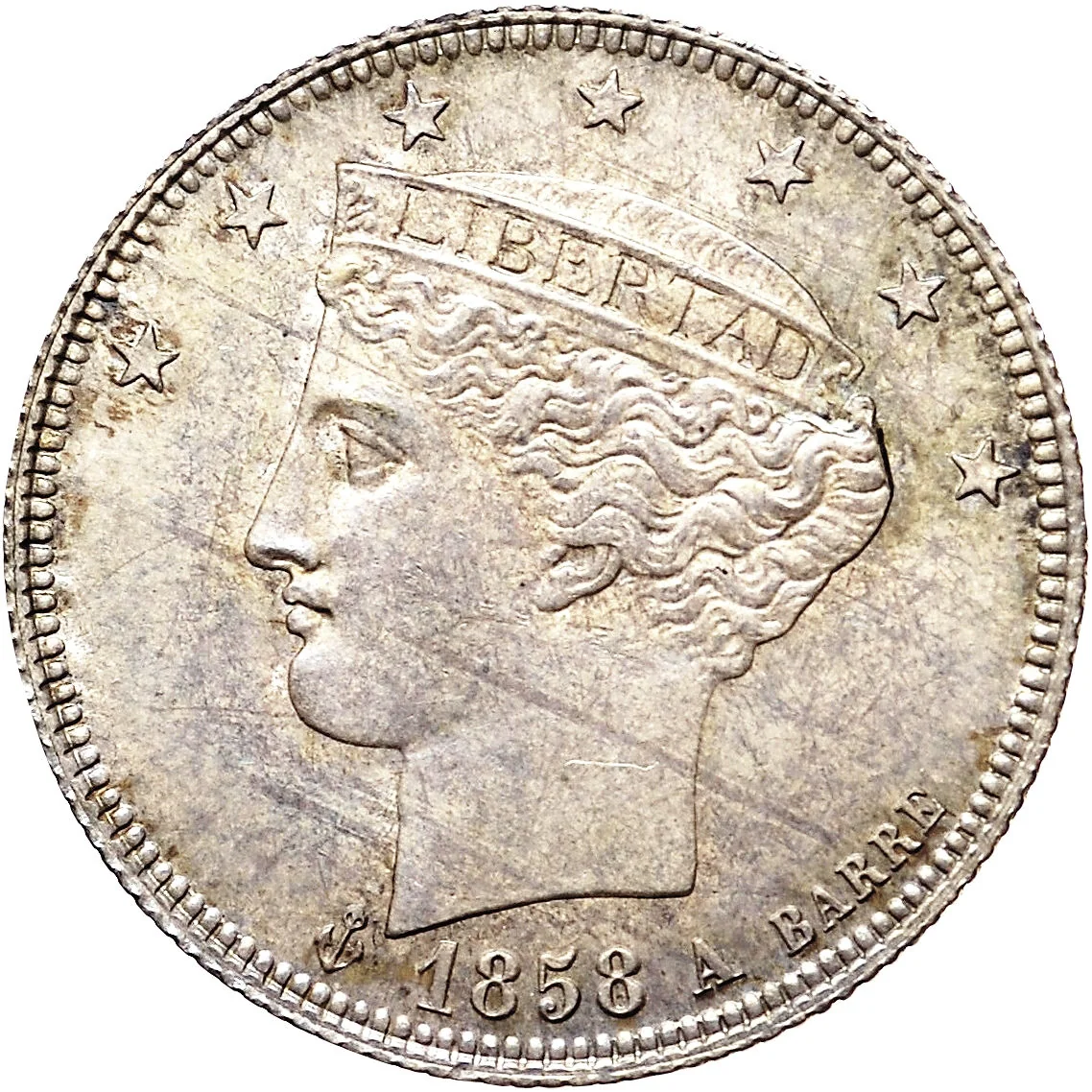
Liberty head left, stars above. Privy mark, date, and engraver below.
Inscription:
★ ★ ★ ★ ★ ★ ★
1858 A BARRE
1858 A BARRE
Translation:
1858 A BARRE
Script: Latin
Engraver: Désiré-Albert Barre
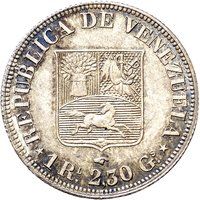
Reverse
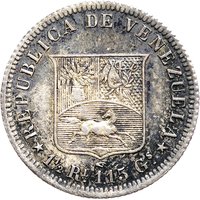
Description:
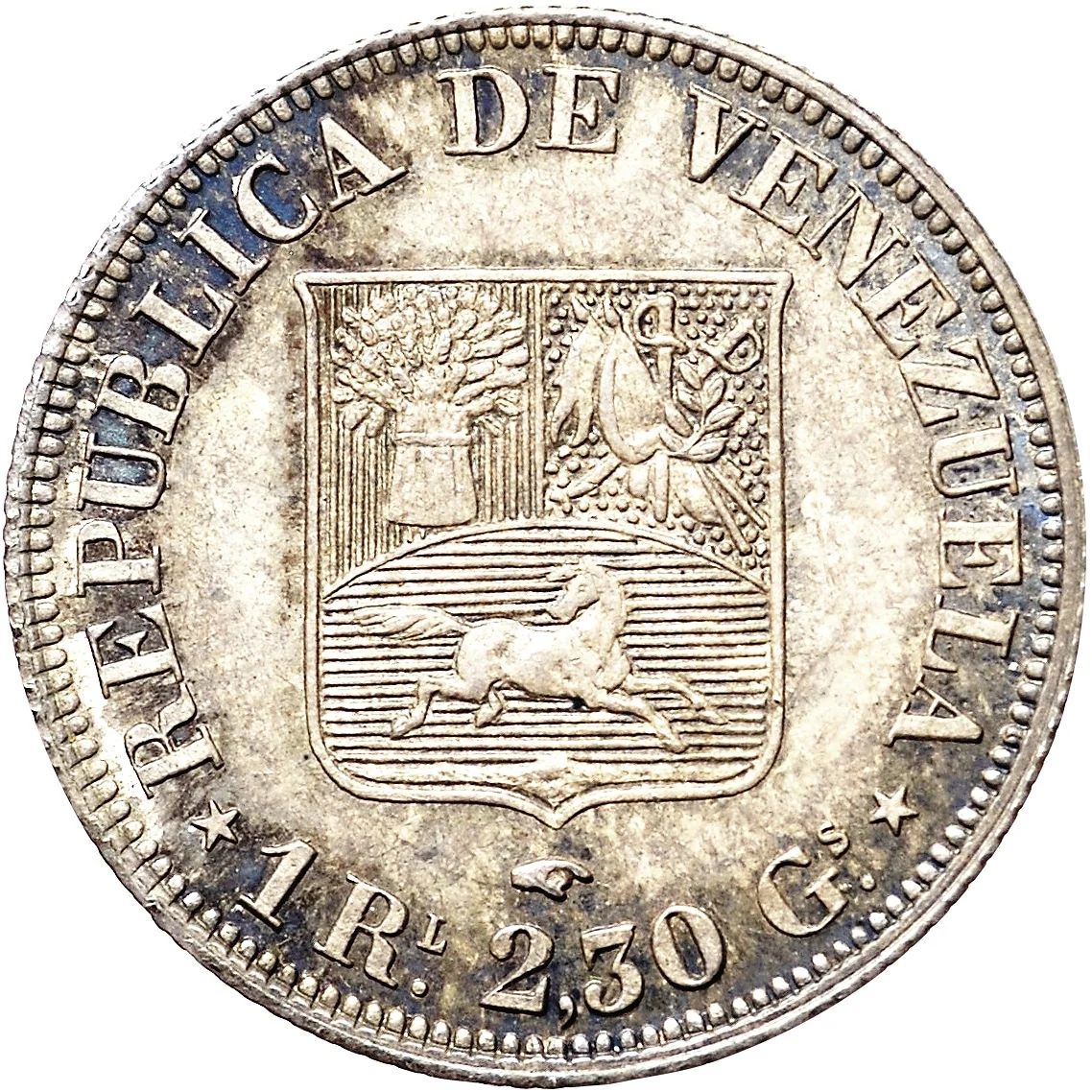
Coat of arms with surrounding legend. Value and weight below.
Inscription:
★ REPUBLICA DE VENEZUELA ★
1 RL. 2,30 Gs.
1 RL. 2,30 Gs.
Translation:
★ REPUBLIC OF VENEZUELA ★
1 RL. 2.30 Gs.
1 RL. 2.30 Gs.
Script: Latin
Language: Spanish
Engraver: Désiré-Albert Barre
Edge
Categories
| Animal> Horse |
| Symbol> Allegory |
| Symbols> Coat of Arms |
| Object> Cold weapons |
Mints
| Name | Mark |
|---|---|
| Monnaie de Paris | A |
Mintings
| Year | Mint Mark | Mintage | Quality | Collection |
|---|---|---|---|---|
| 1858 | A | 42,698 |
Historical background
In 1858, Venezuela's currency situation was characterized by severe instability and fragmentation, a direct reflection of the nation's turbulent political and economic state following the Federal War's outbreak that year. The national government, based in Caracas, struggled to assert monetary authority as the conflict between Conservatives and Liberals decentralized power. While the official currency remained the Venezuelan peso (also called the venezolano), its value and acceptance were highly inconsistent, competing with a plethora of foreign coins that circulated widely, including Spanish colonial reales, British sovereigns, and French francs, which were often preferred for their reliable metallic content.
This monetary chaos was exacerbated by the government's chronic fiscal deficits, which led to repeated debasements and the issuance of low-quality copper and billon (base metal) coinage. Public trust in these official issues was exceedingly low, leading to widespread discounting and hoarding of full-bodied silver and gold coins. Furthermore, the banking system was in its infancy and unable to provide stability; the few existing banks, like the Banco Nacional de Venezuela (founded in 1841), saw their notes circulate at a steep discount outside the capital, if they were accepted at all.
Consequently, Venezuela operated on a de facto system of commodity money, where the intrinsic value of the coin itself—its weight and fineness—mattered more than its stamped denomination. This environment crippled domestic commerce, complicated tax collection, and encouraged rampant speculation. The currency disorder of 1858 was therefore not merely a financial issue but a symptom of a fractured state, setting the stage for the profound economic challenges and monetary experiments that would mark the latter half of the 19th century in Venezuela.
This monetary chaos was exacerbated by the government's chronic fiscal deficits, which led to repeated debasements and the issuance of low-quality copper and billon (base metal) coinage. Public trust in these official issues was exceedingly low, leading to widespread discounting and hoarding of full-bodied silver and gold coins. Furthermore, the banking system was in its infancy and unable to provide stability; the few existing banks, like the Banco Nacional de Venezuela (founded in 1841), saw their notes circulate at a steep discount outside the capital, if they were accepted at all.
Consequently, Venezuela operated on a de facto system of commodity money, where the intrinsic value of the coin itself—its weight and fineness—mattered more than its stamped denomination. This environment crippled domestic commerce, complicated tax collection, and encouraged rampant speculation. The currency disorder of 1858 was therefore not merely a financial issue but a symptom of a fractured state, setting the stage for the profound economic challenges and monetary experiments that would mark the latter half of the 19th century in Venezuela.
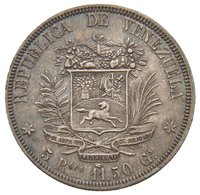
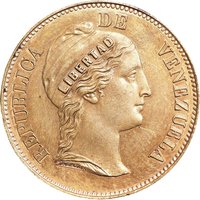
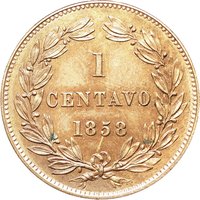
Series: 1858 Venezuela circulation coins
✨ Legendary