

10 Reales – Venezuela
Venezuela
Context
Year: 1863
Issuer: Venezuela 
Ruler: José Antonio Páez Herrera
Currency:
(1843—1879)
Subdivision: 10 Reales = 1 Peso
Demonetized: Yes
Total mintage: 300,000
Material
References
Y: #Click to copy to clipboardA11
Numista: #59784
Value
Bullion value: $59.80
Obverse
Description:
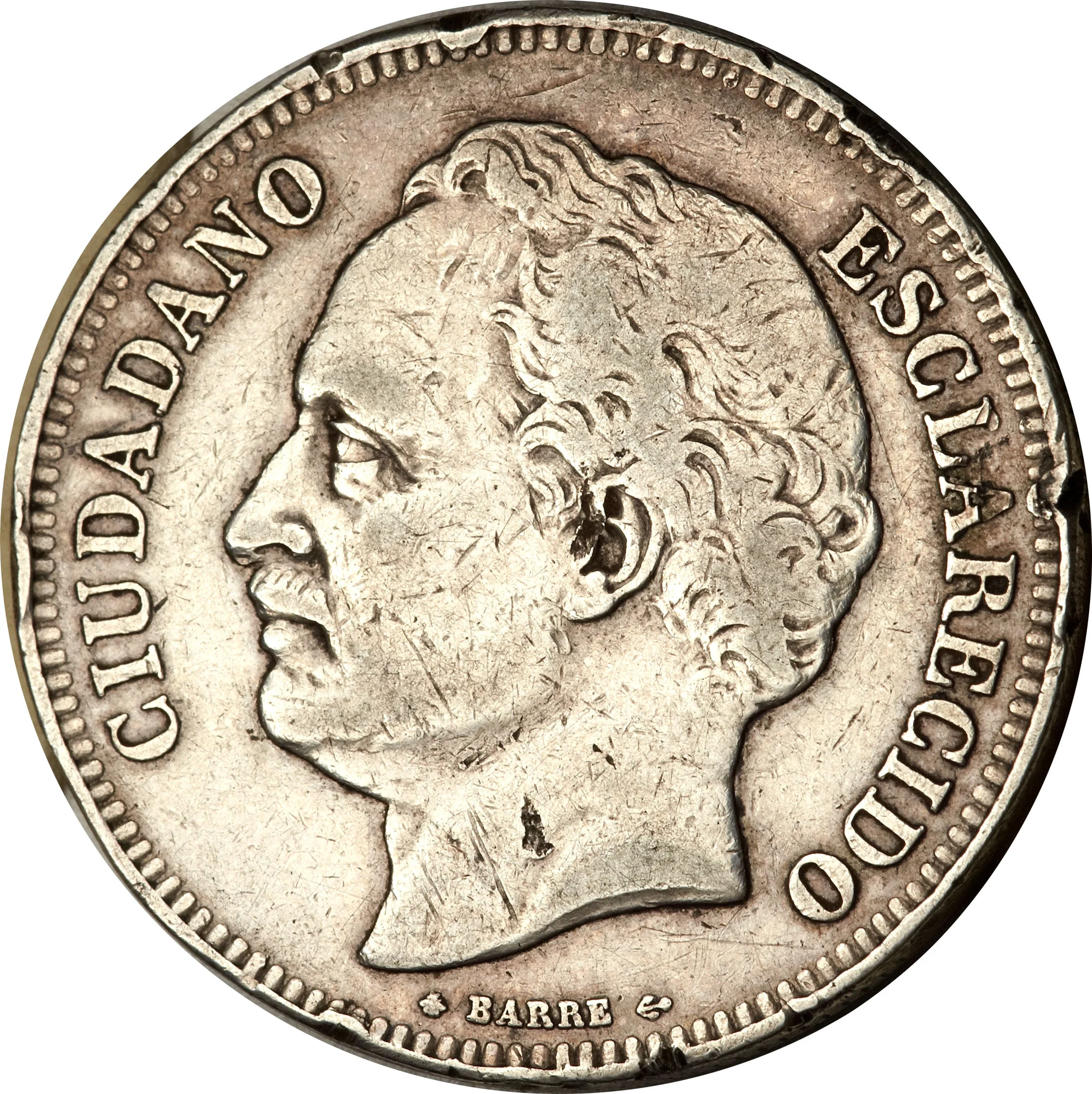
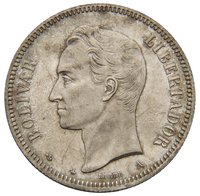
José Antonio Páez bust left, encircled by legend.
Inscription:
CIUDADANO ESCLARECIDO
BARRE
BARRE
Translation:
ENLIGHTENED CITIZEN
BARRE
BARRE
Script: Latin
Language: Spanish
Engraver: Désiré-Albert Barre
Reverse
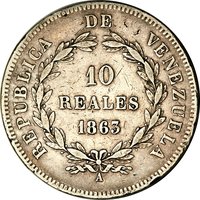
Description:
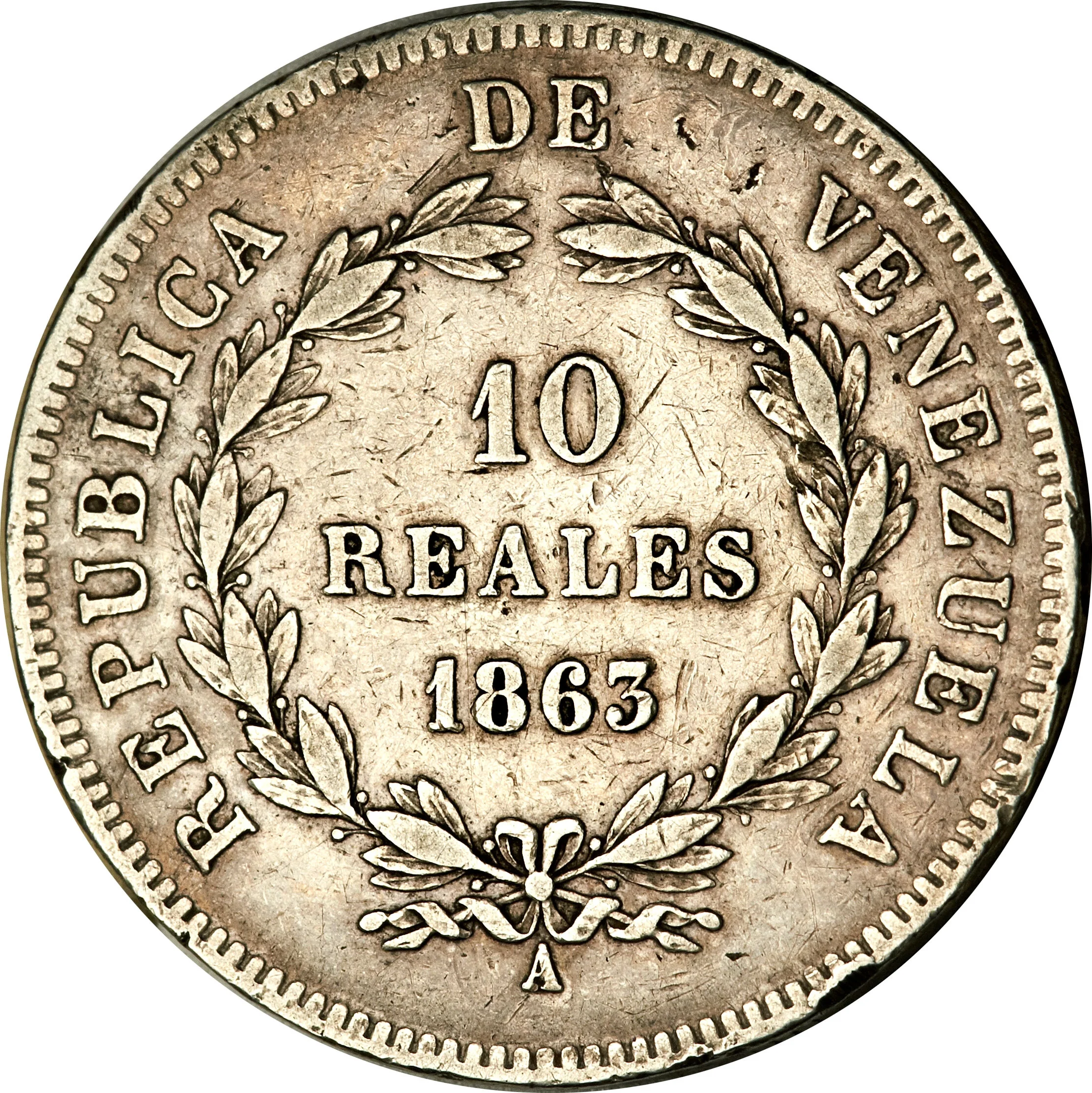
Value and date inside wreath, legend around, mint mark below.
Inscription:
REPUBLICA DE VENEZUELA
10
REALES
1863
A
10
REALES
1863
A
Translation:
REPUBLIC OF VENEZUELA
10
REALES
1863
10
REALES
1863
Script: Latin
Language: Spanish
Engraver: Désiré-Albert Barre
Edge
Categories
| Person> Military leader |
| Mustache/Beard |
| Symbol> Wreath |
| Person> Politician |
Mints
| Name | Mark |
|---|---|
| Monnaie de Paris | A |
Mintings
| Year | Mint Mark | Mintage | Quality | Collection |
|---|---|---|---|---|
| 1863 | A | 300,000 |
Historical background
In 1863, Venezuela's currency situation was characterized by profound instability and fragmentation, a direct legacy of the Federal War (1859-1863). This protracted and devastating civil conflict had crippled the national economy, severely disrupted agricultural and export production, and left the central government in Caracas with depleted finances and limited authority. The result was a chaotic monetary landscape where the value and legitimacy of currency were in constant question, undermining both commerce and public trust.
The primary currency in circulation was the silver Venezolano, introduced in 1843 to replace the old Spanish colonial system. However, years of war had led to severe shortages of precious metal coinage. To finance the conflict, both the centralist and federalist factions, as well as local caudillos, had resorted to issuing vast quantities of low-value copper coinage and paper money with little to no backing. This flood of fiduciary money, combined with a scarcity of silver, led to significant inflation and wide discrepancies in exchange rates between regions. In practice, the country operated with a patchwork of coins, tokens, and notes of dubious value, many of which were only accepted locally.
The end of the Federal War with the Treaty of Coche in 1863 did not bring immediate monetary relief. The victorious federalist government, led by President Juan Crisóstomo Falcón, inherited an empty treasury and a fractured nation. While the urgent task was political pacification, the chaotic currency system remained a critical obstacle to economic recovery. The situation demanded a comprehensive monetary reform, a challenge that would only begin to be addressed in the subsequent years with efforts to retire debased coinage and reassert a single, reliable national currency, though stability would remain elusive for decades.
The primary currency in circulation was the silver Venezolano, introduced in 1843 to replace the old Spanish colonial system. However, years of war had led to severe shortages of precious metal coinage. To finance the conflict, both the centralist and federalist factions, as well as local caudillos, had resorted to issuing vast quantities of low-value copper coinage and paper money with little to no backing. This flood of fiduciary money, combined with a scarcity of silver, led to significant inflation and wide discrepancies in exchange rates between regions. In practice, the country operated with a patchwork of coins, tokens, and notes of dubious value, many of which were only accepted locally.
The end of the Federal War with the Treaty of Coche in 1863 did not bring immediate monetary relief. The victorious federalist government, led by President Juan Crisóstomo Falcón, inherited an empty treasury and a fractured nation. While the urgent task was political pacification, the chaotic currency system remained a critical obstacle to economic recovery. The situation demanded a comprehensive monetary reform, a challenge that would only begin to be addressed in the subsequent years with efforts to retire debased coinage and reassert a single, reliable national currency, though stability would remain elusive for decades.
✨ Legendary