

50 Centavos – Venezuela
Venezuela
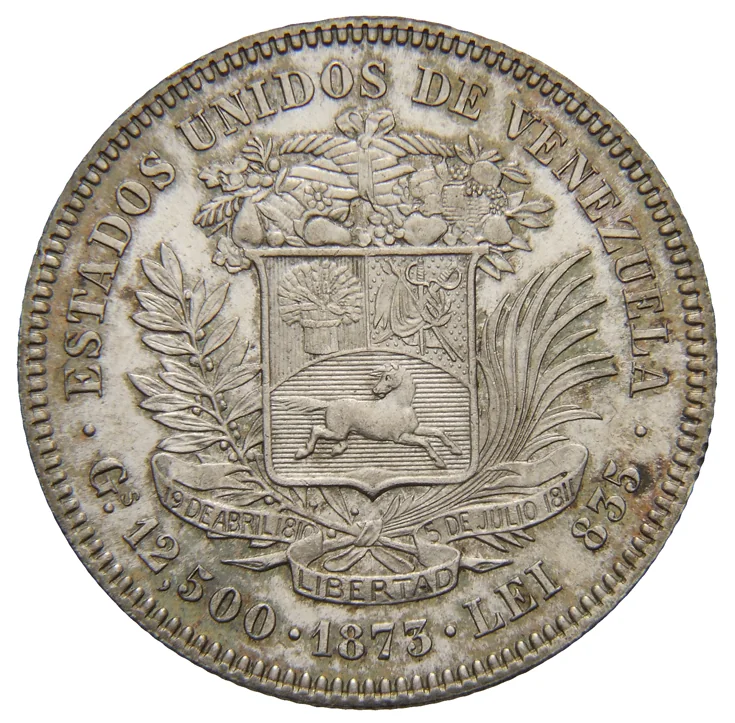
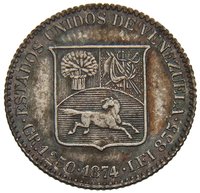
Obverse
Description:
Coat of arms above, weight, date, and fineness below.
Inscription:
•ESTADOS UNIDOS DE VENEZUELA•
Gs. 12,500 • 1876 • LEI 835
Gs. 12,500 • 1876 • LEI 835
Translation:
UNITED STATES OF VENEZUELA
Gs. 12,500 • 1876 • LAW 835
Gs. 12,500 • 1876 • LAW 835
Script: Latin
Language: Spanish
Engraver: Désiré-Albert Barre
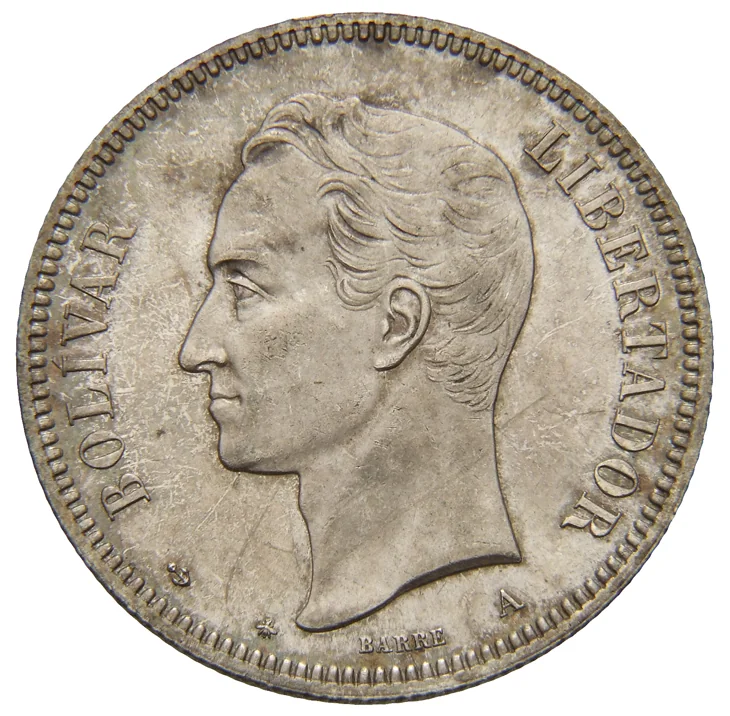
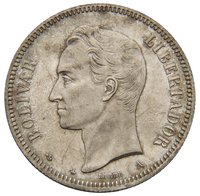
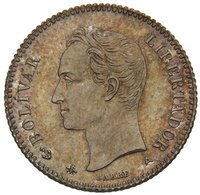
Reverse
Description:
Bust left, flanked by legend. Privy marks, engraver's name, and mint mark below.
Inscription:
BOLÍVAR LIBERTADOR
⚓ * BARRE A
⚓ * BARRE A
Translation:
BOLÍVAR LIBERTADOR
⚓ * BARRE A
⚓ * BARRE A
Script: Latin
Language: Spanish
Engraver: Désiré-Albert Barre
Edge
Reeded
Categories
| Symbol> Cornucopia |
| Animal> Horse |
| Person> Military leader |
| Person> Politician |
| Symbols> Coat of Arms |
Mints
| Name | Mark |
|---|---|
| Monnaie de Paris | A |
Historical background
In 1873, Venezuela’s currency system was in a state of profound disorder and transition, caught between the legacy of colonial monetary chaos and the pressures of a modernizing global economy. The nation had inherited a complex mosaic of coins from the colonial era, including Spanish reales, pesos, and a multitude of foreign currencies like British sovereigns and French francs that circulated freely. However, the most pressing issue was the severe shortage of low-denomination, fractional coinage (moneda menuda) needed for everyday transactions. This scarcity crippled local commerce, forcing businesses and municipalities to issue their own low-value paper tokens (señores or fichas) as a makeshift solution, leading to a fragmented and unreliable monetary environment.
This instability prompted the government of President Antonio Guzmán Blanco, a modernizer seeking to centralize state authority and attract foreign investment, to take decisive action. In 1871, he had initiated a comprehensive monetary reform, which culminated in the official adoption of the Venezuelan venezolano as the national currency in 1873, replacing the old peso. The venezolano was introduced on a decimal system (1 venezolano = 100 centésimos) and was pegged to the French franc at a 5:1 ratio, aligning Venezuela with the Latin Monetary Union and the gold standard. The reform aimed to unify the currency, eliminate the chaotic circulation of foreign coins and private tokens, and project financial credibility to international markets.
Despite these ambitious reforms, the situation in 1873 remained one of implementation and challenge. The government began minting new silver and copper coins bearing national symbols, but the physical replacement of the old heterogeneous money in circulation across a geographically difficult country was a slow process. The public, accustomed to a variety of currencies, was initially skeptical of the new coinage. Furthermore, the reliance on a silver standard at a time when global silver prices were beginning a long decline would later create significant economic pressures. Thus, 1873 stands as a pivotal year—marking the formal establishment of a unified national currency system, yet one whose stability and acceptance were still very much works in progress.
This instability prompted the government of President Antonio Guzmán Blanco, a modernizer seeking to centralize state authority and attract foreign investment, to take decisive action. In 1871, he had initiated a comprehensive monetary reform, which culminated in the official adoption of the Venezuelan venezolano as the national currency in 1873, replacing the old peso. The venezolano was introduced on a decimal system (1 venezolano = 100 centésimos) and was pegged to the French franc at a 5:1 ratio, aligning Venezuela with the Latin Monetary Union and the gold standard. The reform aimed to unify the currency, eliminate the chaotic circulation of foreign coins and private tokens, and project financial credibility to international markets.
Despite these ambitious reforms, the situation in 1873 remained one of implementation and challenge. The government began minting new silver and copper coins bearing national symbols, but the physical replacement of the old heterogeneous money in circulation across a geographically difficult country was a slow process. The public, accustomed to a variety of currencies, was initially skeptical of the new coinage. Furthermore, the reliance on a silver standard at a time when global silver prices were beginning a long decline would later create significant economic pressures. Thus, 1873 stands as a pivotal year—marking the formal establishment of a unified national currency system, yet one whose stability and acceptance were still very much works in progress.
💎 Very Rare