

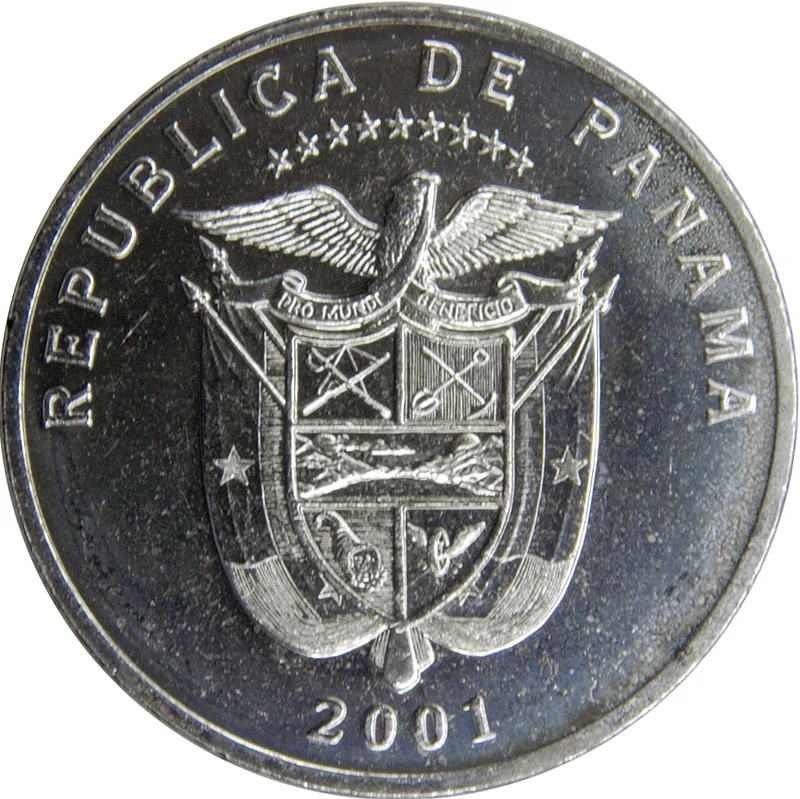
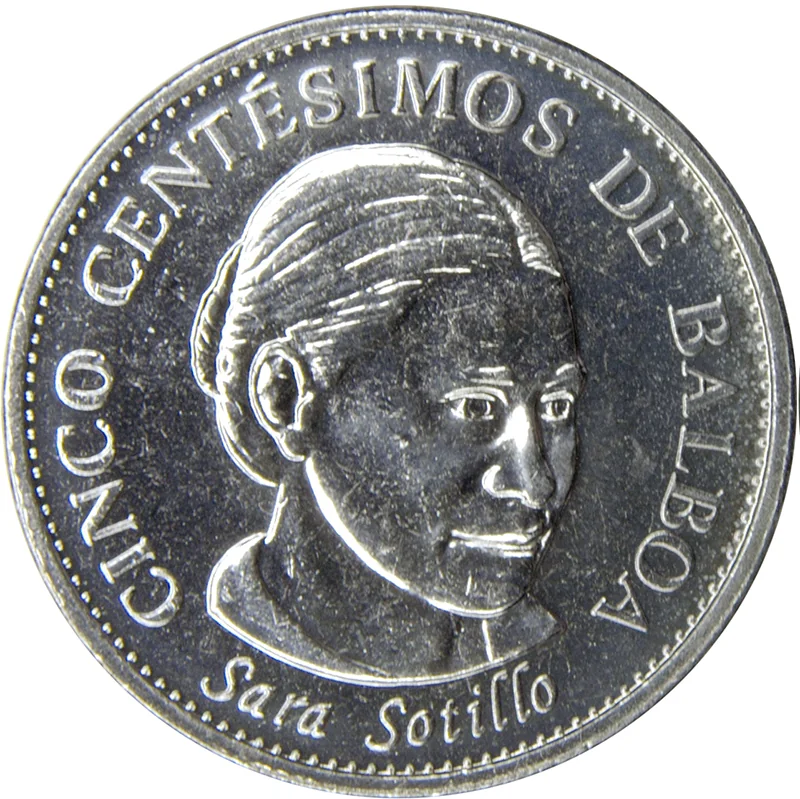
5 centesimos – Panama
Add to wishlist
Circulating commemorative coins
Commemoration: Sara Sotillo
Panama
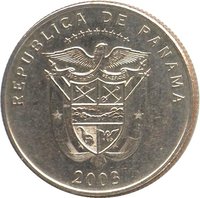
Obverse
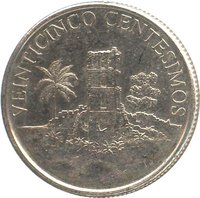
Reverse
Edge
Plain
Categories
| Person> Politician |
| History> Feminism |
| Symbols> Coat of Arms |
Mints
| Name | Mark |
|---|---|
| Royal Canadian Mint of Winnipeg | — |
Mintings
| Year | Mint Mark | Mintage | Quality | Collection |
|---|---|---|---|---|
| 2001 | — | 8,000,000 | ||
| 2008 | — | — | ||
| 2017 | — | 800,000 | ||
| 2018 | — | 800,000 | ||
| 2019 | — | 20,000,000 |
Historical background
In 2001, Panama's currency situation was defined by its unique and long-standing monetary framework, which remained a cornerstone of economic stability. Since 1904, the country has used the US dollar as its official legal tender, a system known as full dollarization. The Panamanian balboa existed only as a fractional coinage, pegged at a 1:1 parity with the dollar, with no paper balboa notes in circulation. This arrangement provided low inflation, eliminated exchange rate risk, and facilitated international trade and investment, which was vital for a service-based economy centered around the Panama Canal and banking.
The year 2001 was not marked by a currency crisis for Panama, but rather by the broader economic challenges following the US recession and the global economic slowdown after the September 11 attacks. These events impacted Panama's key sectors, particularly the Colon Free Zone and tourism, putting pressure on economic growth. However, the dollarized system meant Panama was insulated from the currency devaluations and capital flight that affected neighboring Latin American countries, though it also meant the country had no independent monetary policy to counteract the downturn, relying solely on fiscal measures.
Furthermore, 2001 fell within a period of significant institutional development following the 1999 US handover of the Panama Canal. The government, under President Mireya Moscoso, was focused on managing the Canal's transition and maintaining fiscal discipline to uphold confidence in the dollar-based system. The stability provided by dollarization was thus a double-edged sword: it was a pillar of macroeconomic order but also imposed strict fiscal constraints, a trade-off that continued to define Panama's economic policy as it navigated the early 21st-century global headwinds.
The year 2001 was not marked by a currency crisis for Panama, but rather by the broader economic challenges following the US recession and the global economic slowdown after the September 11 attacks. These events impacted Panama's key sectors, particularly the Colon Free Zone and tourism, putting pressure on economic growth. However, the dollarized system meant Panama was insulated from the currency devaluations and capital flight that affected neighboring Latin American countries, though it also meant the country had no independent monetary policy to counteract the downturn, relying solely on fiscal measures.
Furthermore, 2001 fell within a period of significant institutional development following the 1999 US handover of the Panama Canal. The government, under President Mireya Moscoso, was focused on managing the Canal's transition and maintaining fiscal discipline to uphold confidence in the dollar-based system. The stability provided by dollarization was thus a double-edged sword: it was a pillar of macroeconomic order but also imposed strict fiscal constraints, a trade-off that continued to define Panama's economic policy as it navigated the early 21st-century global headwinds.
🌱 Very Common