

1 pound – Saint Helena and Ascension
Add to wishlist
United Kingdom
Context
Years: 1991–2015
Country: United Kingdom
Issuer: Saint Helena and Ascension
Ruler: Elizabeth II
Currency:
(since 1976)
Material
Diameter: 22.5 mm
Weight: 9.5 g
Thickness: 3 mm
Shape: Round
Composition: Nickel brass
Magnetic: No
Technique: Milled
Alignment: Medal alignment
flip
References
KM: #
Numista: #5914
Obverse
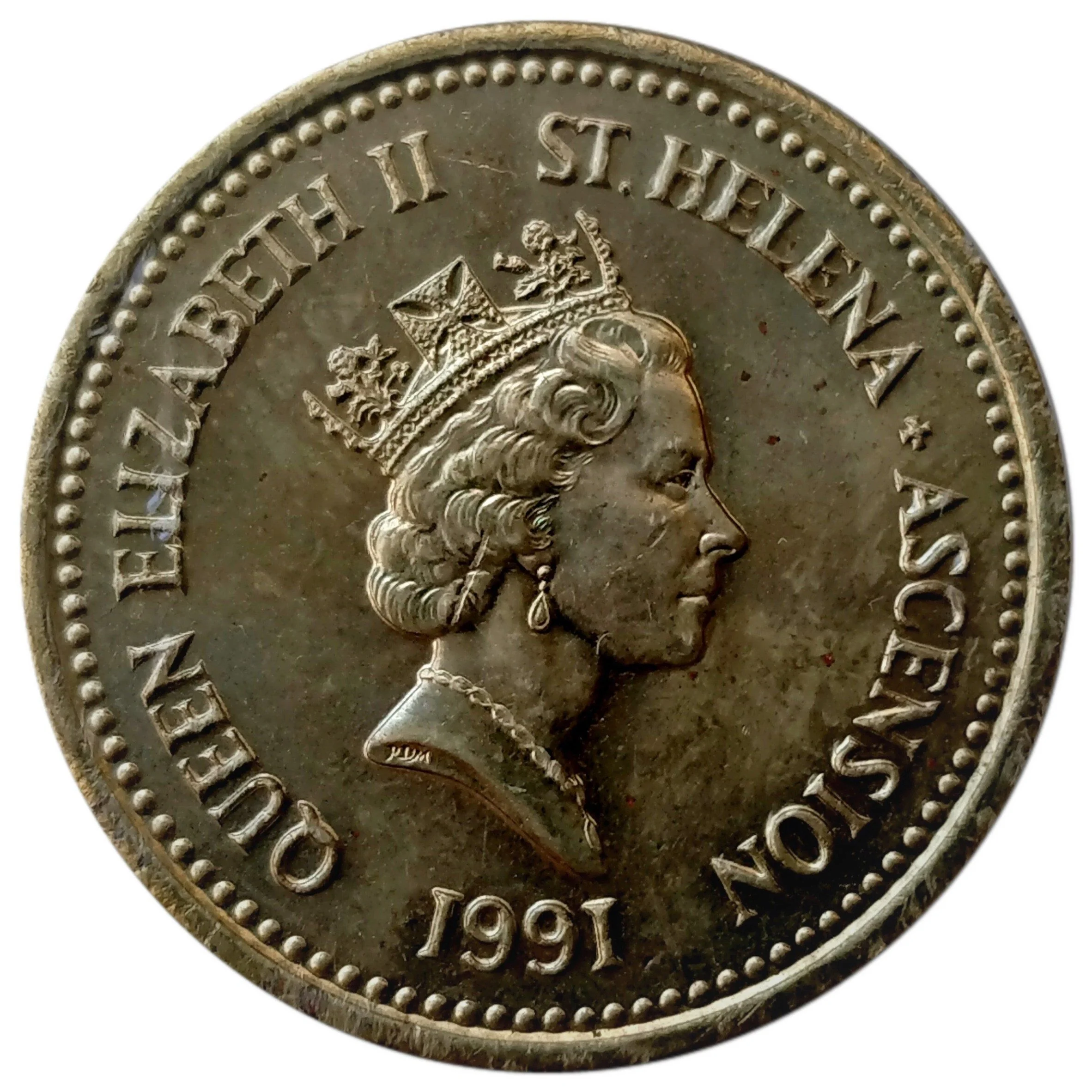
Description:
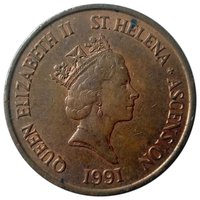
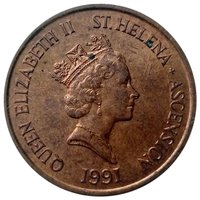
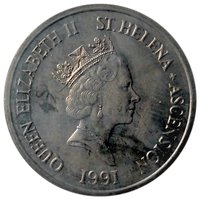
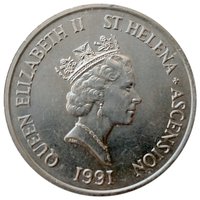
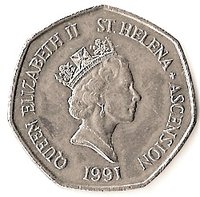
Young facing right, date beneath.
Inscription:
QUEEN ELIZABETH II ST.HELENA + ASCENSION
RDM
1991
RDM
1991
Script: Latin
Engraver: Raphael David Maklouf
Reverse
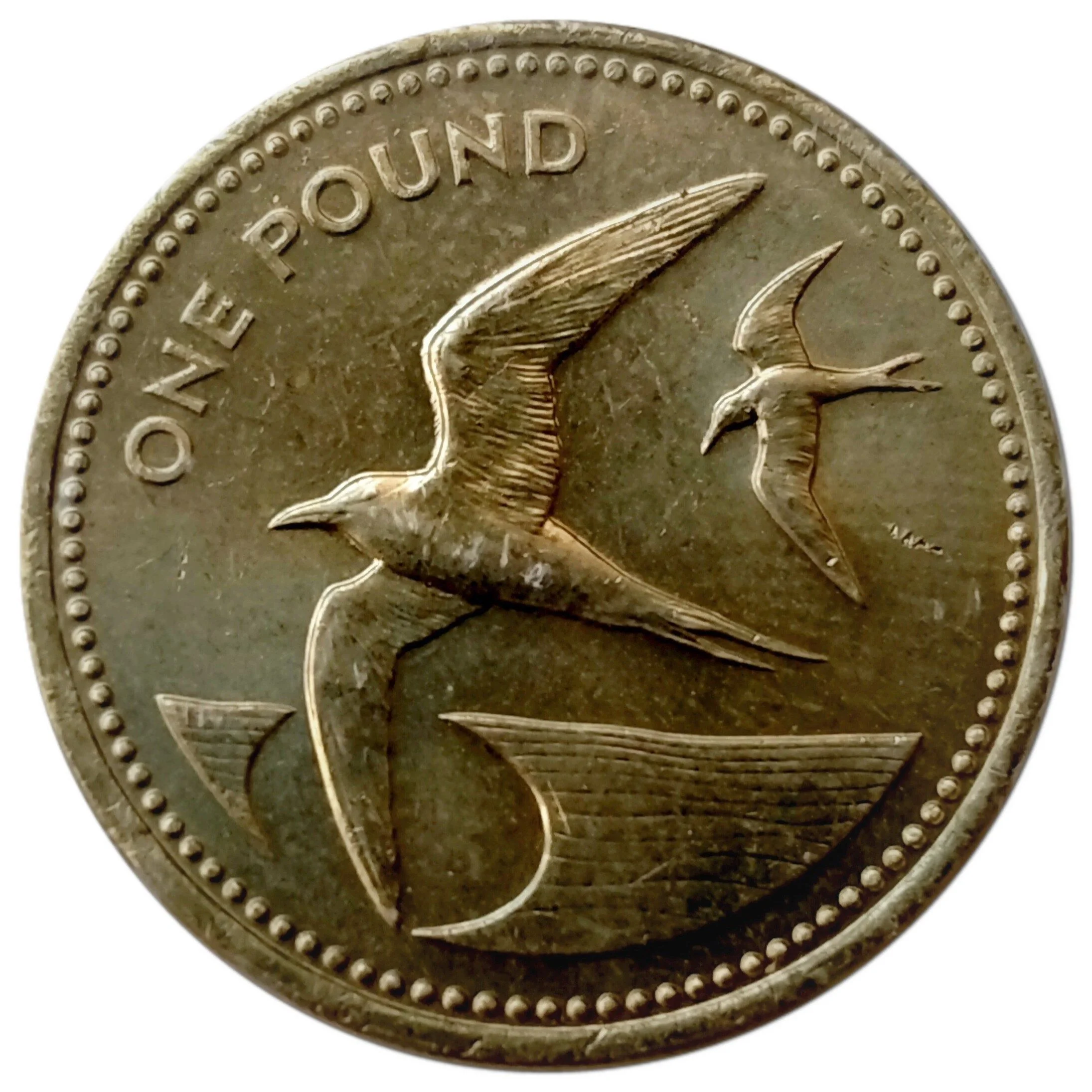
Description:
Sooty terns ("Wideawakes") flying left.
Inscription:
ONE POUND
Script: Latin
Engraver: Michael Hibbit
Edge
Script:Latin
Legend:
(1991, 2003) : COLONY OF ST. HELENA
(2006, 2015) : ST. HELENA ISLAND
(2006, 2015) : ST. HELENA ISLAND
Mints
| Name | Mark |
|---|---|
| Royal Mint | — |
Mintings
| Year | Mint Mark | Mintage | Quality | Collection |
|---|---|---|---|---|
| 1991 | — | — | ||
| 2003 | — | — | ||
| 2006 | — | — | ||
| 2015 | — | — |
Historical background
In 1991, the currency situation on the islands of Saint Helena and Ascension was administratively straightforward but practically complex, as both were British Overseas Territories using the Saint Helena pound (SHP). This currency was, and remains, pegged at par with the British pound sterling (GBP), meaning one SHP equaled one GBP. However, the SHP was a separate issue, not physically the same as UK banknotes and coins, which created a recurring challenge. Sterling cash was often accepted, but Saint Helena-issued notes and coins were not legal tender in the UK or elsewhere, leading to occasional confusion and exchange difficulties for visitors and in foreign transactions.
The practical reality on the ground differed between the two islands. On Saint Helena, the local government issued its own distinct banknotes and coins, which were the primary physical currency in circulation for daily life. Due to the island's extreme remoteness in the South Atlantic, obtaining sufficient cash was a perennial logistical issue, and the economy operated largely on a cash basis. In contrast, Ascension Island, functioning primarily as a support base for the UK and US militaries and a BBC relay station, operated more pragmatically. While the SHP was the official currency, both sterling and US dollars were widely used and often preferred given the transient international workforce and military presence.
Overall, the 1991 system was defined by its fixed parity with sterling and its administrative dependency on the United Kingdom, which ultimately guaranteed its value. The main complications arose from the limited acceptance of the physical Saint Helena currency outside the territory and the logistical hurdles of supplying such a remote economy with sufficient cash. This framework underscored the islands' unique position: politically and monetarily tied to Britain, yet facing distinct economic realities shaped by isolation and, in Ascension's case, a significant international presence.
The practical reality on the ground differed between the two islands. On Saint Helena, the local government issued its own distinct banknotes and coins, which were the primary physical currency in circulation for daily life. Due to the island's extreme remoteness in the South Atlantic, obtaining sufficient cash was a perennial logistical issue, and the economy operated largely on a cash basis. In contrast, Ascension Island, functioning primarily as a support base for the UK and US militaries and a BBC relay station, operated more pragmatically. While the SHP was the official currency, both sterling and US dollars were widely used and often preferred given the transient international workforce and military presence.
Overall, the 1991 system was defined by its fixed parity with sterling and its administrative dependency on the United Kingdom, which ultimately guaranteed its value. The main complications arose from the limited acceptance of the physical Saint Helena currency outside the territory and the logistical hurdles of supplying such a remote economy with sufficient cash. This framework underscored the islands' unique position: politically and monetarily tied to Britain, yet facing distinct economic realities shaped by isolation and, in Ascension's case, a significant international presence.
🌱 Common