

1 penny – Saint Helena and Ascension
Add to wishlist
United Kingdom
Context
Years: 1997–2022
Country: United Kingdom
Issuer: Saint Helena and Ascension
Ruler: Elizabeth II
Currency:
(since 1976)
Material
References
KM: #
Numista: #5986
Obverse
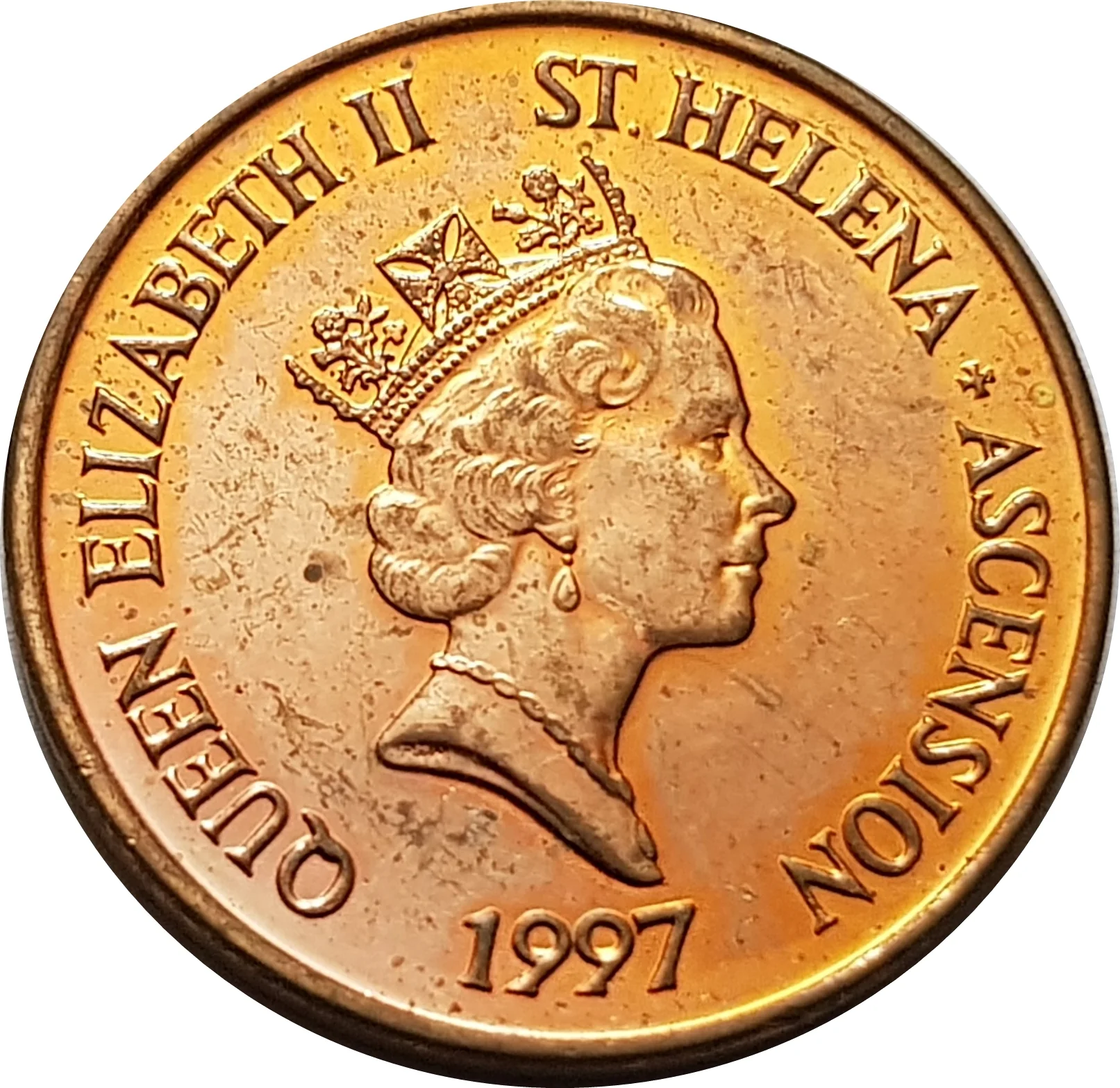
Description:
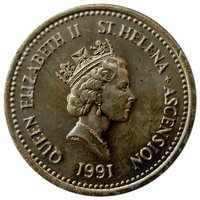
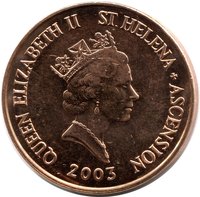
Queen Elizabeth II in right profile.
Inscription:
QUEEN ELIZABETH II ST.HELENA + ASCENSION
RDM
1997
RDM
1997
Script: Latin
Engraver: Raphael David Maklouf
Reverse
Edge
Plain
Mints
| Name | Mark |
|---|---|
| Royal Mint | — |
Mintings
| Year | Mint Mark | Mintage | Quality | Collection |
|---|---|---|---|---|
| 1997 | — | — | ||
| 2003 | — | — | ||
| 2006 | — | — | ||
| 2022 | — | — |
Historical background
In 1997, the currency situation on the islands of Saint Helena and Ascension was administratively straightforward but practically complex, as both were British Overseas Territories. The official currency was the Saint Helena pound (SHP), which was (and remains) pegged at par with the British pound sterling (GBP). This meant that banknotes and coins issued by the Government of Saint Helena circulated alongside UK sterling currency, with both being legal tender on the island. However, the SHP was a local issue, not accepted elsewhere, creating a one-to-one exchange dynamic that required physical transport of sterling to back the local issue.
The practical reality, especially for Ascension Island, was different. Ascension functioned largely on a sterling cash basis, with British coins and Bank of England notes being the primary physical currency. The Saint Helena pound was less common there due to the island's distinct role as a communications and military hub, with a significant expatriate and contract worker population linked to the British and American facilities. Furthermore, the extreme isolation of both islands meant that obtaining cash was a logistical challenge, with supplies arriving infrequently by sea, influencing local banking and spending habits.
Overall, the 1997 currency framework was defined by its fixed parity and dependency on sterling, but its application highlighted the islands' geographical and economic divergence. Saint Helena itself relied more on its own distinct banknotes, while Ascension operated more directly with sterling. This system underscored the territories' fragile economic connectivity, where the theoretical simplicity of a pegged currency met the complexities of remote Atlantic island life, reliant on imported currency and governed by the financial authority of the United Kingdom.
The practical reality, especially for Ascension Island, was different. Ascension functioned largely on a sterling cash basis, with British coins and Bank of England notes being the primary physical currency. The Saint Helena pound was less common there due to the island's distinct role as a communications and military hub, with a significant expatriate and contract worker population linked to the British and American facilities. Furthermore, the extreme isolation of both islands meant that obtaining cash was a logistical challenge, with supplies arriving infrequently by sea, influencing local banking and spending habits.
Overall, the 1997 currency framework was defined by its fixed parity and dependency on sterling, but its application highlighted the islands' geographical and economic divergence. Saint Helena itself relied more on its own distinct banknotes, while Ascension operated more directly with sterling. This system underscored the territories' fragile economic connectivity, where the theoretical simplicity of a pegged currency met the complexities of remote Atlantic island life, reliant on imported currency and governed by the financial authority of the United Kingdom.
🌱 Very Common