

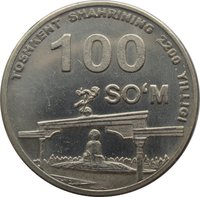
100 Soʻm (State Currency) – Uzbekistan
Circulating commemorative coins
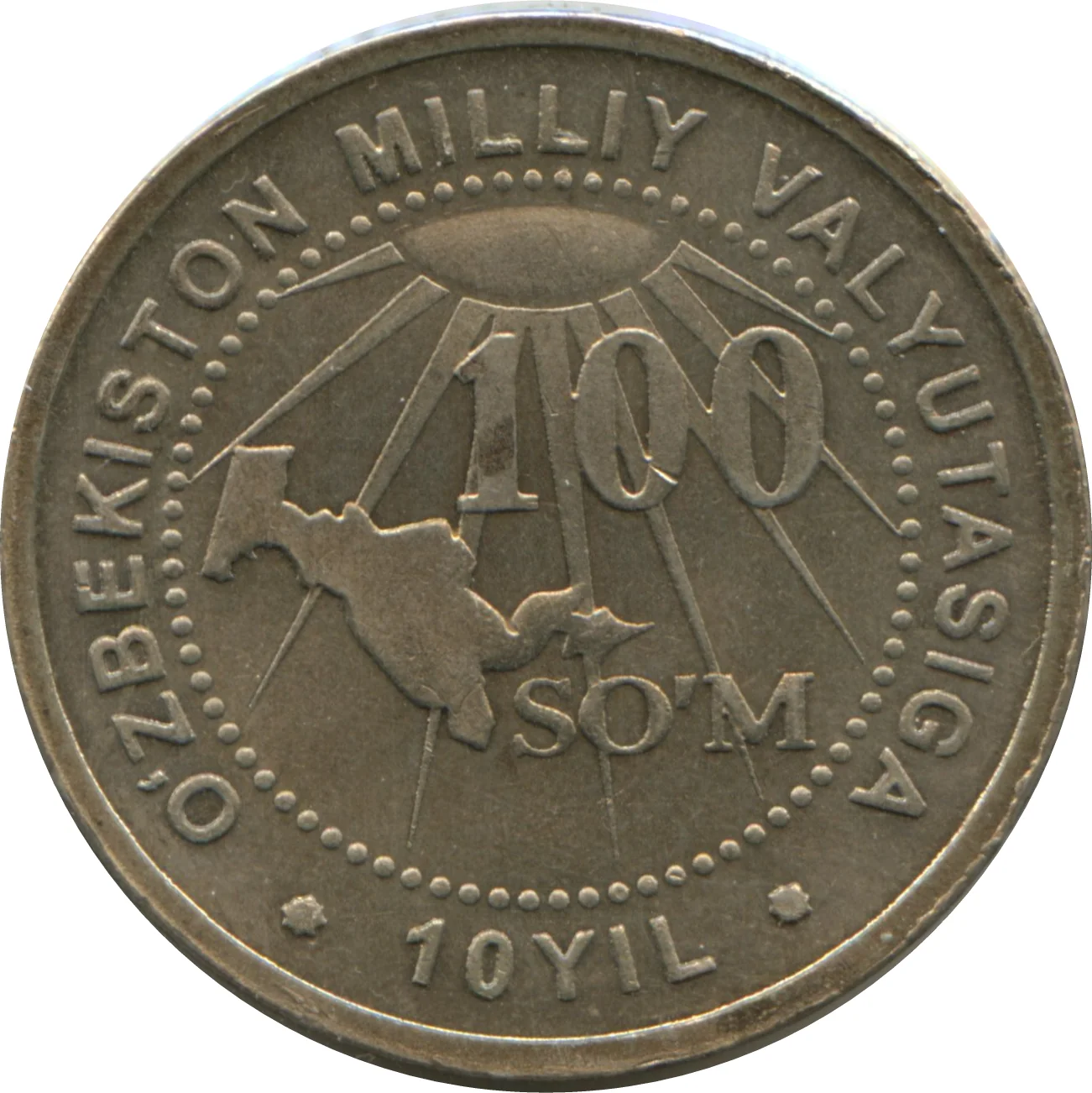
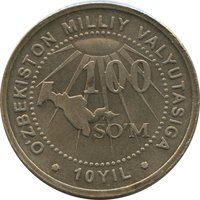
Commemoration: 10th Anniversary State Currency
Uzbekistan
Context
Year: 2004
Issuer: Uzbekistan 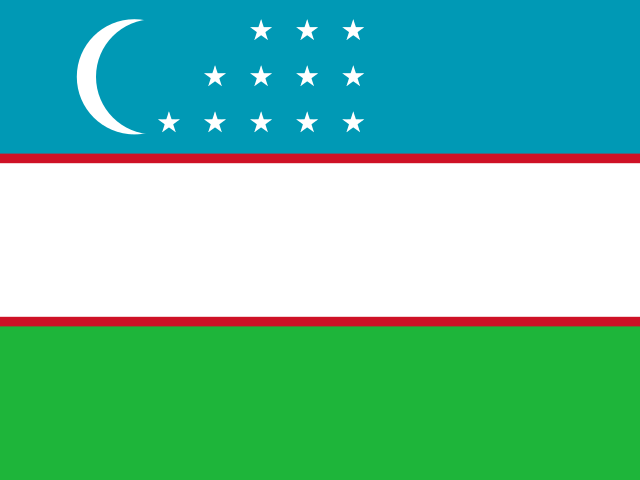
Period:
(since 1991)
Currency:
(since 1994)
Demonetization: 1 July 2019
Material
References
KM: #Click to copy to clipboard17
Numista: #5884
Value
Exchange value: 100 UZS
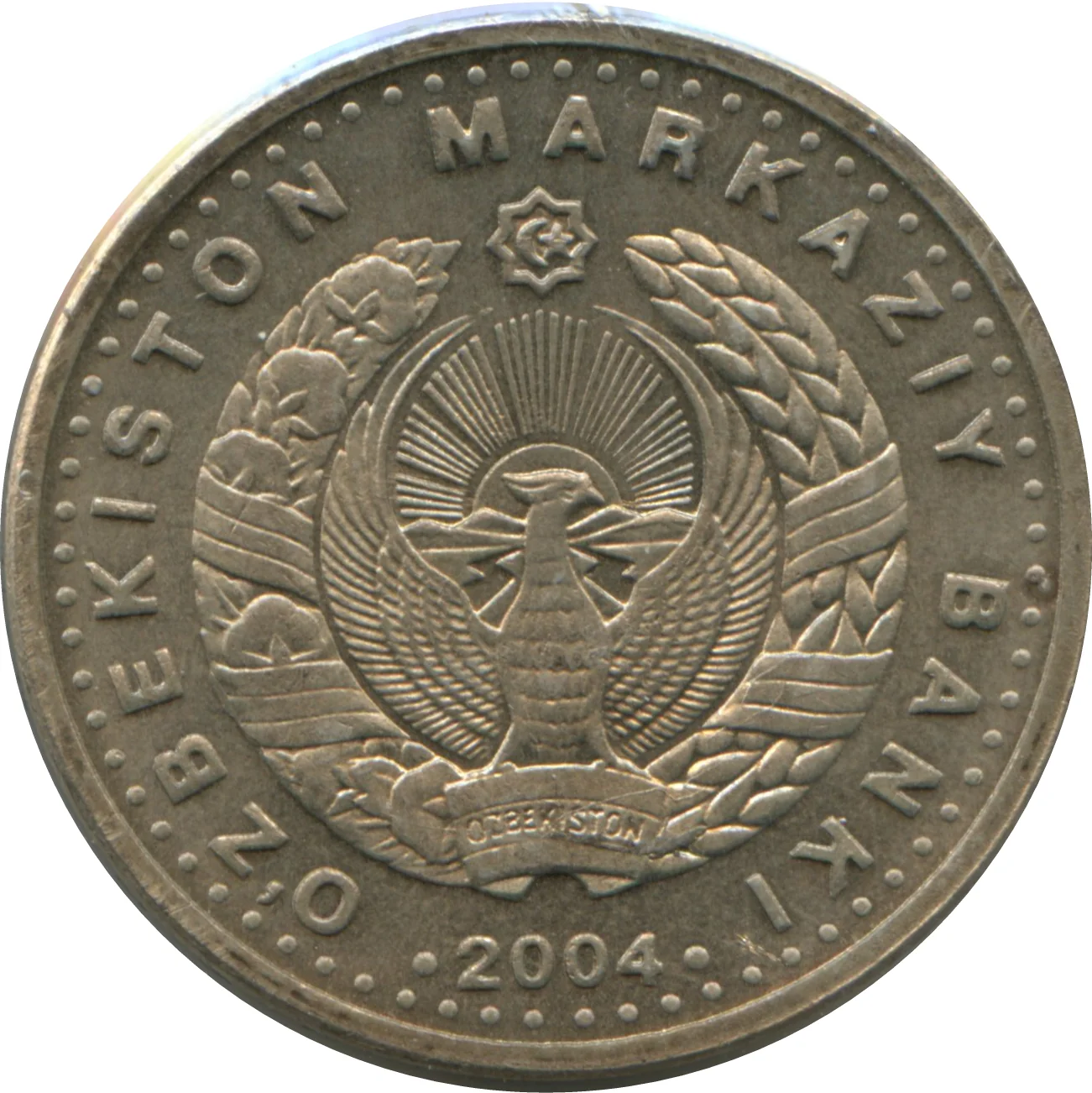
Obverse
Reverse
Edge
Lettered
Legend:
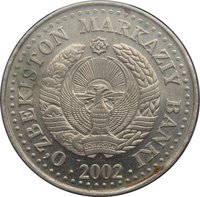
OʻZBEKISTON MARKAZIY BANKI
Translation:
THE CENTRAL BANK OF UZBEKISTAN
Language: Uzbek
Categories
| Symbols> Coat of Arms |
| Symbol> Sun |
| Animal> Bird |
| Mythology> Fantastic animal |
| Map |
Mintings
| Year | Mint Mark | Mintage | Quality | Collection |
|---|---|---|---|---|
| 2004 | — | — |
Historical background
In 2004, Uzbekistan's currency situation was characterized by a complex and restrictive system of multiple exchange rates, a legacy of the post-Soviet transition. The official exchange rate, set by the Central Bank of Uzbekistan, was significantly overvalued compared to the black-market rate, creating a wide disparity. This dual system emerged as a control mechanism to manage foreign exchange reserves, subsidize state-owned enterprises, and maintain price stability for essential imports, but it severely distorted the economy.
The consequences of this policy were profound for both businesses and citizens. Legal access to foreign currency at the official rate was limited and required cumbersome bureaucratic approval, forcing most individuals and many firms to rely on the thriving black market where the Uzbek som was much weaker. This environment discouraged foreign investment, as profits could not be easily repatriated at a realistic rate, and fostered widespread corruption as access to the official rate became a privilege. It also created artificial shortages of imported goods and hampered the development of a legitimate private sector.
While there had been minor adjustments, 2004 fell within a period of entrenched stability for this dysfunctional system, preceding any serious move toward liberalization. The government maintained tight control, viewing it as necessary for economic sovereignty, despite mounting evidence of its inefficiency. The situation would remain largely unchanged until a decisive shift in policy later in the decade, making 2004 a representative year of the persistent and challenging monetary constraints that defined Uzbekistan's economy in the early 2000s.
The consequences of this policy were profound for both businesses and citizens. Legal access to foreign currency at the official rate was limited and required cumbersome bureaucratic approval, forcing most individuals and many firms to rely on the thriving black market where the Uzbek som was much weaker. This environment discouraged foreign investment, as profits could not be easily repatriated at a realistic rate, and fostered widespread corruption as access to the official rate became a privilege. It also created artificial shortages of imported goods and hampered the development of a legitimate private sector.
While there had been minor adjustments, 2004 fell within a period of entrenched stability for this dysfunctional system, preceding any serious move toward liberalization. The government maintained tight control, viewing it as necessary for economic sovereignty, despite mounting evidence of its inefficiency. The situation would remain largely unchanged until a decisive shift in policy later in the decade, making 2004 a representative year of the persistent and challenging monetary constraints that defined Uzbekistan's economy in the early 2000s.
🌱 Common