

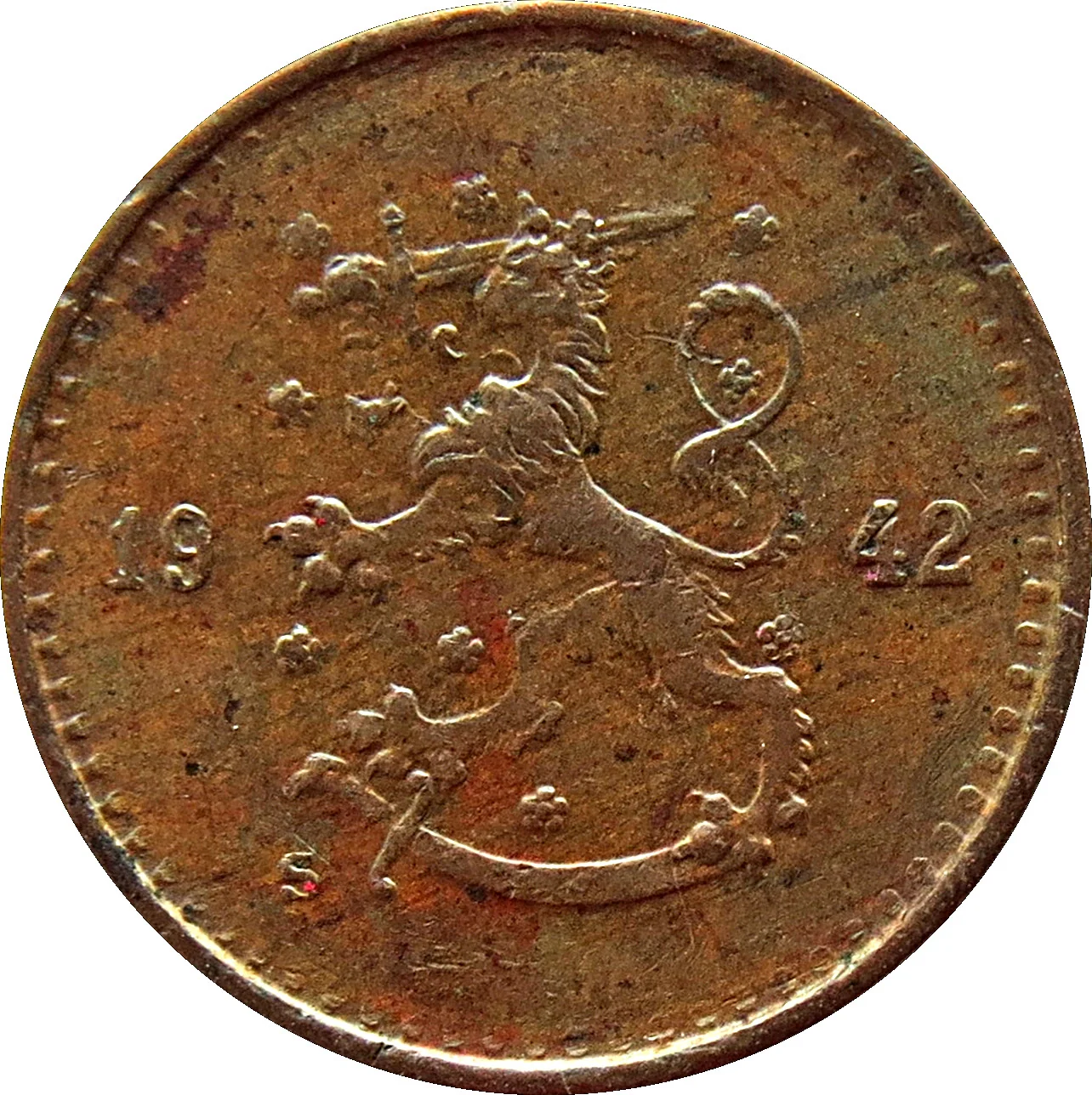
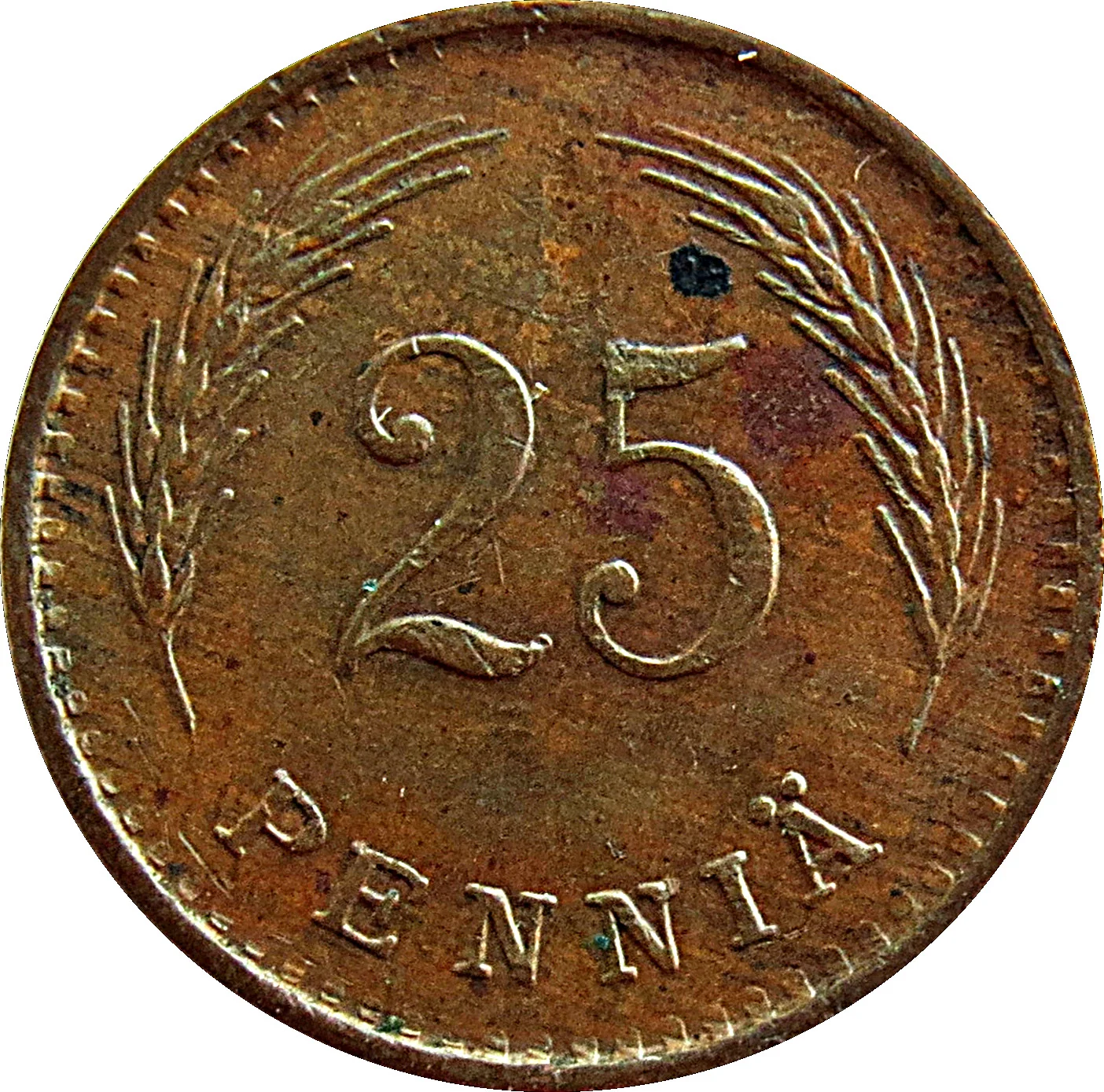

Obverse
Description:
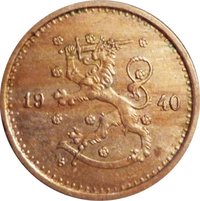
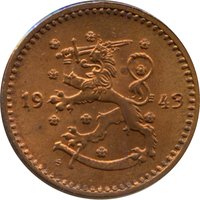
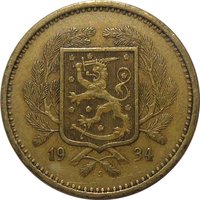
Finnish coat of arms: a rampant lion with an armored hand wielding a sword, trampling a sabre. Date flanking the shield.
Inscription:
19 42
S
S
Script: Latin
Reverse
Edge
Reeded
Categories
| Plants> Flower |
| Symbols> Coat of Arms |
| Object> Cold weapons |
| Animal> Feline |
Mints
| Name | Mark |
|---|---|
| Mint of Finland | — |
Mintings
| Year | Mint Mark | Mintage | Quality | Collection |
|---|---|---|---|---|
| 1940 | — | 72,000 | ||
| 1941 | — | 5,980,000 | ||
| 1942 | — | 6,464,000 | ||
| 1943 | — | 4,912,000 |
Historical background
In 1940, Finland’s currency situation was dominated by the immense financial and economic strain of the Winter War (1939–1940) against the Soviet Union. The war effort required massive government borrowing and spending, leading to inflationary pressures and a growing budget deficit. The Bank of Finland, under the leadership of Governor Risto Ryti (who became Prime Minister in December 1939 and President in December 1940), was forced to suspend the statutory cover requirement for the Finnish markka (FIM) to enable emergency financing. This effectively meant abandoning the gold standard's last constraints, allowing the bank to print money to fund the war, which devalued the currency's purchasing power.
The immediate post-war period, following the Moscow Peace Treaty in March 1940, did not bring relief but rather a continuation of crisis management. Finland faced a heavy war indemnity to the USSR, payable in goods over several years, which diverted industrial production and exports, further straining the economy and the currency's stability. Rationing of essential goods like food, fuel, and textiles remained stringent to manage scarce resources and curb hyperinflation. The markka’s value was largely sustained through strict state control of foreign exchange, imports, and prices, rather than market forces or substantial reserves.
Thus, the currency landscape was one of a managed, fragile stability. The markka remained in circulation and functioned, but its real value was eroding under state-directed finance, a crippled economy, and the looming shadow of further conflict. This controlled yet precarious monetary environment would be severely tested again with the outbreak of the Continuation War in June 1941, setting the stage for more profound economic challenges in the years to follow.
The immediate post-war period, following the Moscow Peace Treaty in March 1940, did not bring relief but rather a continuation of crisis management. Finland faced a heavy war indemnity to the USSR, payable in goods over several years, which diverted industrial production and exports, further straining the economy and the currency's stability. Rationing of essential goods like food, fuel, and textiles remained stringent to manage scarce resources and curb hyperinflation. The markka’s value was largely sustained through strict state control of foreign exchange, imports, and prices, rather than market forces or substantial reserves.
Thus, the currency landscape was one of a managed, fragile stability. The markka remained in circulation and functioned, but its real value was eroding under state-directed finance, a crippled economy, and the looming shadow of further conflict. This controlled yet precarious monetary environment would be severely tested again with the outbreak of the Continuation War in June 1941, setting the stage for more profound economic challenges in the years to follow.
🌱 Common