

20 markkaa – Finland
Add to wishlist
Finland
Context
Material
Diameter: 31 mm
Weight: 13 g
Thickness: 2.5 mm
Shape: Round
Composition: Aluminium bronze
Magnetic: No
Technique: Milled
Alignment: Medal alignment
flip
References
KM: #
Numista: #11013
Obverse
Description:
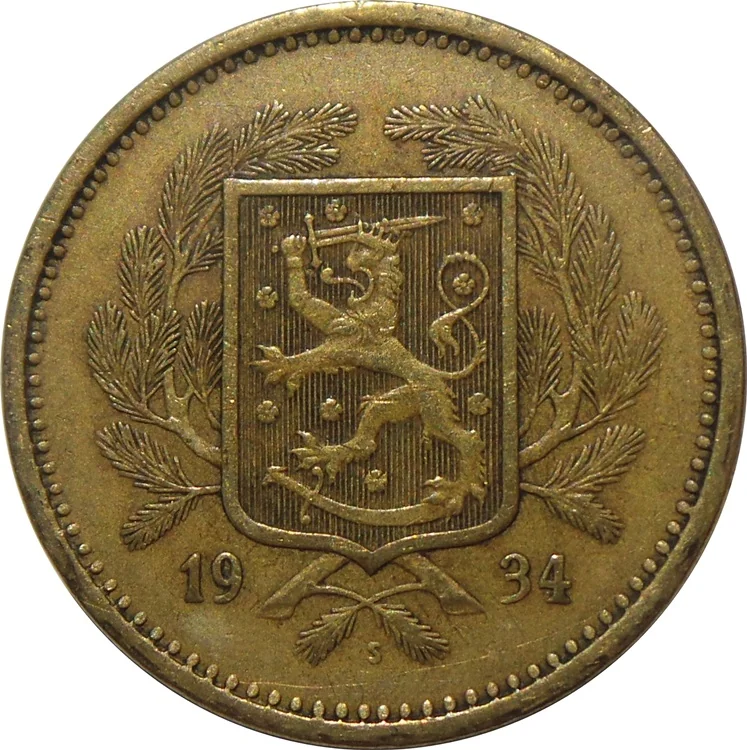
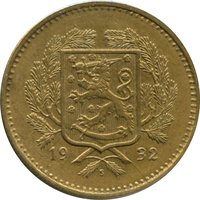
Finland's coat of arms: a rampant lion with an armored hand wielding a sword, trampling a sabre, within a spruce wreath. Date below.
Inscription:
19 34
S
S
Script: Latin
Engraver: Isak Gustaf Sundell
Reverse
Description:
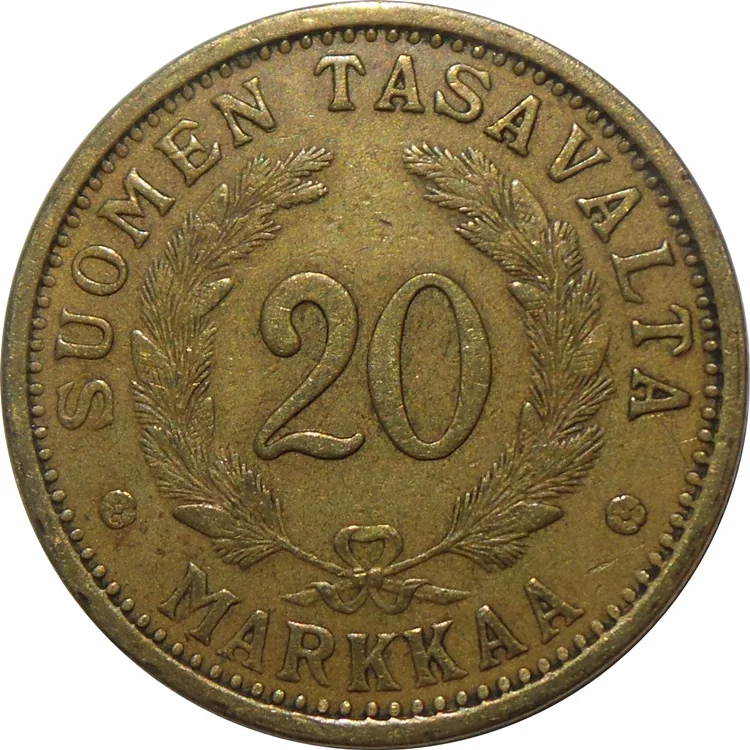
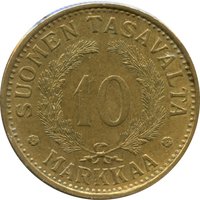
Denomination over wreath.
Inscription:
SUOMEN TASAVALTA
20
MARKKAA
20
MARKKAA
Translation:
REPUBLIC OF FINLAND
20
MARKKA
20
MARKKA
Script: Latin
Language: Finnish
Engraver: Isak Gustaf Sundell
Edge
Reeded
Categories
| Animal> Feline |
| Plants> Flower |
| Symbols> Coat of Arms |
| Symbol> Wreath |
| Object> Cold weapons |
Mints
| Name | Mark |
|---|---|
| Mint of Finland | — |
Mintings
| Year | Mint Mark | Mintage | Quality | Collection |
|---|---|---|---|---|
| 1931 | — | 16,000 | ||
| 1932 | — | 14,000 | ||
| 1934 | — | 390,000 | ||
| 1935 | — | 250,000 | ||
| 1936 | — | 110,000 | ||
| 1937 | — | 510,000 | ||
| 1938 | — | 360,000 | ||
| 1939 | — | 960,000 |
Historical background
In 1931, Finland found itself in a precarious monetary position, caught in the global storm of the Great Depression. As a small, open economy heavily reliant on exports of timber and pulp, it was acutely vulnerable to the collapse in international trade and commodity prices. The country had maintained the gold standard since 1926, pegging the Finnish markka to gold, which meant its monetary policy was largely dictated by external gold flows. This rigidity became a severe liability as the depression deepened, causing deflation, a sharp decline in industrial output, and soaring unemployment, which strained the banking sector and public finances.
The situation reached a critical point in the autumn of 1931 following Britain's dramatic departure from the gold standard in September. This event triggered a wave of speculative pressure against currencies still pegged to gold, including the markka. Finland experienced massive capital outflows as investors feared a devaluation, rapidly depleting the Bank of Finland's gold and foreign exchange reserves. Despite attempts to defend the peg through high interest rates, the unsustainable pressure forced the government and the central bank to act.
Consequently, on October 12, 1931, Finland suspended the gold standard and allowed the markka to depreciate. This decisive move, taken just weeks after the British exit, was relatively swift compared to many other European nations. The devaluation provided immediate relief by making Finnish exports more competitive and halting the drain on reserves. It marked the beginning of Finland's independent monetary policy in the 1930s, a shift that, combined with strict fiscal discipline, helped the country navigate the remainder of the depression and stabilize its economy.
The situation reached a critical point in the autumn of 1931 following Britain's dramatic departure from the gold standard in September. This event triggered a wave of speculative pressure against currencies still pegged to gold, including the markka. Finland experienced massive capital outflows as investors feared a devaluation, rapidly depleting the Bank of Finland's gold and foreign exchange reserves. Despite attempts to defend the peg through high interest rates, the unsustainable pressure forced the government and the central bank to act.
Consequently, on October 12, 1931, Finland suspended the gold standard and allowed the markka to depreciate. This decisive move, taken just weeks after the British exit, was relatively swift compared to many other European nations. The devaluation provided immediate relief by making Finnish exports more competitive and halting the drain on reserves. It marked the beginning of Finland's independent monetary policy in the 1930s, a shift that, combined with strict fiscal discipline, helped the country navigate the remainder of the depression and stabilize its economy.
🌱 Common