

5 centavos – Mexico
Add to wishlist
Mexico
Context
Years: 1992–2002
Issuer: Mexico
Period:
(since 1823)
Currency:
(since 1992)
Total mintage: 1,084,261,981
Material
Diameter: 15.5 mm
Weight: 1.58 g
Thickness: 1.3 mm
Shape: Round
Composition: Stainless steel
Standard: Gold twentieth ounce
Technique: Milled
Alignment: Coin alignment
flip
References
KM: #
Numista: #580
Value
Exchange value: 0.05 MXN
Inflation-adjusted value: 0.64 MXN
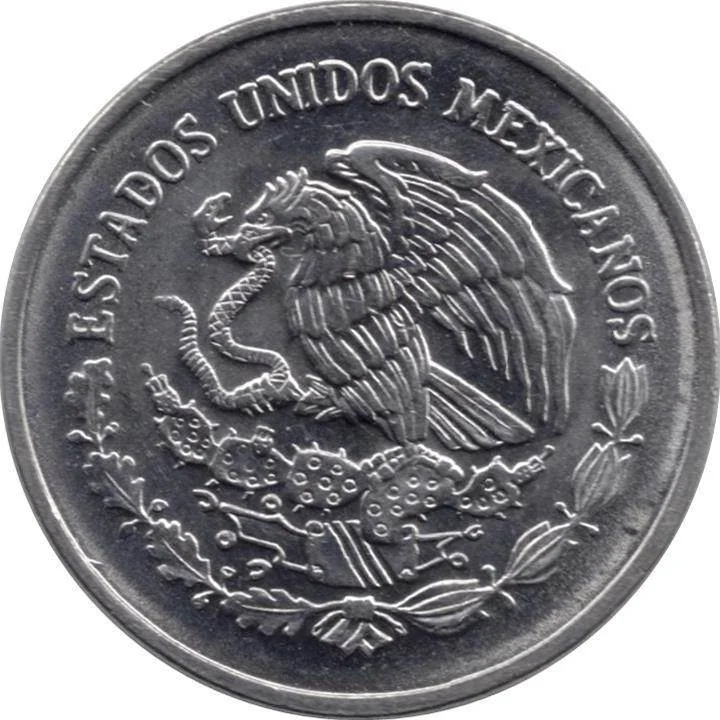
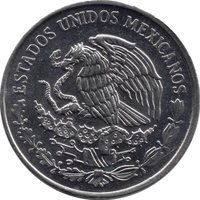
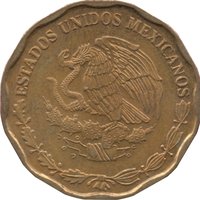
Obverse
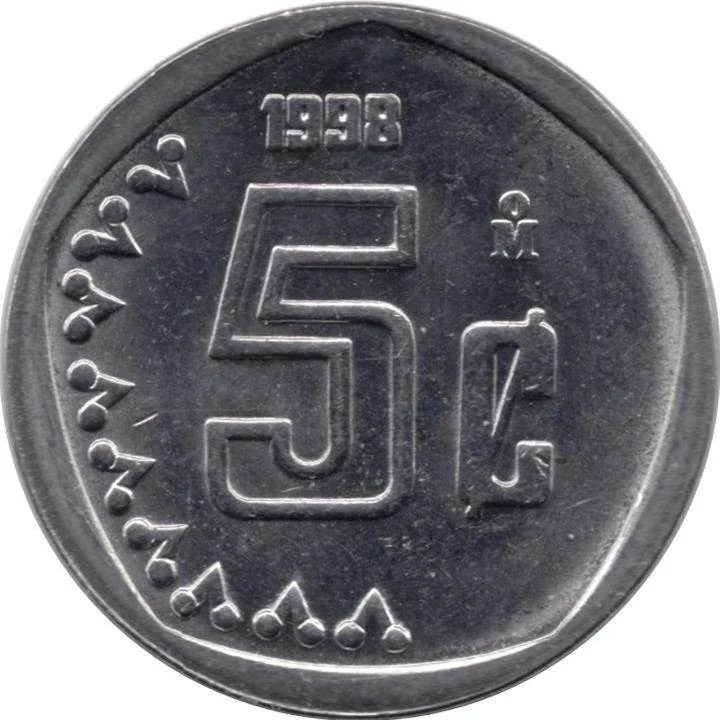
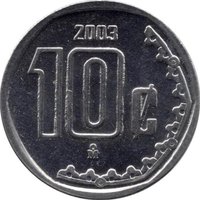
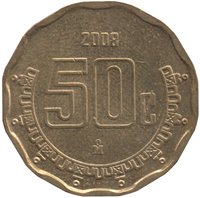
Reverse
Description:
5¢ at center, date above, mint mark Ṁ above ¢. Partial border of solar rays from the Aztec calendar stone's Quincunces Ring at left.
Inscription:
1998
5¢ Mo
5¢ Mo
Script: Latin
Edge
Plain
Mints
| Name | Mark |
|---|---|
| Mexican Mint | Mo |
Mintings
Historical background
In 1992, Mexico was in the final stages of a profound economic transformation under President Carlos Salinas de Gortari, centered on stabilizing and modernizing the economy after the debt crisis of the 1980s. A cornerstone of this policy was the maintenance of a stable exchange rate for the peso, which was pegged within a narrow band against the U.S. dollar. This "crawling peg" or "band" system, established in late 1991, was designed to provide predictability, curb inflation, and attract foreign investment by signaling the government's commitment to monetary discipline. The strategy appeared successful on the surface, with inflation falling and capital flowing into the country, fueling a sense of optimism and leading to Mexico's entry into the North American Free Trade Agreement (NAFTA) negotiations.
However, beneath this stability lay significant vulnerabilities. The peso had become increasingly overvalued due to the fixed exchange rate, high domestic interest rates, and inflation that, while declining, remained higher than in the United States. This overvaluation hurt Mexico's export competitiveness and led to a rapidly growing current account deficit, as imports became cheap and exports expensive. The deficit was financed by large inflows of volatile short-term portfolio investment ("hot money") rather than long-term foreign direct investment, making the economy highly susceptible to a sudden reversal of investor sentiment.
Consequently, by the end of 1992, Mexico was in a precarious position, though the full crisis would erupt two years later. The government was engaged in a difficult balancing act, using its reserves to defend the peso's band while promoting liberalization. While official rhetoric emphasized strength and control, many economists and investors privately questioned the sustainability of the exchange rate policy. The stage was thus set for the severe financial crisis of 1994-95, when these accumulated imbalances—the overvalued peso, large deficit, and short-term debt—would culminate in a devastating devaluation and require a major international bailout.
However, beneath this stability lay significant vulnerabilities. The peso had become increasingly overvalued due to the fixed exchange rate, high domestic interest rates, and inflation that, while declining, remained higher than in the United States. This overvaluation hurt Mexico's export competitiveness and led to a rapidly growing current account deficit, as imports became cheap and exports expensive. The deficit was financed by large inflows of volatile short-term portfolio investment ("hot money") rather than long-term foreign direct investment, making the economy highly susceptible to a sudden reversal of investor sentiment.
Consequently, by the end of 1992, Mexico was in a precarious position, though the full crisis would erupt two years later. The government was engaged in a difficult balancing act, using its reserves to defend the peso's band while promoting liberalization. While official rhetoric emphasized strength and control, many economists and investors privately questioned the sustainability of the exchange rate policy. The stage was thus set for the severe financial crisis of 1994-95, when these accumulated imbalances—the overvalued peso, large deficit, and short-term debt—would culminate in a devastating devaluation and require a major international bailout.
Series: 1992 Mexico circulation coins
🌱 Very Common