

1 Paisa – Bengal Presidency
India

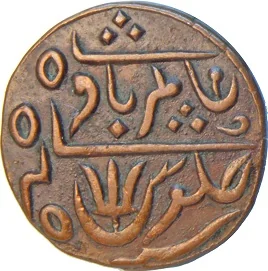
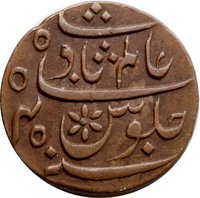
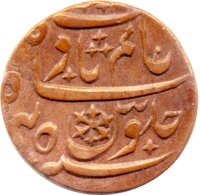
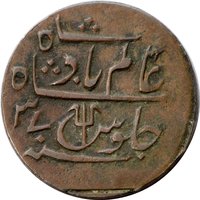
Obverse
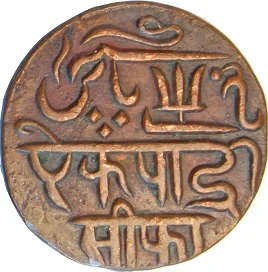
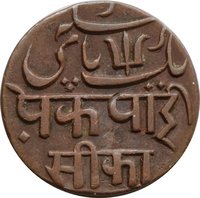
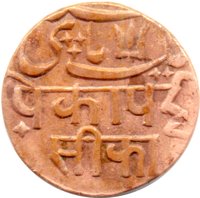
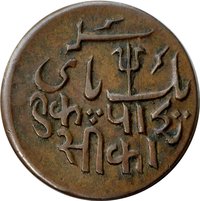
Reverse
Edge
Plain
Mintings
| Year | Mint Mark | Mintage | Quality | Collection |
|---|---|---|---|---|
| — | ψ | — |
Historical background
In 1826, the Bengal Presidency’s currency system was in a state of complex transition, dominated by the silver rupee but strained by a chronic shortage of specie. The British East India Company, having consolidated its territorial control, sought to impose monetary uniformity, yet the economy was a mosaic of circulating coins. Alongside the Company’s newly minted silver rupees, older Mughal and regional issues, gold mohurs, and a vast quantity of worn and clipped coins remained in use, causing confusion in exchange rates and facilitating widespread forgery. This heterogeneity, particularly the poor state of the copper pice used for small transactions, created significant practical difficulties for daily commerce and revenue collection.
The core monetary challenge was a persistent drain of silver from Bengal to China to pay for tea and opium, exacerbated by the high cost of remitting funds to Britain. This outflow created a deflationary pressure, making currency scarce and credit tight. To address this, the Company had officially adopted the silver standard with the Coinage Act of 1793, but in practice, the system was unstable. The Presidency Banks, like the Bank of Bengal, issued paper notes, but public trust in them was limited, and their circulation was largely confined to major commercial centers like Calcutta, leaving the wider rural economy reliant on physical coin.
Therefore, the situation in 1826 was one of an authoritative power grappling with the practical realities of a diverse and drained economy. The Company’s administration was actively moving toward greater standardization, but its system was not yet fully effective or trusted. The currency landscape remained fragmented, with the scarcity of sound silver coinage stifling economic activity and highlighting the tension between the Company's centralizing fiscal ambitions and the subcontinent's complex monetary traditions. This instability would eventually lead to more decisive reforms, culminating in the uniform coinage introduced across British India after 1835.
The core monetary challenge was a persistent drain of silver from Bengal to China to pay for tea and opium, exacerbated by the high cost of remitting funds to Britain. This outflow created a deflationary pressure, making currency scarce and credit tight. To address this, the Company had officially adopted the silver standard with the Coinage Act of 1793, but in practice, the system was unstable. The Presidency Banks, like the Bank of Bengal, issued paper notes, but public trust in them was limited, and their circulation was largely confined to major commercial centers like Calcutta, leaving the wider rural economy reliant on physical coin.
Therefore, the situation in 1826 was one of an authoritative power grappling with the practical realities of a diverse and drained economy. The Company’s administration was actively moving toward greater standardization, but its system was not yet fully effective or trusted. The currency landscape remained fragmented, with the scarcity of sound silver coinage stifling economic activity and highlighting the tension between the Company's centralizing fiscal ambitions and the subcontinent's complex monetary traditions. This instability would eventually lead to more decisive reforms, culminating in the uniform coinage introduced across British India after 1835.
💎 Very Rare