

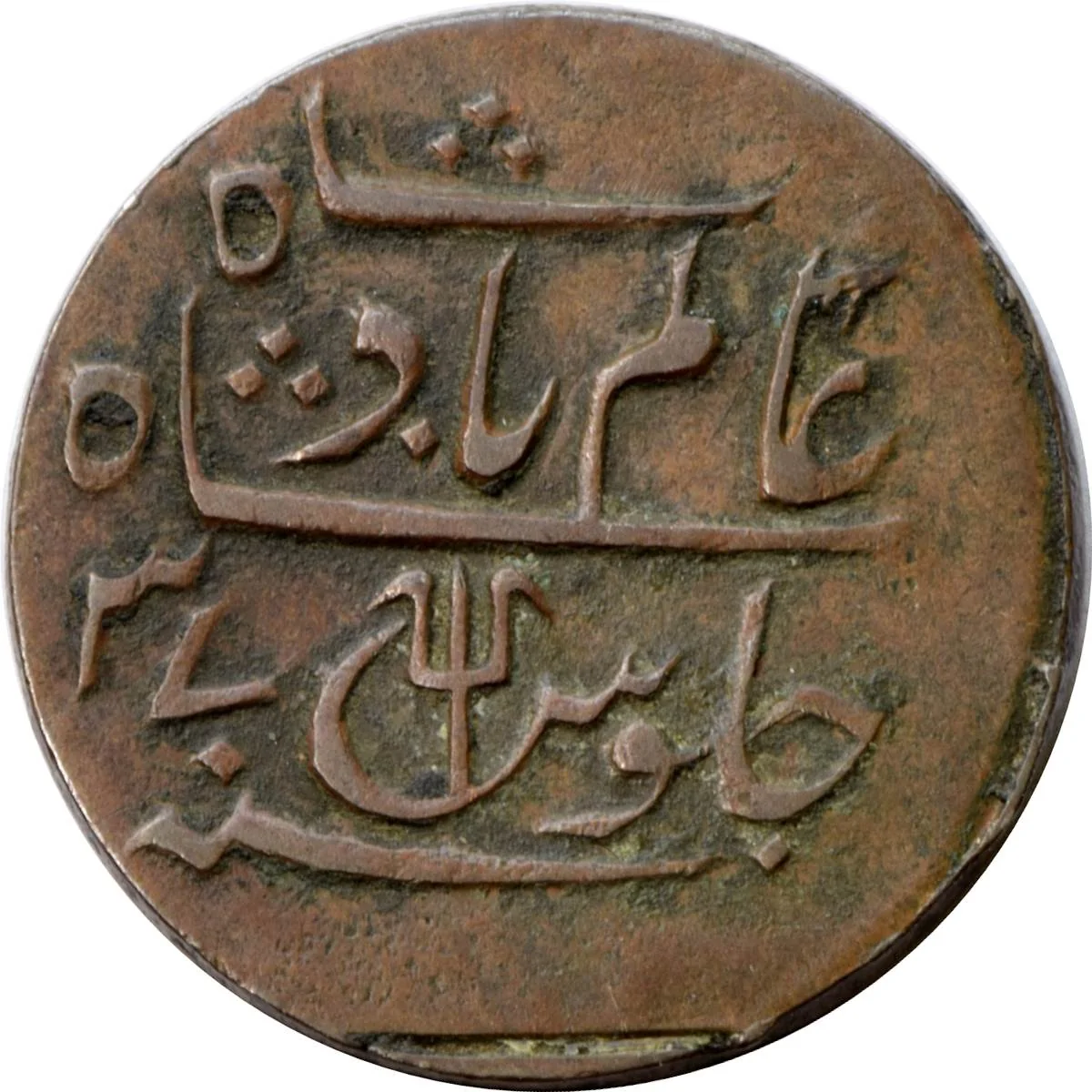
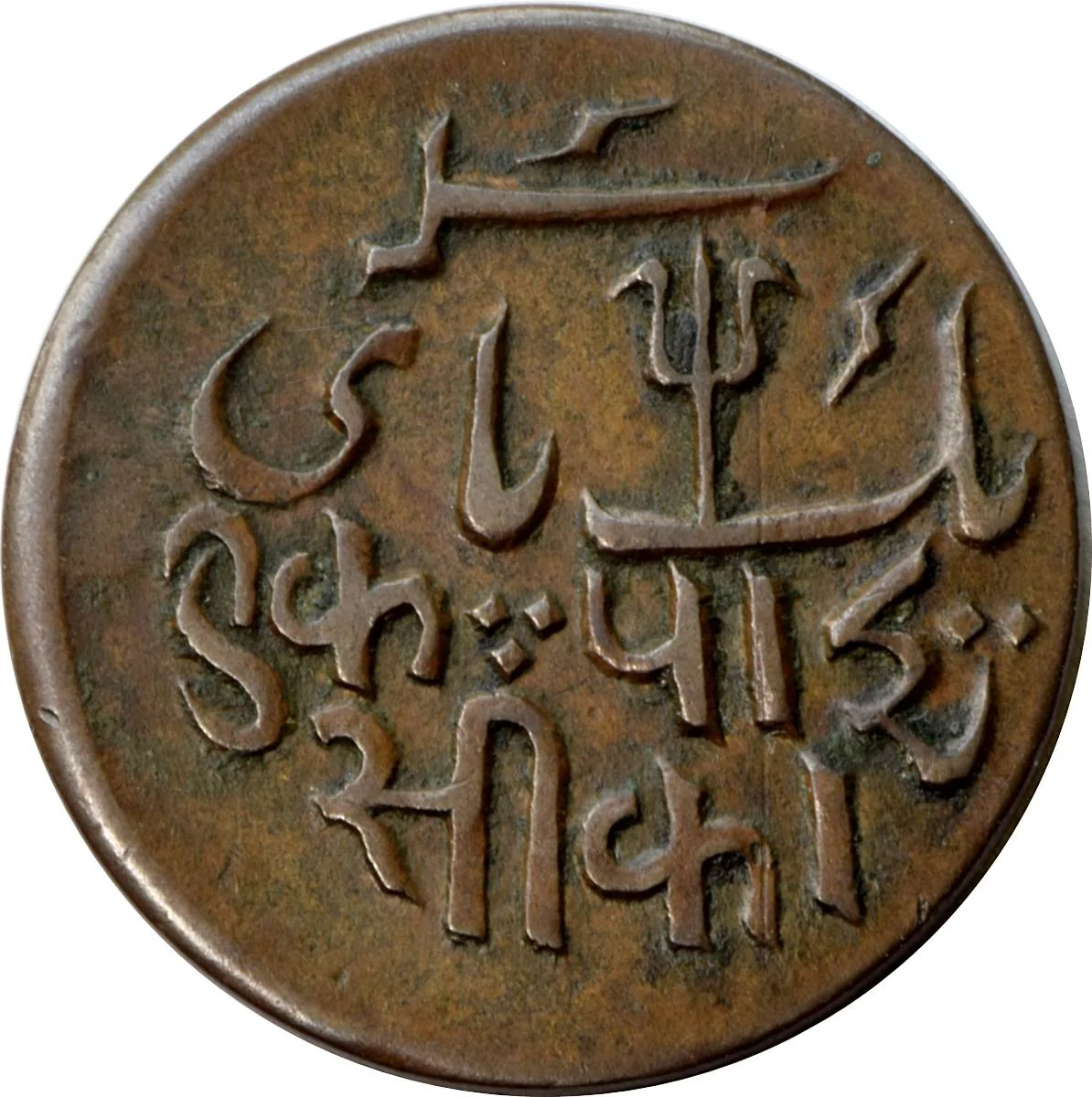
1 Paisa – Bengal Presidency
India
Context

Material
References
KM: #Click to copy to clipboard29
Numista: #22952
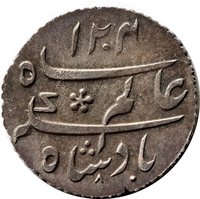
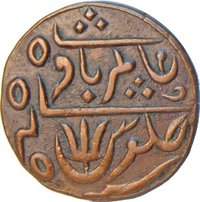
Obverse
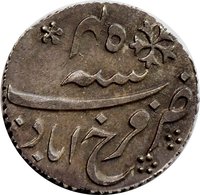
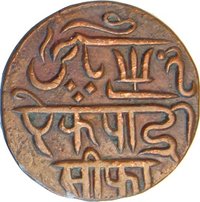
Reverse
Edge
Plain
Mintings
| Year | Mint Mark | Mintage | Quality | Collection |
|---|---|---|---|---|
| — | — | — |
Historical background
In 1821, the Bengal Presidency's currency system was in a state of complex transition, dominated by the silver rupee but strained by a critical shortage of small-denomination coinage. The British East India Company, having solidified its political control, sought to impose monetary uniformity, yet the economy still relied heavily on a chaotic mix of older, debased Mughal and regional coins alongside the Company's newer issues. This scarcity of reliable small change for daily transactions crippled local bazaars and rural economies, forcing the use of cumbersome cowrie shells or fragmented coins (pice), and creating a fertile ground for counterfeiters who exploited the public's desperation.
The core of the problem was bimetallism. The Company officially valued gold mohurs against silver rupees at a fixed rate of 16:1, but this ratio frequently diverged from the higher global market price of gold. This created an arbitrage opportunity, leading to the systematic export of gold coins from Bengal, which further drained the monetary supply. Consequently, while the silver rupee remained the official standard, the effective circulation of usable, trusted coinage was insufficient for the needs of a growing colonial economy dependent on revenue collection and cash-crop agriculture.
Recognising this crisis, the authorities were on the verge of significant reform. The period immediately following 1821 would see decisive action, culminating in the Coinage Act of 1835. This act would finally establish a uniform silver standard across British India, introducing new, machine-struck coins with the image of the reigning monarch, and decisively demonetising the plethora of older issues. Thus, 1821 represents the tense culmination of a protracted monetary disorder, a final year of widespread inconvenience and economic friction just before the Company moved to impose a centralised and modern currency system.
The core of the problem was bimetallism. The Company officially valued gold mohurs against silver rupees at a fixed rate of 16:1, but this ratio frequently diverged from the higher global market price of gold. This created an arbitrage opportunity, leading to the systematic export of gold coins from Bengal, which further drained the monetary supply. Consequently, while the silver rupee remained the official standard, the effective circulation of usable, trusted coinage was insufficient for the needs of a growing colonial economy dependent on revenue collection and cash-crop agriculture.
Recognising this crisis, the authorities were on the verge of significant reform. The period immediately following 1821 would see decisive action, culminating in the Coinage Act of 1835. This act would finally establish a uniform silver standard across British India, introducing new, machine-struck coins with the image of the reigning monarch, and decisively demonetising the plethora of older issues. Thus, 1821 represents the tense culmination of a protracted monetary disorder, a final year of widespread inconvenience and economic friction just before the Company moved to impose a centralised and modern currency system.
💎 Very Rare