

5 francs cfa – Western African States
Add to wishlist
Context
Year: 1960
Issuer: Western African States
Issuing organization: Central Bank of Western African States
Currency:
(since 1958)
Total mintage: 5,000,000
Material
References
KM: #
Numista: #11074
Value
Exchange value: 5 XOF
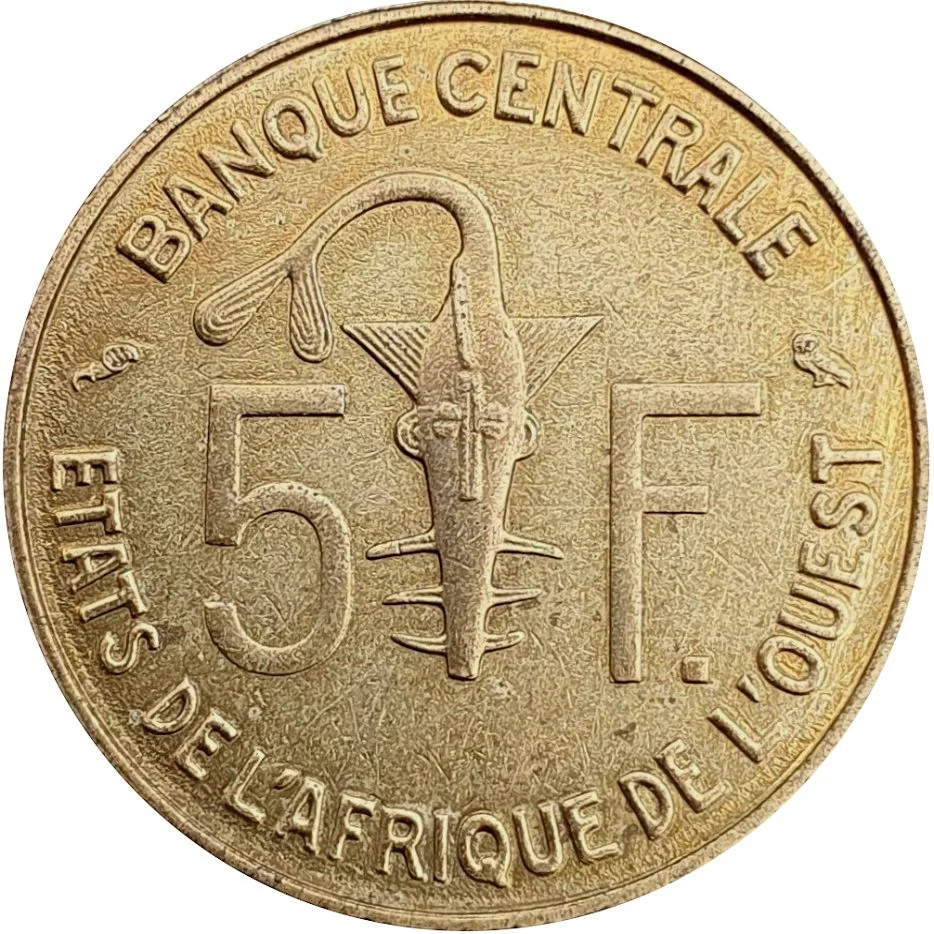
Obverse
Description:
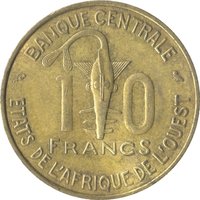
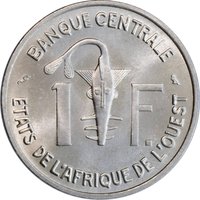
BCEAO emblem and value
Inscription:
5 F.
BANQUE CENTRALE
ETATS DE L'AFRIQUE DE L'OUEST
BANQUE CENTRALE
ETATS DE L'AFRIQUE DE L'OUEST
Translation:
5 FRANCS
CENTRAL BANK
OF THE WEST AFRICAN STATES
CENTRAL BANK
OF THE WEST AFRICAN STATES
Script: Latin
Language: French
Engravers: Gabriel Bernard, Lucien Bazor
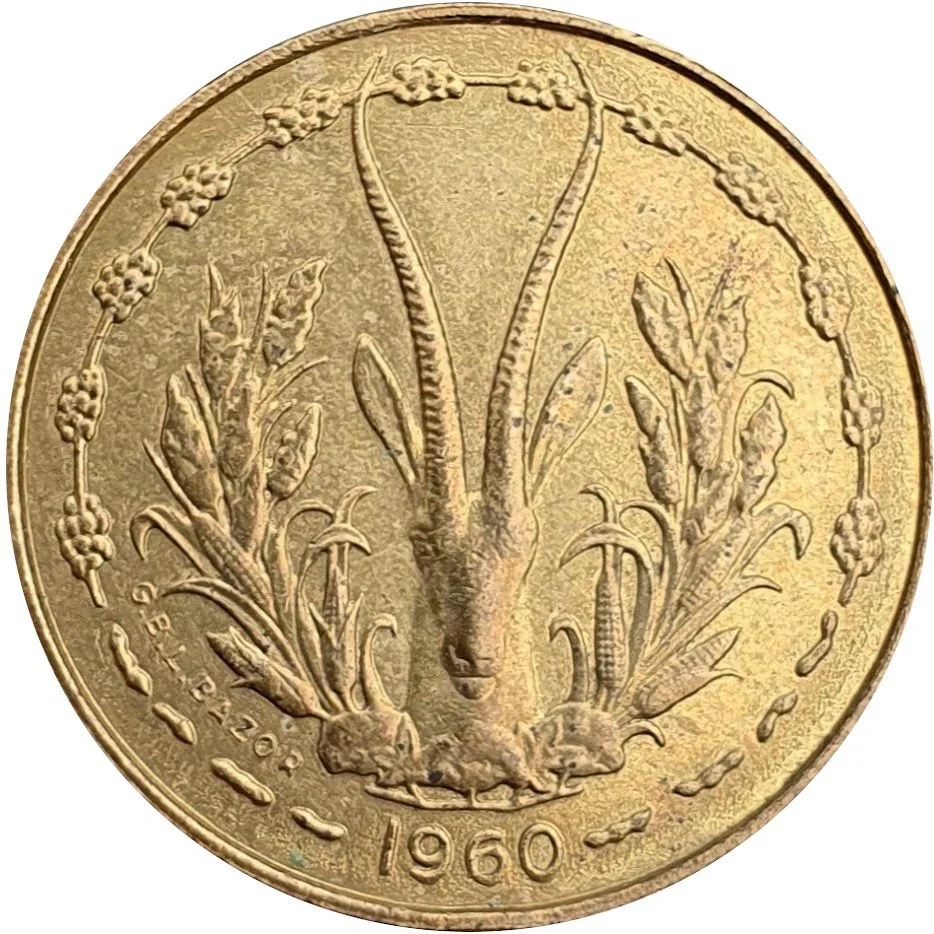
Reverse
Description:
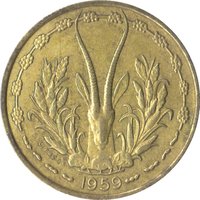
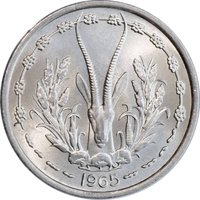
Swift antelope
Inscription:
G. B. L. BAZOR
1960
1960
Script: Latin
Engravers: Gabriel Bernard, Lucien Bazor
Edge
Plain
Mints
| Name | Mark |
|---|---|
| Monnaie de Paris | — |
Mintings
| Year | Mint Mark | Mintage | Quality | Collection |
|---|---|---|---|---|
| 1960 | — | 5,000,000 |
Historical background
In 1960, the currency situation across the newly independent states of Francophone West Africa was one of deep colonial continuity, managed through the CFA franc (Colonies Françaises d'Afrique). This currency, created by France in 1945, was fully guaranteed by the French Treasury and pegged at a fixed rate to the French franc. For the eight newly sovereign nations—including Senegal, Ivory Coast, and Mali—this arrangement provided immediate monetary stability and facilitated trade with France, but it also meant that their monetary policy was effectively set in Paris, with their foreign reserves pooled and held by France. This system was a double-edged sword, offering economic security while symbolizing a lingering economic dependence.
In contrast, the former British colonies, such as Nigeria and Ghana (which had gained independence in 1957), pursued different paths. They initially operated within the British West African pound, a currency board system that also tied their currency to sterling. However, by 1960, these nations were actively moving toward establishing their own central banks and national currencies as stronger symbols of sovereignty. Nigeria, for instance, would introduce the Nigerian pound in 1959 and establish its central bank in 1958, seeking greater control over its monetary policy and economic destiny separate from the sterling area.
Thus, the currency landscape of 1960 reflected the divergent colonial legacies and immediate post-independence strategies of the region. The Francophone states largely retained a centralized, externally guaranteed currency union (the West African CFA), prioritizing stability and maintained economic links. The Anglophone states were in a transitional phase, dismantling the colonial currency framework in favour of national monetary institutions. In both cases, the fundamental challenge was balancing the practical needs for stability and accessible foreign exchange with the political imperative for economic self-determination in the dawn of independence.
In contrast, the former British colonies, such as Nigeria and Ghana (which had gained independence in 1957), pursued different paths. They initially operated within the British West African pound, a currency board system that also tied their currency to sterling. However, by 1960, these nations were actively moving toward establishing their own central banks and national currencies as stronger symbols of sovereignty. Nigeria, for instance, would introduce the Nigerian pound in 1959 and establish its central bank in 1958, seeking greater control over its monetary policy and economic destiny separate from the sterling area.
Thus, the currency landscape of 1960 reflected the divergent colonial legacies and immediate post-independence strategies of the region. The Francophone states largely retained a centralized, externally guaranteed currency union (the West African CFA), prioritizing stability and maintained economic links. The Anglophone states were in a transitional phase, dismantling the colonial currency framework in favour of national monetary institutions. In both cases, the fundamental challenge was balancing the practical needs for stability and accessible foreign exchange with the political imperative for economic self-determination in the dawn of independence.
🌱 Common