

1 franc cfa – Western African States
Add to wishlist
Context
Years: 1961–1975
Issuer: Western African States
Issuing organization: Central Bank of Western African States
Currency:
(since 1958)
Demonetized: Yes
Total mintage: 67,084,000
Material
References
KM: #
Numista: #4273
Value
Exchange value: 1 XOF
Obverse
Description:
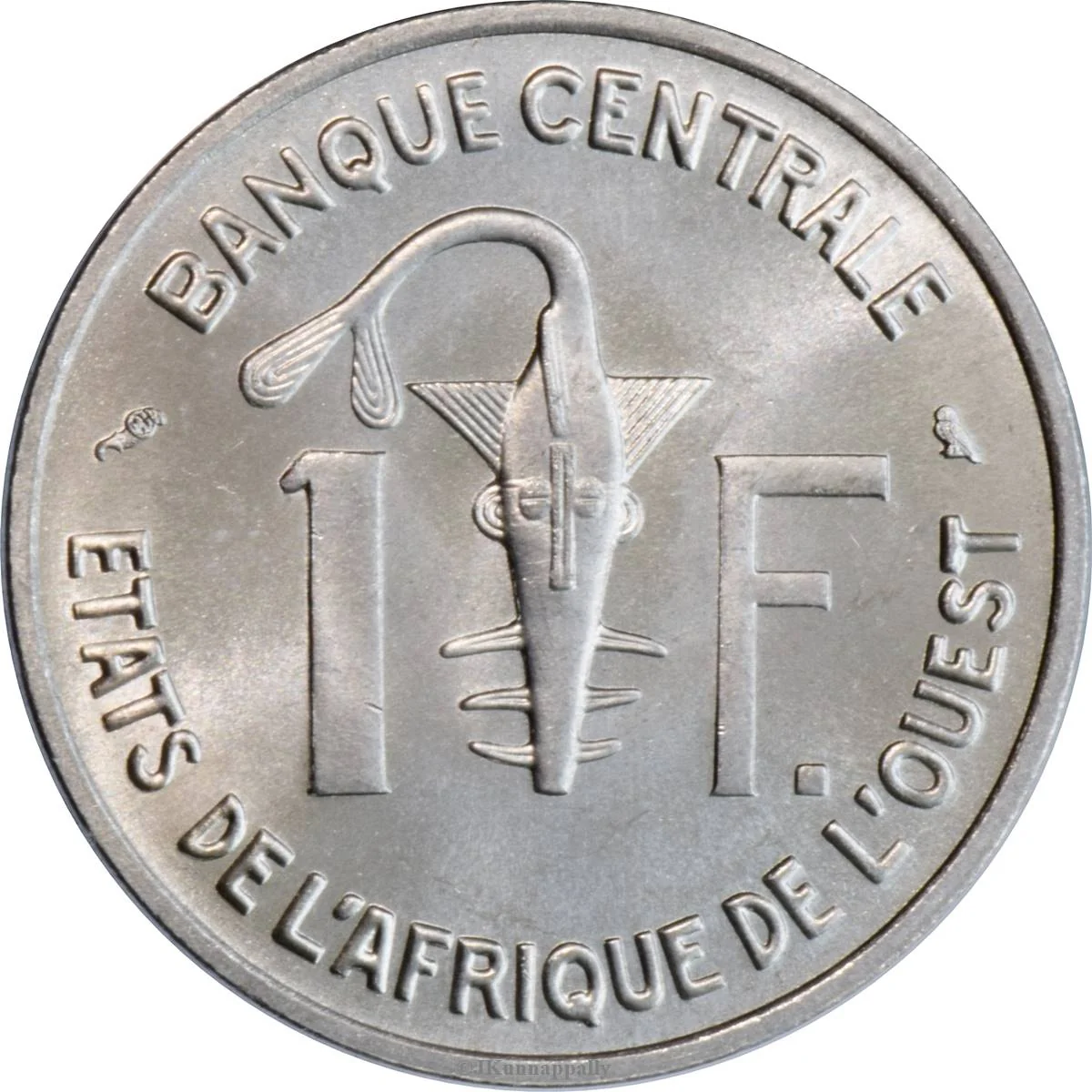
BCEAO emblem and value
Inscription:
1 F.
BANQUE CENTRALE
ETATS DE L'AFRIQUE DE L'OUEST
BANQUE CENTRALE
ETATS DE L'AFRIQUE DE L'OUEST
Translation:
CENTRAL BANK
OF THE WEST AFRICAN STATES
OF THE WEST AFRICAN STATES
Script: Latin
Language: French
Engravers: Gabriel Bernard, Lucien Bazor
Reverse
Description:
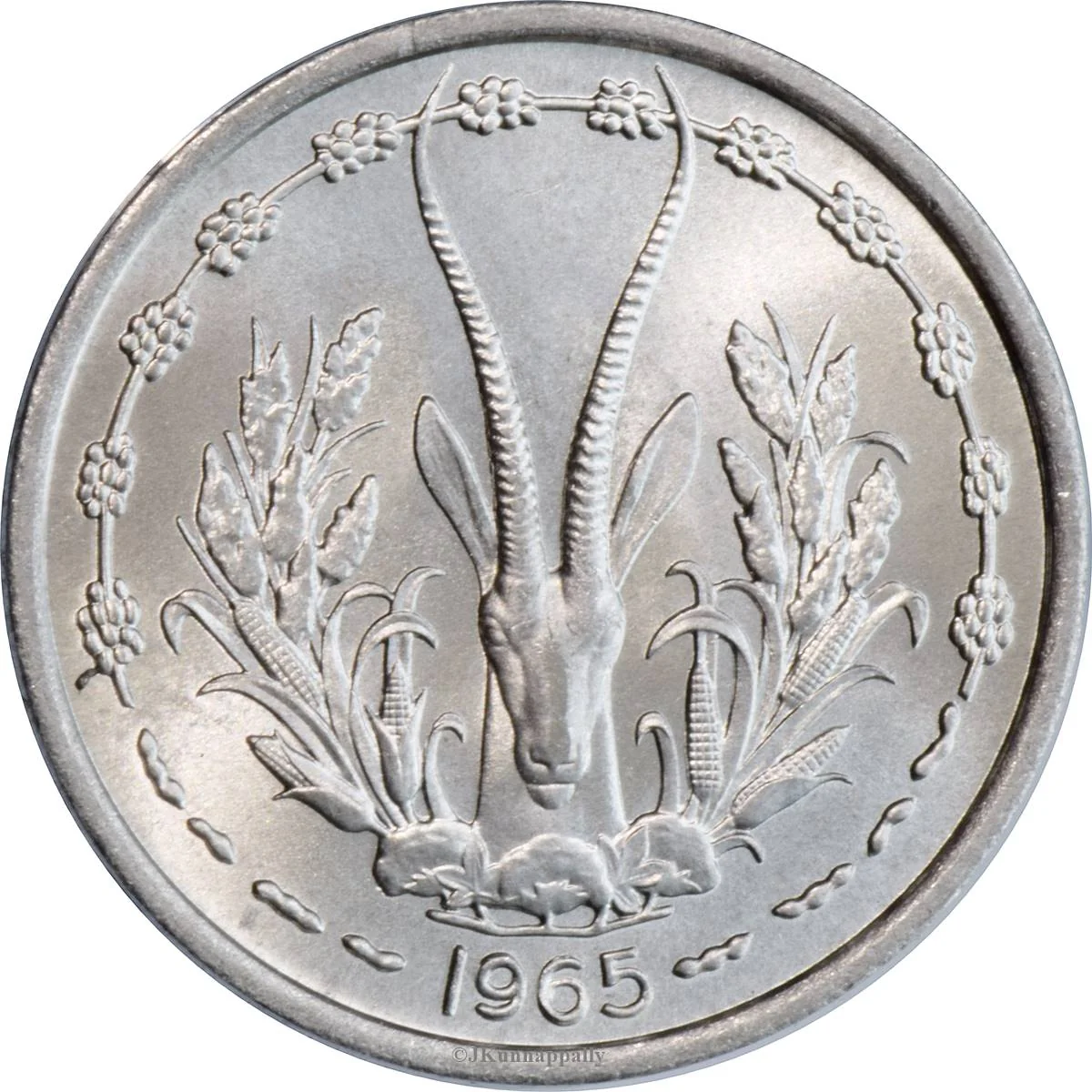
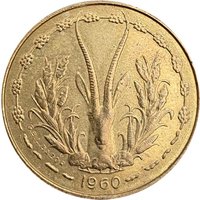
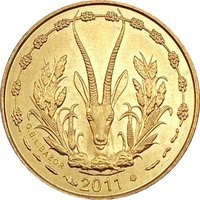
Gazelle, dated below.
Inscription:
1965
Script: Latin
Engravers: Gabriel Bernard, Lucien Bazor
Edge
Plain
Mints
| Name | Mark |
|---|---|
| Monnaie de Paris | — |
Mintings
| Year | Mint Mark | Mintage | Quality | Collection |
|---|---|---|---|---|
| 1961 | — | 3,000,000 | ||
| 1962 | — | 2,000,000 | ||
| 1963 | — | 4,500,000 | ||
| 1964 | — | 10,498,000 | ||
| 1965 | — | 5,502,000 | ||
| 1967 | — | 2,500,000 | ||
| 1971 | — | 8,000,000 | ||
| 1972 | — | 4,000,000 | ||
| 1973 | — | 4,500,000 | ||
| 1974 | — | 4,504,000 | ||
| 1975 | — | 18,080,000 |
Historical background
In 1961, the currency landscape of West Africa was dominated by the CFA franc, a colonial monetary system established by France in 1945. The region was divided into two currency zones: the West African CFA franc (XOF), issued by the Banque Centrale des États de l'Afrique de l'Ouest (BCEAO) for seven territories (Ivory Coast, Dahomey, French Sudan, Mauritania, Niger, Senegal, and Upper Volta), and the Central African CFA franc (XAF) for Equatorial Africa. This arrangement guaranteed convertibility at a fixed parity to the French franc and required member states to deposit a significant portion of their foreign reserves with the French Treasury, ensuring monetary stability but cementing deep financial dependency on France.
The year 1961 was a pivotal moment of transition, as many of these territories had just gained formal independence in 1960. A key question was whether the new sovereign nations would retain the CFA system or issue their own national currencies. While the system provided stability and facilitated trade with France, it also symbolized continued colonial economic control and limited autonomous monetary policy. Notably, Guinea had already broken away in 1959 by creating its own franc, and Mali would establish the Malian franc in 1962, though it later rejoined the CFA zone.
Thus, the currency situation was one of fragile continuity amidst political upheaval. The newly independent states largely chose to maintain the CFA franc for pragmatic reasons—to avoid economic instability and retain access to French support—despite the political compromise it entailed. This decision in the immediate post-independence period locked in a framework of monetary cooperation with France that would define the region's financial architecture for decades to come.
The year 1961 was a pivotal moment of transition, as many of these territories had just gained formal independence in 1960. A key question was whether the new sovereign nations would retain the CFA system or issue their own national currencies. While the system provided stability and facilitated trade with France, it also symbolized continued colonial economic control and limited autonomous monetary policy. Notably, Guinea had already broken away in 1959 by creating its own franc, and Mali would establish the Malian franc in 1962, though it later rejoined the CFA zone.
Thus, the currency situation was one of fragile continuity amidst political upheaval. The newly independent states largely chose to maintain the CFA franc for pragmatic reasons—to avoid economic instability and retain access to French support—despite the political compromise it entailed. This decision in the immediate post-independence period locked in a framework of monetary cooperation with France that would define the region's financial architecture for decades to come.
🌱 Very Common