

½ penny – Jersey
Add to wishlist
Context
Years: 1971–1980
Country: British Crown dependencies
Issuer: Jersey
Ruler: Elizabeth II
Currency:
(since 1971)
Demonetization: 18 February 1985
Total mintage: 3,207,800
Material
References
KM: #
Numista: #5722
Value
Exchange value: 0.005 JEP
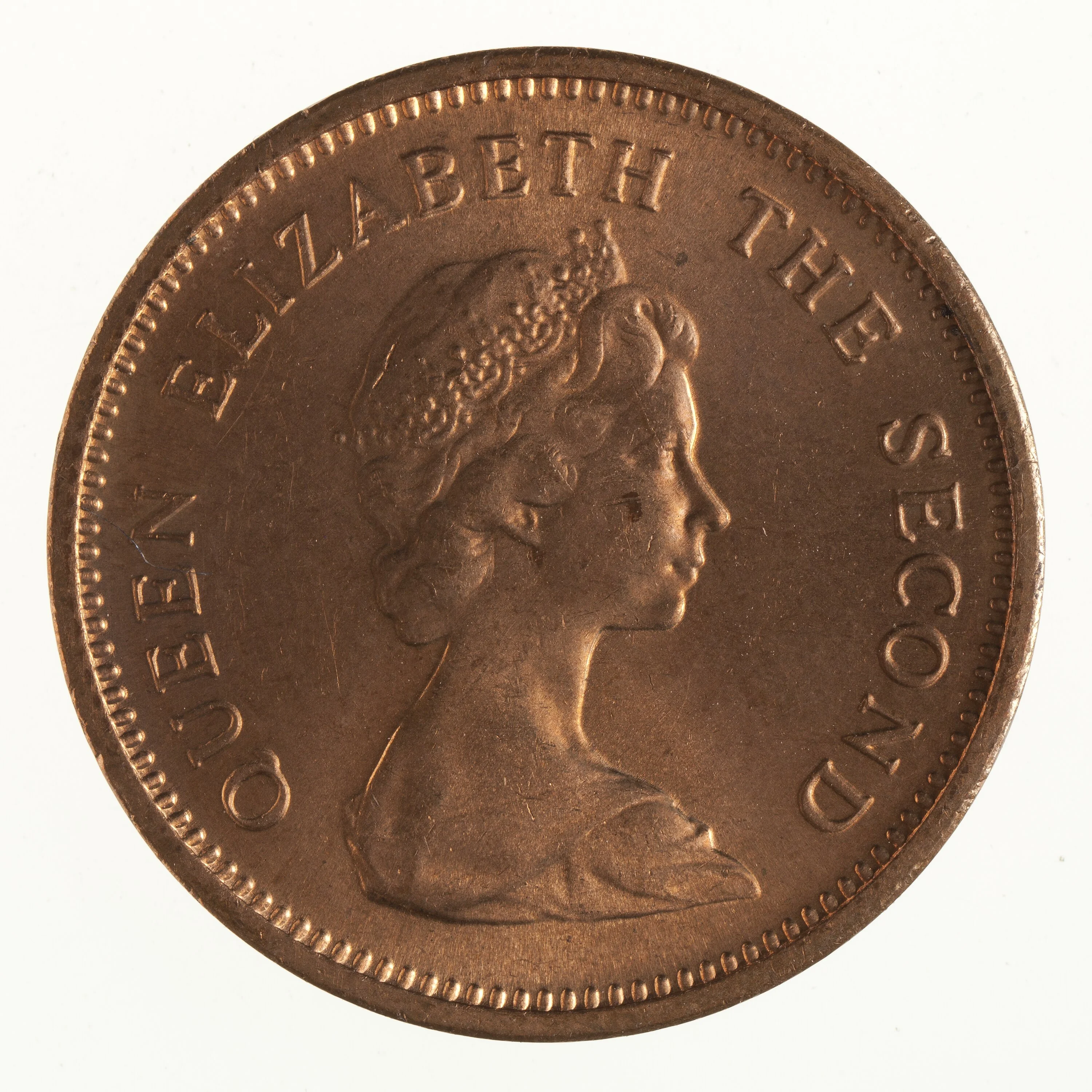
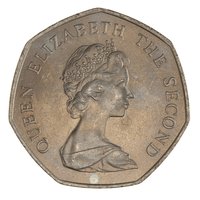
Obverse
Description:
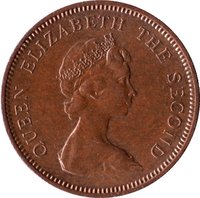
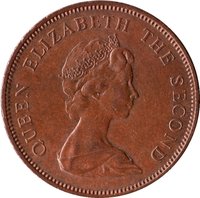
Queen Elizabeth II in the "Girls of Great Britain and Ireland" Tiara.
Inscription:
QUEEN ELIZABETH THE SECOND
Script: Latin
Engraver: Arnold Machin
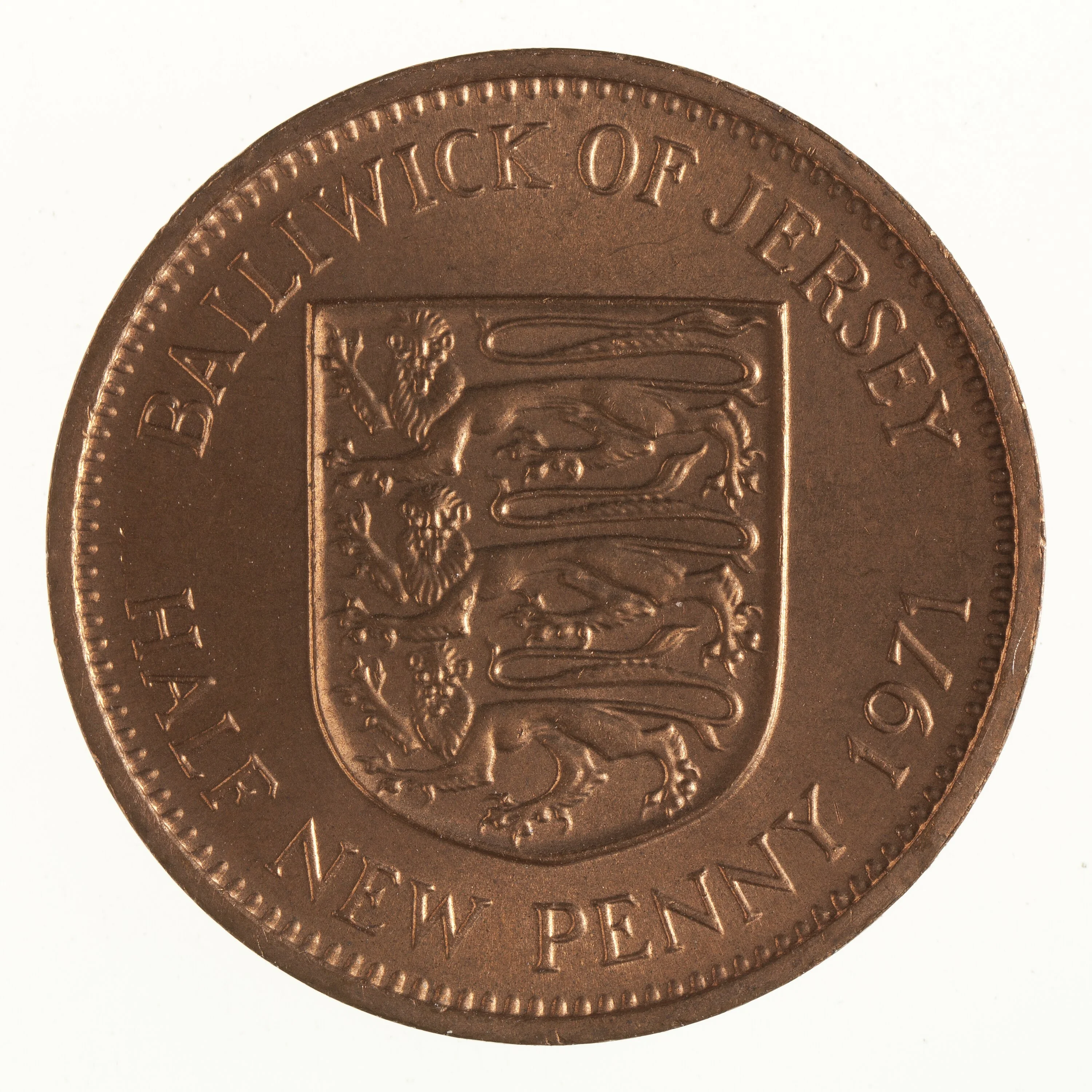
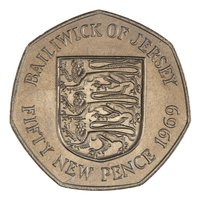
Reverse
Description:
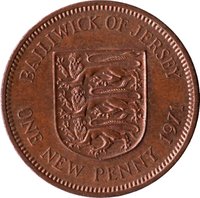
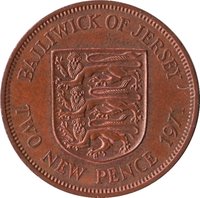
Value Crest
Inscription:
BAILIWICK OF JERSEY
HALF NEW PENNY 1971
HALF NEW PENNY 1971
Script: Latin
Engraver: George Kruger Gray
Edge
Plain
Mints
| Name | Mark |
|---|---|
| Royal Mint | — |
Mintings
| Year | Mint Mark | Mintage | Quality | Collection |
|---|---|---|---|---|
| 1971 | — | 3,000,000 | ||
| 1980 | — | 200,000 | ||
| 1980 | — | 7,800 | Proof |
Historical background
In 1971, Jersey's currency situation was intrinsically linked to that of the United Kingdom but was characterised by a unique and locally significant duality. As a British Crown Dependency, Jersey used sterling as its official currency. However, it was not part of the UK's domestic banking system and had long issued its own, distinct banknotes. These Jersey-issued pound notes were legally local tokens, fully backed by sterling reserves held in London, and circulated alongside UK banknotes. This system provided a strong symbol of the island's political and fiscal autonomy while maintaining a fixed 1:1 parity with British sterling.
The year 1971 was pivotal due to the UK's official decimalisation on 15 February, known as Decimal Day. Jersey had to decide whether to follow suit and, if so, what form its new decimal coinage would take. The island chose to decimalise in alignment with the UK to avoid economic and commercial disruption, adopting the new pound subdivided into 100 new pence. However, Jersey authorities were determined to retain a visible element of their identity. Consequently, while UK coins entered circulation, Jersey also introduced its own specific decimal coins (initially ½, 1, 2, 5, 10, and 50 new pence) featuring local designs and the distinctive Jersey crest.
This period therefore cemented a key aspect of Jersey's modern monetary framework: full integration into the British decimal currency system coupled with the continued issuance of distinct, legally valid local tender. The 1971 transition was managed smoothly, ensuring financial stability. It reinforced the principle that while Jersey's economy was tied to sterling, the right to issue its own notes and coins remained a guarded prerogative, laying the groundwork for the increasingly independent monetary policy and distinctive coinage designs that would develop in subsequent decades.
The year 1971 was pivotal due to the UK's official decimalisation on 15 February, known as Decimal Day. Jersey had to decide whether to follow suit and, if so, what form its new decimal coinage would take. The island chose to decimalise in alignment with the UK to avoid economic and commercial disruption, adopting the new pound subdivided into 100 new pence. However, Jersey authorities were determined to retain a visible element of their identity. Consequently, while UK coins entered circulation, Jersey also introduced its own specific decimal coins (initially ½, 1, 2, 5, 10, and 50 new pence) featuring local designs and the distinctive Jersey crest.
This period therefore cemented a key aspect of Jersey's modern monetary framework: full integration into the British decimal currency system coupled with the continued issuance of distinct, legally valid local tender. The 1971 transition was managed smoothly, ensuring financial stability. It reinforced the principle that while Jersey's economy was tied to sterling, the right to issue its own notes and coins remained a guarded prerogative, laying the groundwork for the increasingly independent monetary policy and distinctive coinage designs that would develop in subsequent decades.
🌱 Very Common