

50 Pence – Jersey
Context
Years: 1969–1980
Country: British Crown dependencies
Issuer: Jersey 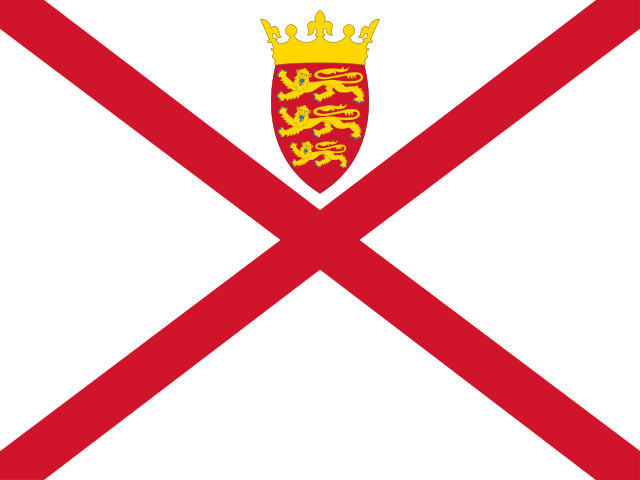
Ruler: Elizabeth II
Currency:
(since 1971)
Demonetization: 30 April 1998
Total mintage: 587,800
Material
Diameter: 30 mm
Weight: 13.5 g
Shape: Equilateral curve heptagon
Composition: Copper-nickel
Technique: Milled
Alignment: Medal alignment
flip
References
KM: #Click to copy to clipboard34
Numista: #10947
Value
Exchange value: 0.50 JEP
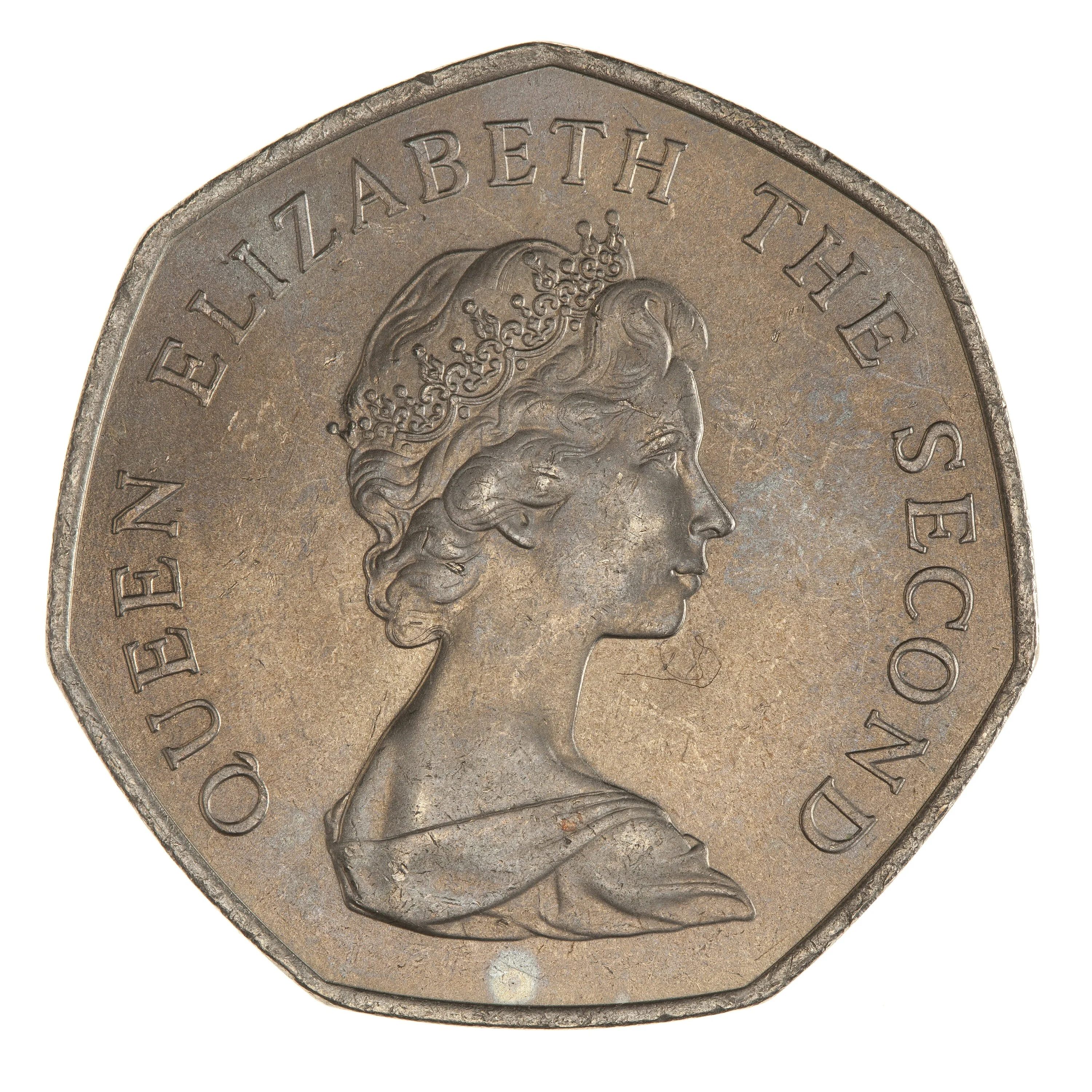
Obverse
Description:
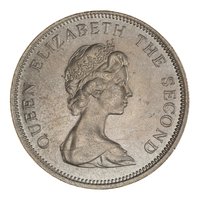
Right-facing crowned bust.
Inscription:
QUEEN ELIZABETH THE SECOND
Script: Latin
Engraver: Arnold Machin
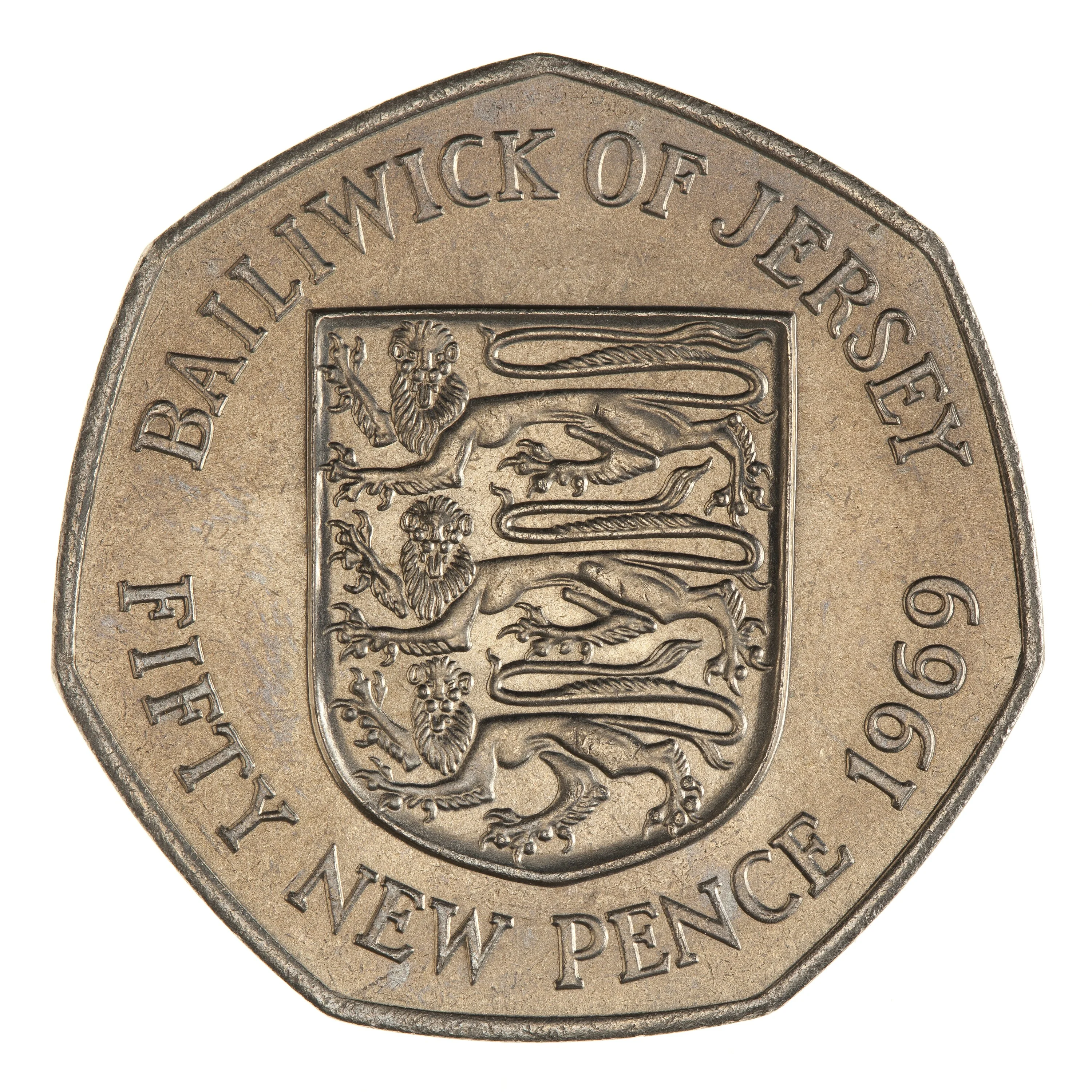
Reverse
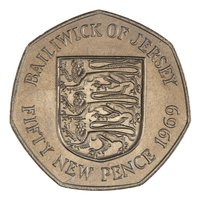
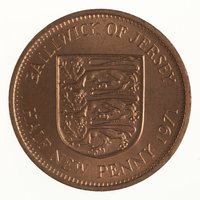
Description:
Lions on a shield.
Inscription:
BAILIWICK OF JERSEY
FIFTY NEW PENCE 1969
FIFTY NEW PENCE 1969
Script: Latin
Engraver: George Kruger Gray
Edge
Plain
Mints
| Name | Mark |
|---|---|
| Royal Mint | — |
Mintings
| Year | Mint Mark | Mintage | Quality | Collection |
|---|---|---|---|---|
| 1969 | — | 480,000 | ||
| 1980 | — | 100,000 | ||
| 1980 | — | 7,800 | Proof |
Historical background
In 1969, the currency situation in Jersey was one of transition and assertion of local identity, set against the backdrop of the global shift towards decimalisation. Since the 19th century, Jersey had used a mixture of British sterling and its own locally issued banknotes, which were denominated in pounds, shillings, and pence and were legally equivalent to their UK counterparts. However, the impending UK Decimal Currency Act of 1971, which would replace the old £sd system with a new decimal pound, presented a significant administrative and symbolic challenge for the island.
The States of Jersey faced a critical decision: whether to simply adopt the new British decimal coins and notes or to use the moment to design a distinct decimal series that reflected the island's autonomy. There was a strong desire within Jersey to maintain its own currency as a point of pride and a symbol of its unique constitutional status as a Crown Dependency, separate from the United Kingdom. Consequently, 1969 was a year of planning and design, with committees working on the specifications for a new decimal currency that would remain pegged at par with sterling but feature distinctly Jersey imagery.
Thus, the currency situation in 1969 was characterised by preparatory work for a historic change. The island's authorities were committed to introducing their own decimal coins and notes in 1971, in parallel with the UK, but with designs celebrating Jersey's heritage, such as the iconic gold hougue and the Jersey cow. This period solidified the principle that while Jersey's economy was inextricably linked to the British monetary system, its currency would serve as a tangible expression of its separate political and cultural identity.
The States of Jersey faced a critical decision: whether to simply adopt the new British decimal coins and notes or to use the moment to design a distinct decimal series that reflected the island's autonomy. There was a strong desire within Jersey to maintain its own currency as a point of pride and a symbol of its unique constitutional status as a Crown Dependency, separate from the United Kingdom. Consequently, 1969 was a year of planning and design, with committees working on the specifications for a new decimal currency that would remain pegged at par with sterling but feature distinctly Jersey imagery.
Thus, the currency situation in 1969 was characterised by preparatory work for a historic change. The island's authorities were committed to introducing their own decimal coins and notes in 1971, in parallel with the UK, but with designs celebrating Jersey's heritage, such as the iconic gold hougue and the Jersey cow. This period solidified the principle that while Jersey's economy was inextricably linked to the British monetary system, its currency would serve as a tangible expression of its separate political and cultural identity.
🌱 Common