

1 Pound – United Kingdom
United Kingdom
Context
Year: 1988
Issuer: United Kingdom 
Ruler: Elizabeth II
Currency:
(since 1971)
Demonetization: 15 October 2017
Total mintage: 10,000
Material
References
KM: #Click to copy to clipboardP8
Numista: #56362
Value
Exchange value: 1 GBP = $1.35
Bullion value: $51.06
Inflation-adjusted value: 3.59 GBP
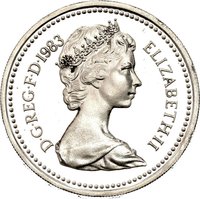
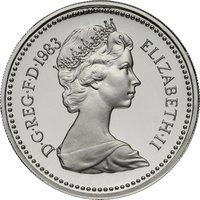
Obverse
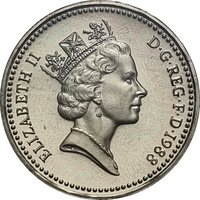
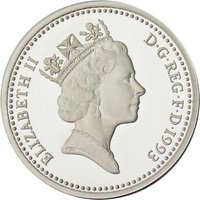
Description:
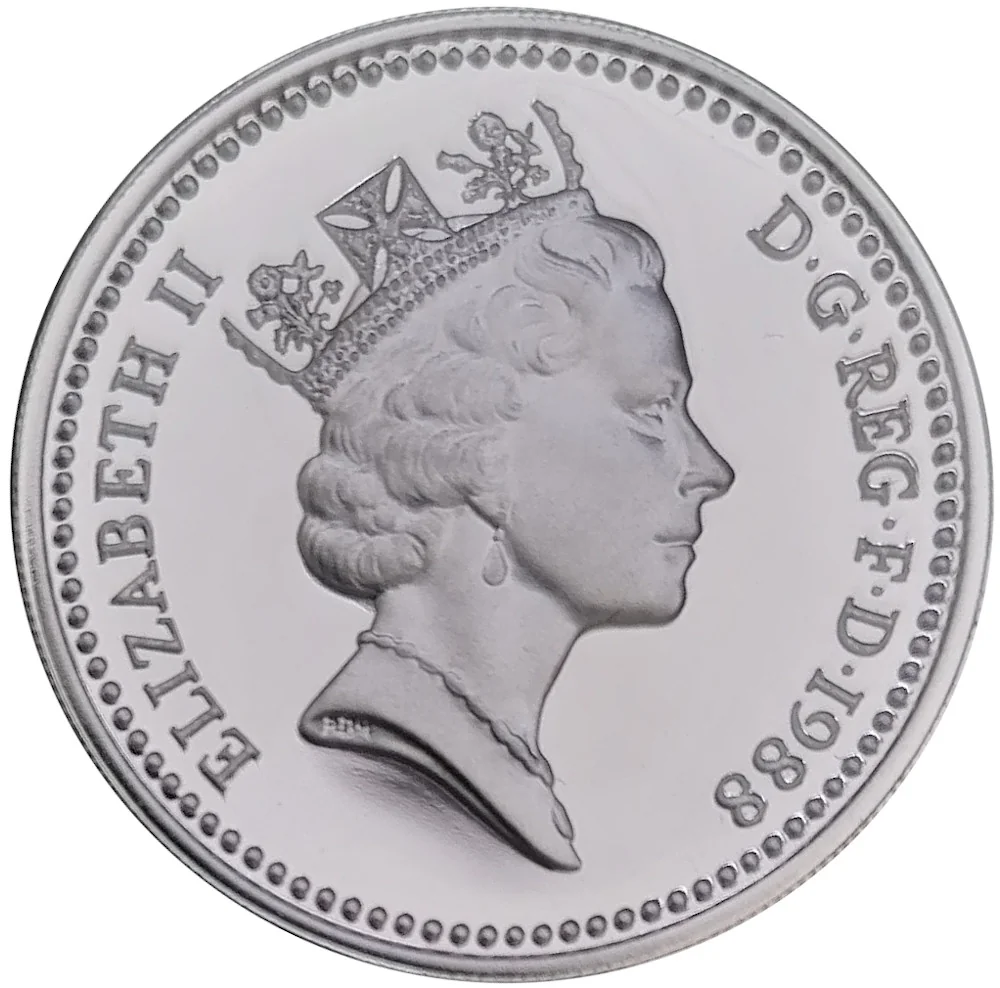
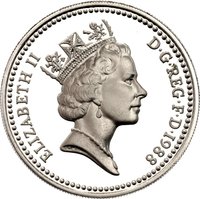
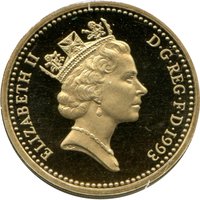
Queen Elizabeth III crowned right, wearing the George IV State Diadem.
Inscription:
ELIZABETH II D·G·REG·F·D·1988
RDM
RDM
Translation:
Elizabeth II, by the Grace of God, Queen, Defender of the Faith, 1988
Script: Latin
Language: Latin
Engraver: Raphael David Maklouf
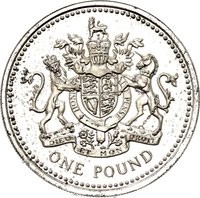
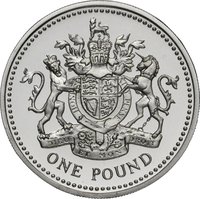
Reverse
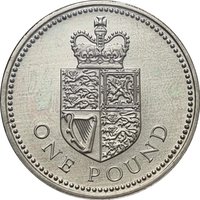
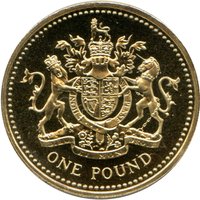
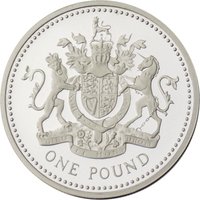
Description:
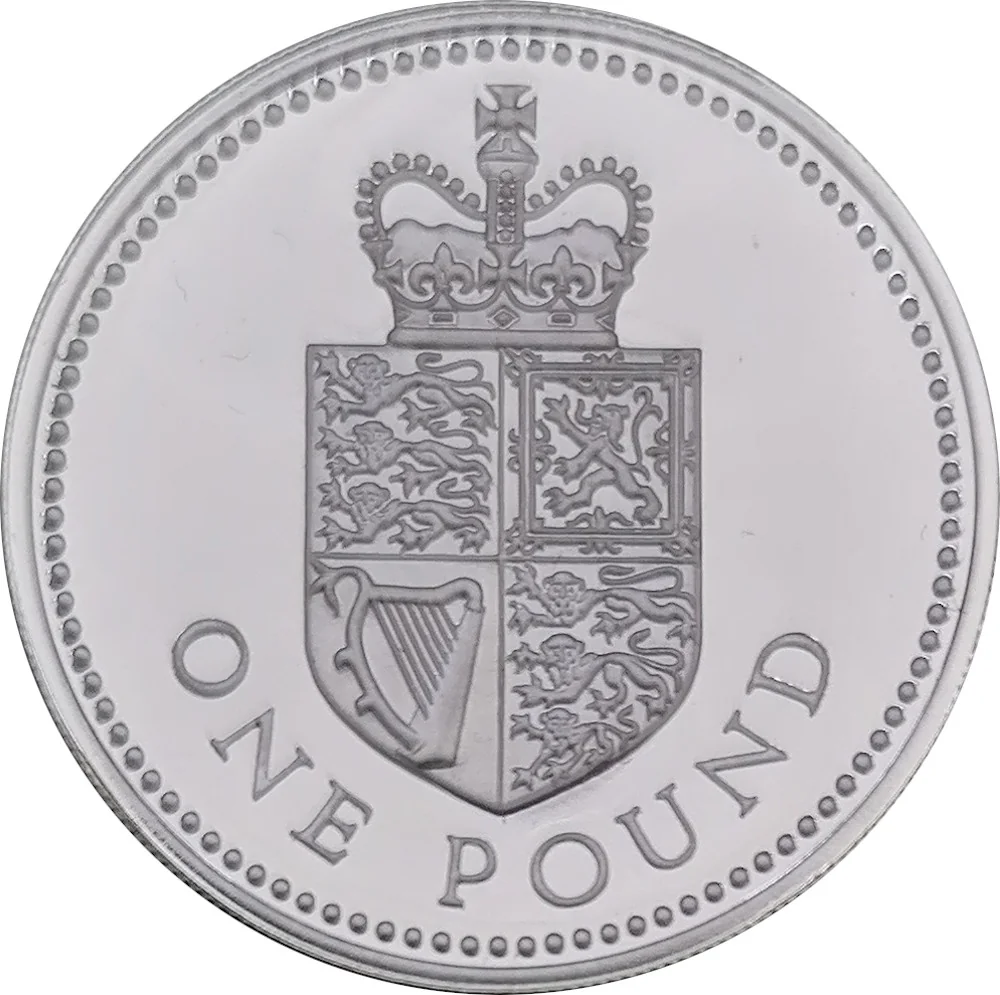
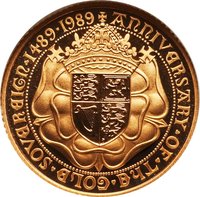
Crowned Royal Shield of Arms over denomination.
Inscription:
ONE POUND
Script: Latin
Engraver: Derek Gorringe
Edge
Milled with incuse lettering
Legend:
DECUS ET TUTAMEN
Translation:
An ornament and a safeguard
Language: Latin
Mints
| Name | Mark |
|---|---|
| Royal Mint | — |
Mintings
| Year | Mint Mark | Mintage | Quality | Collection |
|---|---|---|---|---|
| 1988 | — | 10,000 | Proof |
Historical background
In 1988, the United Kingdom’s currency situation was dominated by the government's exchange rate policy and its battle against inflation. The pound sterling was not part of the European Exchange Rate Mechanism (ERM), as Chancellor Nigel Lawson was pursuing a policy of "shadowing" the Deutsche Mark. This unofficial peg aimed to import the anti-inflation credibility of the Bundesbank by maintaining sterling within a narrow band around DM 3.00. However, this policy was conducted covertly and created significant tension within Margaret Thatcher's government, as it involved subordinating domestic interest rate policy to the goal of currency stability without any formal agreement or democratic oversight.
Economically, this period was characterised by the "Lawson Boom," a consumer-led surge in growth and credit expansion. This boom, fueled by tax cuts and financial deregulation, put upward pressure on sterling and worsened a growing current account deficit. The high interest rates required to maintain the sterling-DM peg (reaching 13% by mid-1988) attracted hot money flows, further strengthening the pound and damaging the competitiveness of British exporters. The situation created a policy dilemma: the high rates needed for the exchange rate target were exacerbating domestic inflationary pressures from the booming economy, a contradiction that highlighted the unsustainable nature of the shadowing policy.
The currency strategy ultimately proved untenable and sowed the seeds for a later crisis. Prime Minister Margaret Thatcher was deeply suspicious of the ERM and of Lawson's de facto policy, leading to a major rift. By early 1988, she began to overrule him, forcing a break from the DM shadowing and allowing interest rates to rise more sharply to tackle domestic inflation directly. This episode of policy conflict and the failure of shadowing demonstrated the difficulties of managing sterling independently. It directly influenced the UK's eventual, and ill-fated, decision to join the ERM in 1990 at what many argued was an unsustainably high central rate, setting the stage for Black Wednesday in 1992.
Economically, this period was characterised by the "Lawson Boom," a consumer-led surge in growth and credit expansion. This boom, fueled by tax cuts and financial deregulation, put upward pressure on sterling and worsened a growing current account deficit. The high interest rates required to maintain the sterling-DM peg (reaching 13% by mid-1988) attracted hot money flows, further strengthening the pound and damaging the competitiveness of British exporters. The situation created a policy dilemma: the high rates needed for the exchange rate target were exacerbating domestic inflationary pressures from the booming economy, a contradiction that highlighted the unsustainable nature of the shadowing policy.
The currency strategy ultimately proved untenable and sowed the seeds for a later crisis. Prime Minister Margaret Thatcher was deeply suspicious of the ERM and of Lawson's de facto policy, leading to a major rift. By early 1988, she began to overrule him, forcing a break from the DM shadowing and allowing interest rates to rise more sharply to tackle domestic inflation directly. This episode of policy conflict and the failure of shadowing demonstrated the difficulties of managing sterling independently. It directly influenced the UK's eventual, and ill-fated, decision to join the ERM in 1990 at what many argued was an unsustainably high central rate, setting the stage for Black Wednesday in 1992.
Series: Heraldic Emblems series

⭐ Rare