

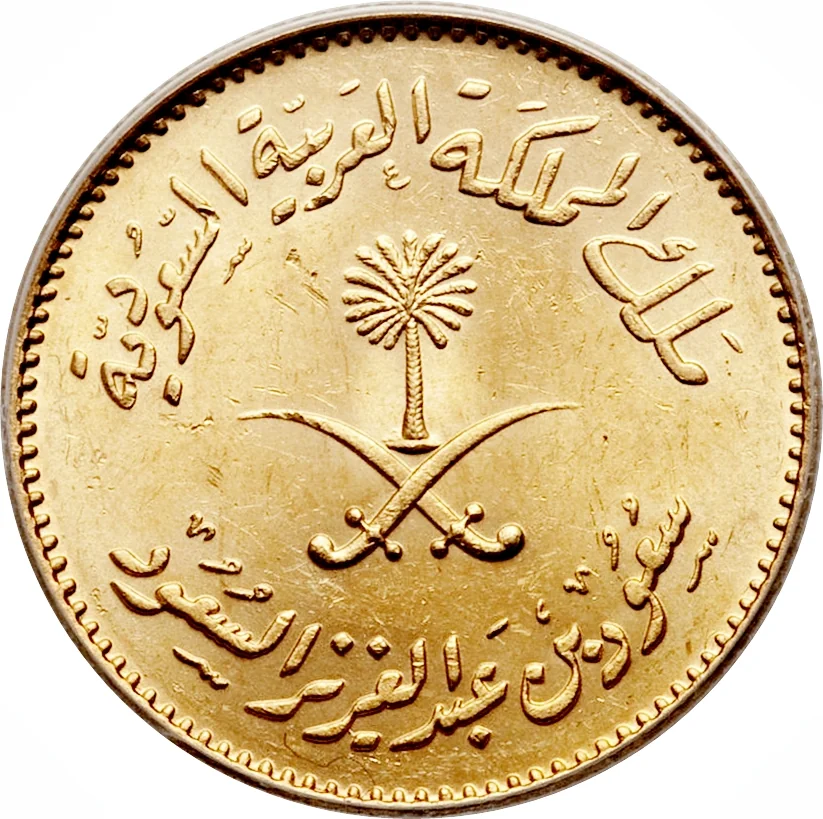
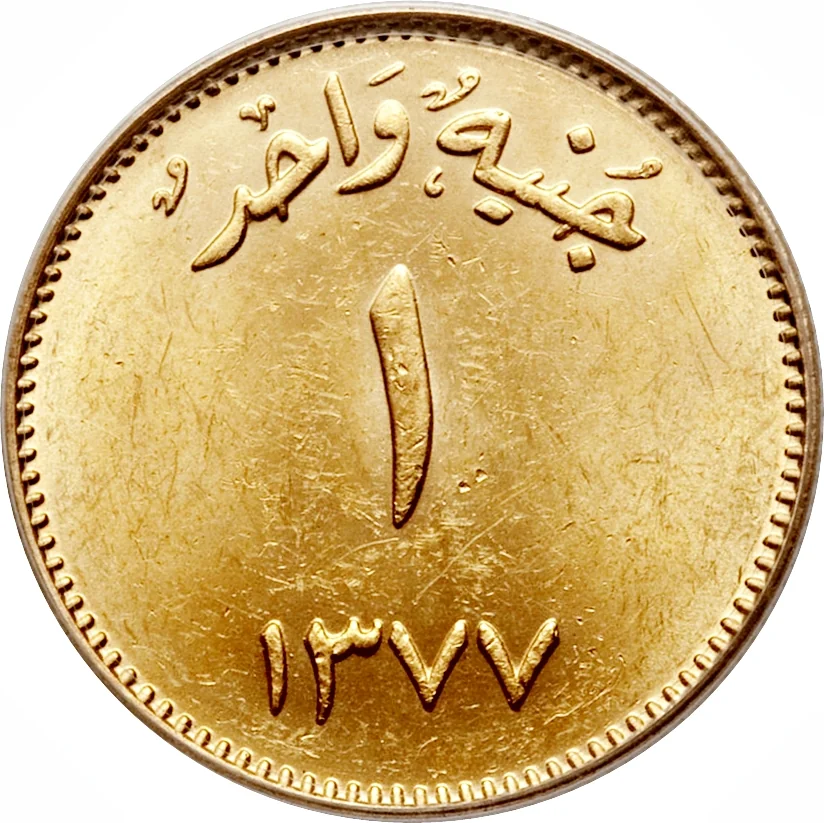
1 Gunayh – Saudi Arabia
Saudi Arabia
Context
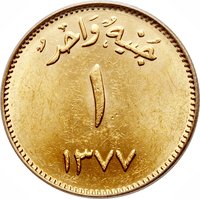
Year: 1957
Islamic (Hijri) Year: 1377
Issuer: Saudi Arabia 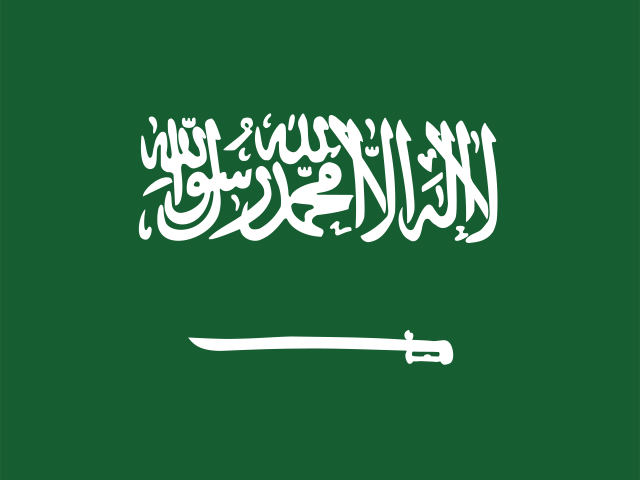
Ruler: Saud bin Abdulaziz
Currency:
(1925—1960)
Demonetized: Yes
Total mintage: 1,579,000
Material
References
KM: #Click to copy to clipboard43
Numista: #56269
Value
Bullion value: $1221.07
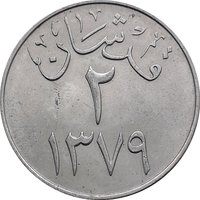
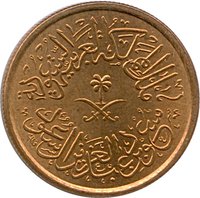
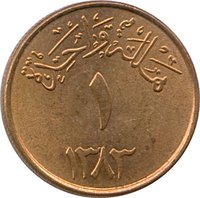
Obverse
Reverse
Edge
Reeded
Categories
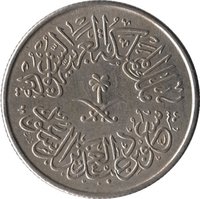
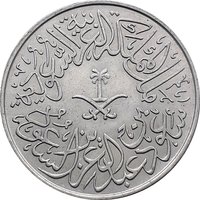
| Symbols> Coat of Arms |
| Object> Cold weapons |
| Plant> Tree |
Mints
| Name | Mark |
|---|---|
| Lahore | — |
Mintings
| Year | Mint Mark | Mintage | Quality | Collection |
|---|---|---|---|---|
| 1957 | — | 1,579,000 |
Historical background
In 1957, Saudi Arabia's currency situation was characterized by a period of transition and stabilization following the economic tumult of the Second World War and its aftermath. The nation, whose wealth was becoming increasingly tied to oil revenues managed by Aramco, did not yet have a central bank. Instead, the Saudi Arabian Monetary Agency (SAMA), established in 1952, was actively working to assert control over the monetary system. The landscape was one of competing currencies: the Saudi silver riyal, known as the riyal franji, circulated alongside various foreign gold coins, particularly the British gold sovereign, which was widely used for large transactions and as a store of value. This bimetallic system, with fluctuating exchange rates between silver and gold, created complexity and instability for commerce.
The core challenge for SAMA was to unify this system under a single, stable national currency. A significant step was taken in 1957 with the issuance of the first paper money in the kingdom's history—the "Pilgrims' Receipts." These were not initially intended as a full-fledged currency but were introduced to facilitate Hajj pilgrims who were bringing large amounts of foreign banknotes. However, their convenience led to broader public acceptance and circulation, marking a crucial move toward a modern paper-based monetary system. Concurrently, SAMA continued its efforts to manage the value of the silver riyal and limit the influence of the gold sovereign in the domestic economy.
Thus, by the end of 1957, Saudi Arabia was on a clear path toward monetary modernization, though the process was incomplete. The successful introduction of paper receipts laid the groundwork for the eventual launch of the Saudi Arabian Riyal as a unified decimal currency in 1960, which would finally replace the circulating foreign gold coins. The actions taken in 1957 were pivotal in consolidating state control over the currency, reducing reliance on precious metal coins, and building the financial infrastructure necessary to manage the kingdom's growing oil income.
The core challenge for SAMA was to unify this system under a single, stable national currency. A significant step was taken in 1957 with the issuance of the first paper money in the kingdom's history—the "Pilgrims' Receipts." These were not initially intended as a full-fledged currency but were introduced to facilitate Hajj pilgrims who were bringing large amounts of foreign banknotes. However, their convenience led to broader public acceptance and circulation, marking a crucial move toward a modern paper-based monetary system. Concurrently, SAMA continued its efforts to manage the value of the silver riyal and limit the influence of the gold sovereign in the domestic economy.
Thus, by the end of 1957, Saudi Arabia was on a clear path toward monetary modernization, though the process was incomplete. The successful introduction of paper receipts laid the groundwork for the eventual launch of the Saudi Arabian Riyal as a unified decimal currency in 1960, which would finally replace the circulating foreign gold coins. The actions taken in 1957 were pivotal in consolidating state control over the currency, reducing reliance on precious metal coins, and building the financial infrastructure necessary to manage the kingdom's growing oil income.
💎 Very Rare