

1 halala – Saudi Arabia
Add to wishlist
Saudi Arabia
Context
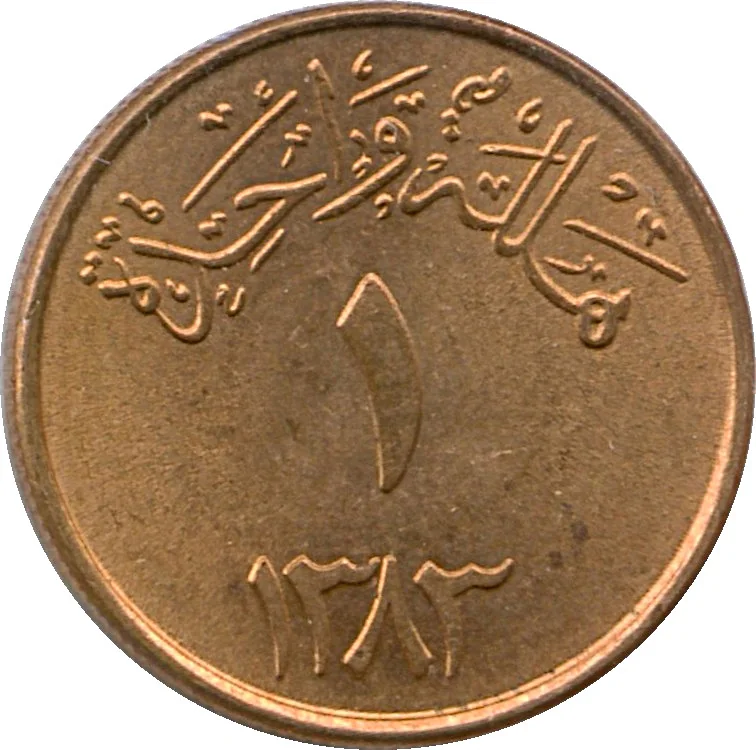
Year: 1963
Islamic (Hijri) Year:: 1383
Issuer: Saudi Arabia
Ruler: Saud bin Abdulaziz
Currency:
(since 1960)
Total mintage: 5,000,000
Material
References
KM: #
Numista: #17085
Value
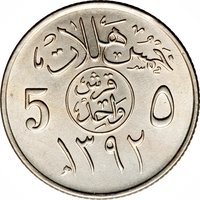
Exchange value: 0.01 SAR
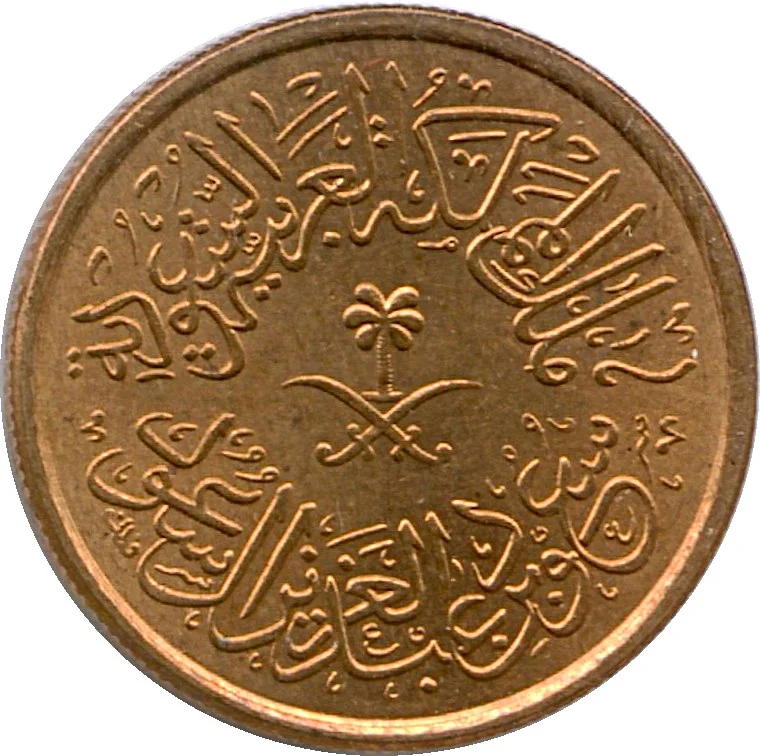
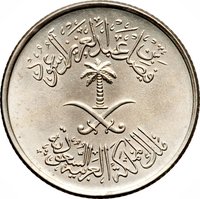
Obverse
Reverse
Edge
Reeded
Categories
| Plant> Tree |
| Symbols> Coat of Arms |
| Object> Cold weapons |
Mints
| Name | Mark |
|---|---|
| Lahore | — |
Mintings
| Year | Mint Mark | Mintage | Quality | Collection |
|---|---|---|---|---|
| 1963 | — | 5,000,000 |
Historical background
In 1963, Saudi Arabia's currency situation was characterized by a transitional phase as the nation modernized its monetary system under the guidance of the Saudi Arabian Monetary Agency (SAMA), established in 1952. The primary currency in circulation was the Saudi Riyal (SAR), which had been officially defined in 1960 as equivalent to 0.197482 grams of fine gold, pegging it to the International Monetary Fund's (IMF) par value system. This formal gold peg provided a stable external value, but the domestic system still contended with the historical circulation of foreign silver coins, particularly the Maria Theresa Thaler, in more remote regions.
The monetary landscape was one of consolidation and centralization. SAMA, acting as the central bank, was actively working to replace the variety of silver and gold coins that had traditionally been used in commerce and pilgrimage-related transactions with a unified, government-issued paper currency. The agency had introduced its first pilgrimage receipts in 1953, which evolved into formal banknotes. By 1963, these notes were gaining broader public acceptance, gradually displacing physical specie and helping to build a more formal banking sector to manage the kingdom's growing oil revenues.
This period was crucial for laying the foundation for the financial system of a modern oil economy. The stable peg of the Riyal, managed by SAMA, provided the predictability necessary for increasing foreign investment and trade as oil exports surged. The successful displacement of commodity money with fiat currency strengthened state sovereignty over monetary policy and facilitated the government's ambitious infrastructure and development projects, setting the stage for the rapid economic transformation that would follow in the coming decades.
The monetary landscape was one of consolidation and centralization. SAMA, acting as the central bank, was actively working to replace the variety of silver and gold coins that had traditionally been used in commerce and pilgrimage-related transactions with a unified, government-issued paper currency. The agency had introduced its first pilgrimage receipts in 1953, which evolved into formal banknotes. By 1963, these notes were gaining broader public acceptance, gradually displacing physical specie and helping to build a more formal banking sector to manage the kingdom's growing oil revenues.
This period was crucial for laying the foundation for the financial system of a modern oil economy. The stable peg of the Riyal, managed by SAMA, provided the predictability necessary for increasing foreign investment and trade as oil exports surged. The successful displacement of commodity money with fiat currency strengthened state sovereignty over monetary policy and facilitated the government's ambitious infrastructure and development projects, setting the stage for the rapid economic transformation that would follow in the coming decades.
🌱 Common