

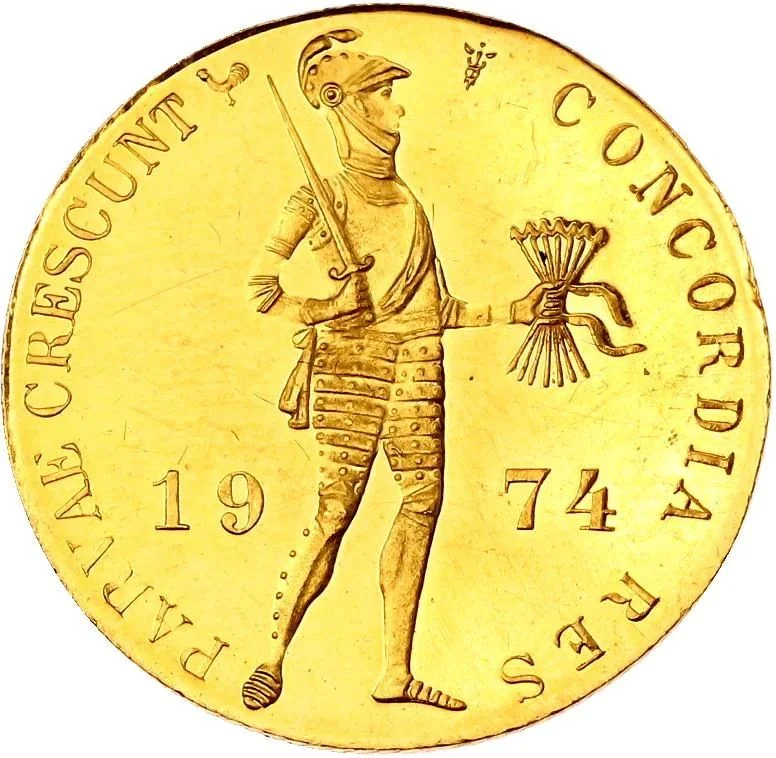
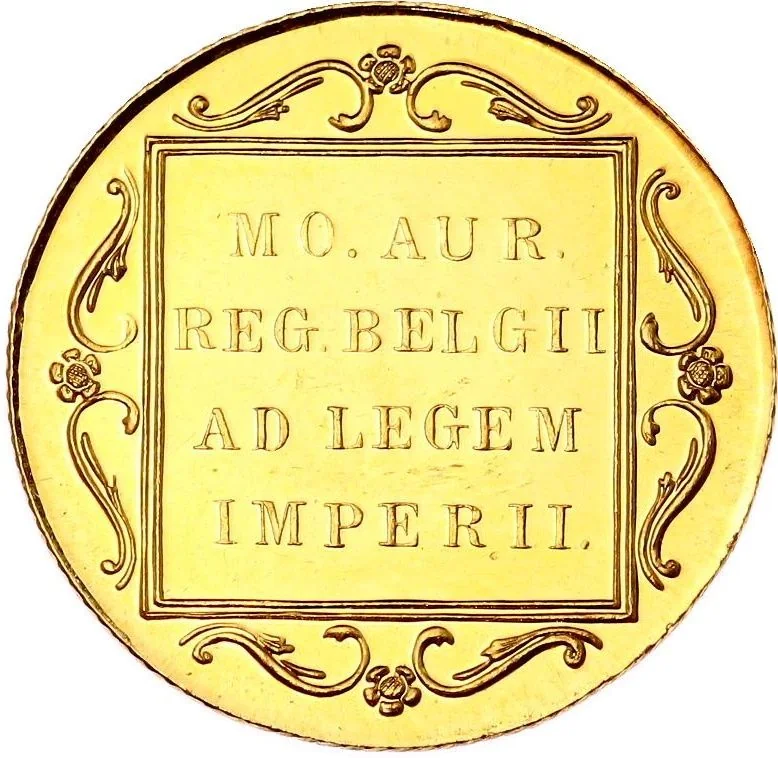
1 ducat – Netherlands
Add to wishlist
Netherlands
Context
Material
References
KM: #
Numista: #56204
Value
Exchange value: 17⁄3 NLG
Bullion value: $535.89
Inflation-adjusted value: 48.55 NLG
Obverse
Reverse
Edge
Slanted reeding
Mints
| Name | Mark |
|---|---|
| Royal Dutch Mint | — |
Mintings
| Year | Mint Mark | Mintage | Quality | Collection |
|---|---|---|---|---|
| 1960 | — | 3,605 | Prooflike | |
| 1972 | — | 29,205 | Prooflike | |
| 1974 | — | 86,558 | Prooflike | |
| 1975 | — | 2,000 | ||
| 1975 | — | 204,788 | Prooflike | |
| 1976 | — | 37,844 | Prooflike | |
| 1978 | — | 29,305 | Prooflike | |
| 1985 | — | 103,863 | Prooflike | |
| 1985 | — | — |
Historical background
In 1960, the Netherlands operated within the framework of the Bretton Woods system, which pegged its currency, the Dutch guilder, to the US dollar at a fixed exchange rate. This stability was a cornerstone of the country's post-war economic policy, known as the "guided economy," where government, employers, and unions collaborated closely. The guilder was considered a strong and reliable "hard currency," a reputation carefully guarded by De Nederlandsche Bank (the central bank). This strength was underpinned by the nation's rapid industrialisation, growing natural gas exports, and a consistent current account surplus.
Domestically, the currency's stability facilitated the renowned "Dutch miracle" of economic reconstruction and rising prosperity. However, this period also saw the beginnings of pressures that would later challenge the fixed regime. Wage demands began to increase significantly, fuelled by tight labour markets and the discovery of vast natural gas reserves, which promised future wealth but also risked inflation. The central bank maintained a strict policy to preserve the guilder's parity, prioritising monetary stability over potentially inflationary government spending.
Internationally, the guilder's fate was tied to the stability of the Bretton Woods system itself. As a founding member of the European Economic Community (EEC) in 1957, the Netherlands was increasingly aligning its economic policies with its European partners. While the 1960s would later see strains on the dollar and the system, the year 1960 represented a point of relative calm and confidence. The Dutch guilder stood as a symbol of the country's recovered economic strength and its commitment to international monetary cooperation, setting the stage for its later pivotal role in European monetary integration.
Domestically, the currency's stability facilitated the renowned "Dutch miracle" of economic reconstruction and rising prosperity. However, this period also saw the beginnings of pressures that would later challenge the fixed regime. Wage demands began to increase significantly, fuelled by tight labour markets and the discovery of vast natural gas reserves, which promised future wealth but also risked inflation. The central bank maintained a strict policy to preserve the guilder's parity, prioritising monetary stability over potentially inflationary government spending.
Internationally, the guilder's fate was tied to the stability of the Bretton Woods system itself. As a founding member of the European Economic Community (EEC) in 1957, the Netherlands was increasingly aligning its economic policies with its European partners. While the 1960s would later see strains on the dollar and the system, the year 1960 represented a point of relative calm and confidence. The Dutch guilder stood as a symbol of the country's recovered economic strength and its commitment to international monetary cooperation, setting the stage for its later pivotal role in European monetary integration.
⭐ Somewhat Rare