

10 escudos – Angola
Add to wishlist
Angola
Context
Years: 1969–1970
Issuer: Angola
Period:
(1951—1975)
Currency:
(1958—1977)
Demonetized: Yes
Total mintage: 4,000,000
Material
Diameter: 28 mm
Weight: 9 g
Thickness: 2 mm
Shape: Round
Composition: Copper-nickel
Technique: Milled
Alignment: Coin alignment
flip
References
KM: #
Numista: #5613
Obverse
Description:
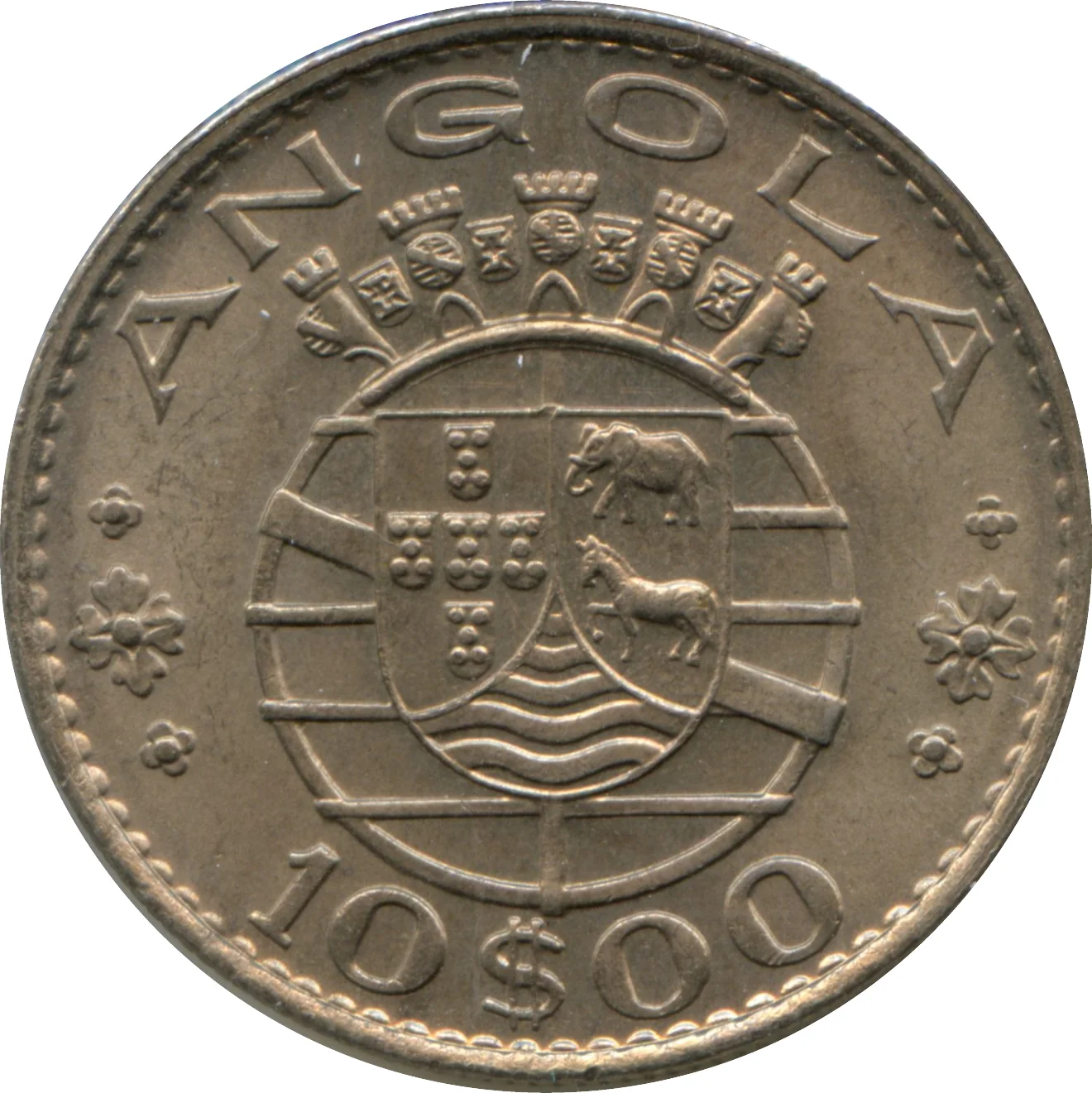
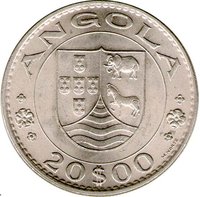
Five crowns, value below.
Inscription:
ANGOLA
10$00
10$00
Translation:
ANGOLA
10 dollars 00 cents
10 dollars 00 cents
Script: Latin
Language: Portuguese
Reverse
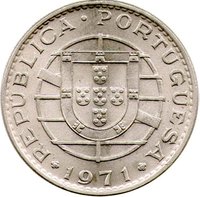
Description:
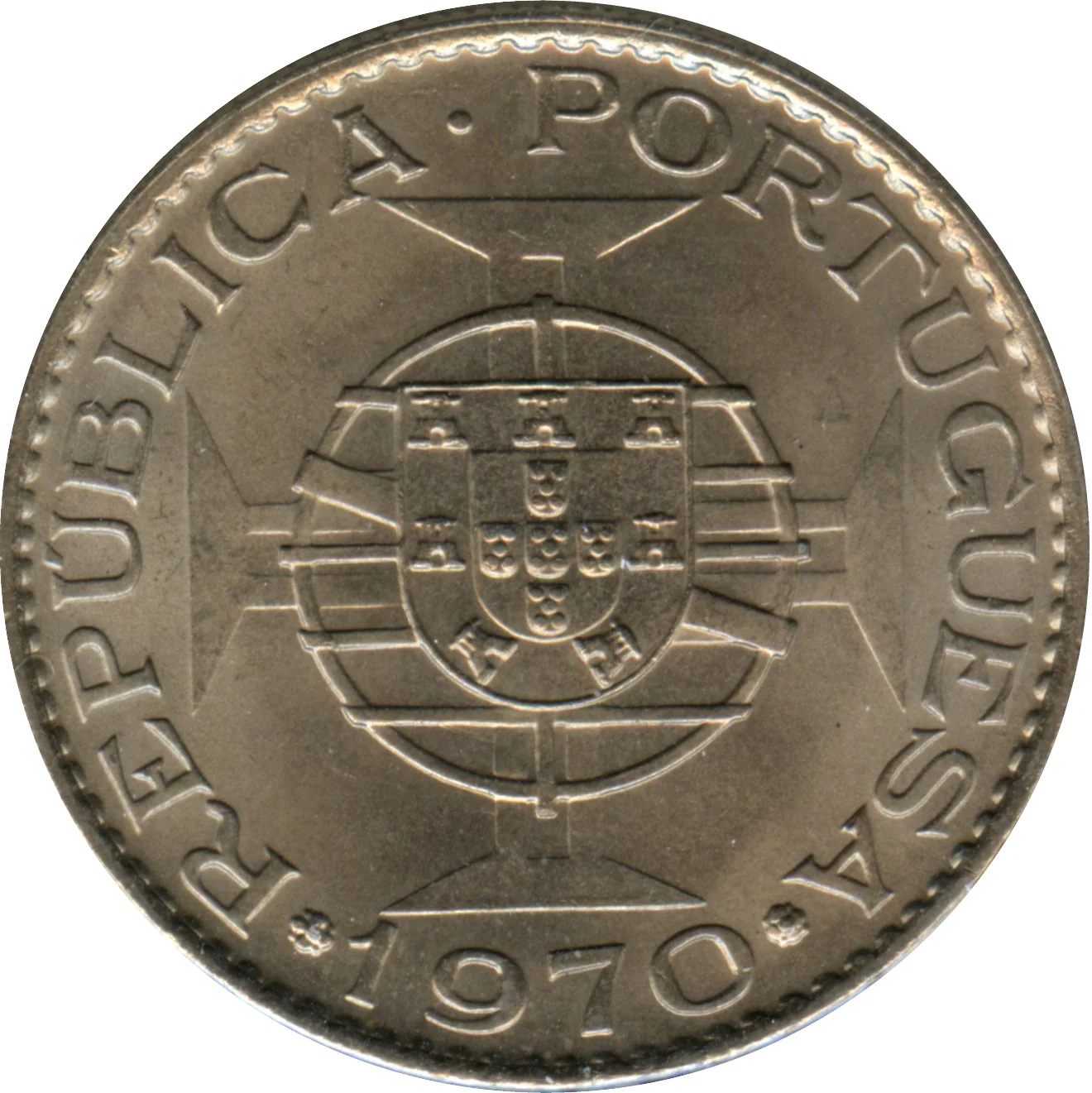
Arms, date beneath.
Inscription:
REPÚBLICA·PORTUGUESA
1970
1970
Translation:
Portuguese Republic
1970
1970
Script: Latin
Language: Portuguese
Edge
Reeded
Categories
| Animal> Elephant |
| Animal> Horse |
| Symbol> Cross |
| Building> Castle or fortification |
| Symbols> Coat of Arms |
Mints
| Name | Mark |
|---|---|
| Imprensa Nacional - Casa da Moeda | — |
Mintings
| Year | Mint Mark | Mintage | Quality | Collection |
|---|---|---|---|---|
| 1969 | — | 3,022,000 | ||
| 1970 | — | 978,000 |
Historical background
In 1969, Angola's currency situation was defined by its status as an overseas province of Portugal, operating under the Portuguese Escudo system. The official currency was the Angolan Escudo (AOE), which had been introduced in 1958 to replace the Angolar and was pegged at par with the Portuguese Escudo (PTE). This monetary union ensured fixed exchange rates and free convertibility with the metropolitan currency, tightly integrating Angola's economy into Portugal's financial system and facilitating the flow of capital and trade within the Escudo Zone. The Banco de Angola, though acting as a central bank, ultimately followed the policies set by Lisbon.
The primary economic driver for this currency stability was Angola's booming export sector, particularly coffee, diamonds, and iron ore. This generated significant foreign exchange reserves, which helped support the escudo's peg. However, the currency system also served Portugal's political aims, reinforcing colonial control and funding the ongoing war against independence movements that had begun in 1961. Military expenditures were substantial, but robust commodity revenues and investment from Portugal helped maintain monetary stability during this period.
Beneath this surface stability, however, were underlying pressures. The economy was highly dependent on volatile global commodity prices and faced structural distortions from colonial policies. Furthermore, the costs of the protracted war and the need for infrastructure development placed fiscal demands on the administration. While not in crisis in 1969, the Angolan escudo's strength was inherently tied to the political fate of Portuguese rule, a system that would be fundamentally challenged and transformed following independence in 1975.
The primary economic driver for this currency stability was Angola's booming export sector, particularly coffee, diamonds, and iron ore. This generated significant foreign exchange reserves, which helped support the escudo's peg. However, the currency system also served Portugal's political aims, reinforcing colonial control and funding the ongoing war against independence movements that had begun in 1961. Military expenditures were substantial, but robust commodity revenues and investment from Portugal helped maintain monetary stability during this period.
Beneath this surface stability, however, were underlying pressures. The economy was highly dependent on volatile global commodity prices and faced structural distortions from colonial policies. Furthermore, the costs of the protracted war and the need for infrastructure development placed fiscal demands on the administration. While not in crisis in 1969, the Angolan escudo's strength was inherently tied to the political fate of Portuguese rule, a system that would be fundamentally challenged and transformed following independence in 1975.
🌱 Very Common