

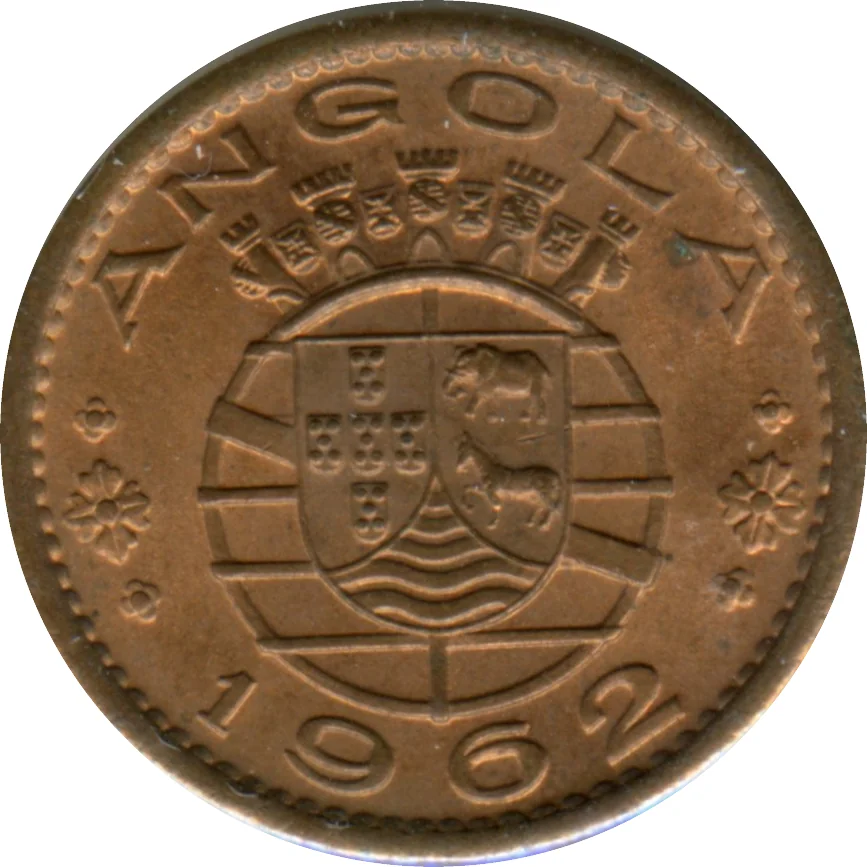
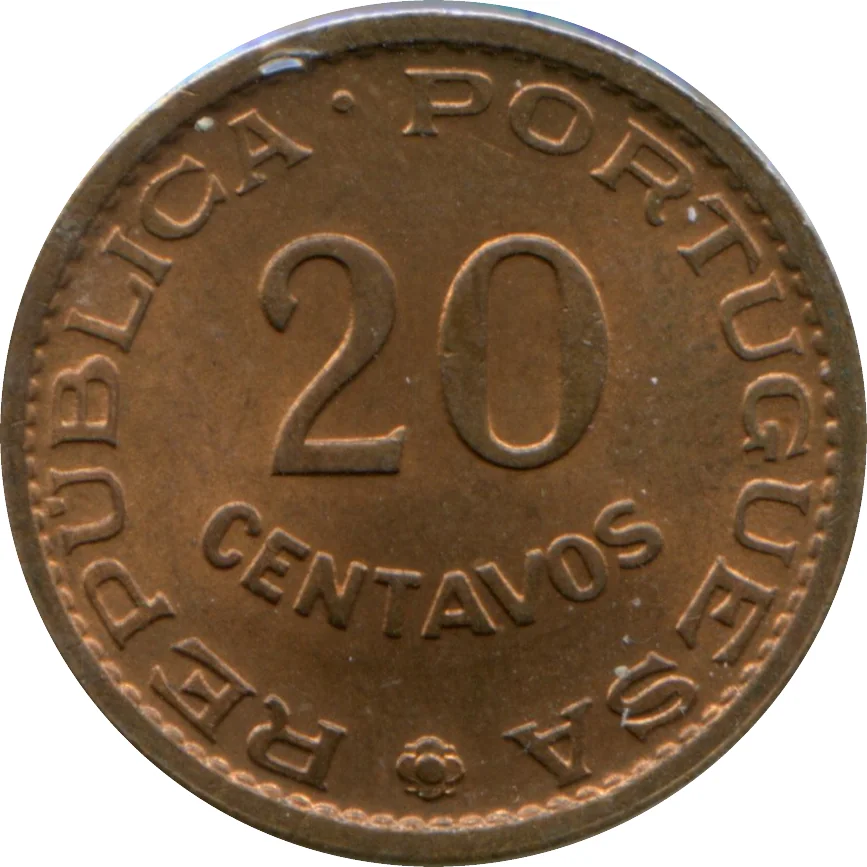
20 centavos – Angola
Add to wishlist
Angola
Obverse
Reverse
Description:
Valuable
Inscription:
REPÚBLICA·PORTUGUESA
20
CENTAVOS
20
CENTAVOS
Translation:
PORTUGUESE REPUBLIC
20
CENTS
20
CENTS
Script: Latin
Language: Portuguese
Edge
Plain
Categories
| Building> Castle or fortification |
| Animal> Elephant |
| Animal> Horse |
| Symbols> Coat of Arms |
Mints
| Name | Mark |
|---|---|
| Imprensa Nacional - Casa da Moeda | — |
Mintings
| Year | Mint Mark | Mintage | Quality | Collection |
|---|---|---|---|---|
| 1962 | — | 3,000,000 |
Historical background
In 1962, Angola was a Portuguese colony, and its currency situation was entirely dictated by Lisbon. The official currency was the Angolan escudo, which had replaced the Angolan real in 1928 and was pegged at par with the Portuguese escudo. This meant Angola operated within Portugal’s broader "Escudo Zone," with monetary policy, issuance of banknotes and coins, and foreign exchange reserves all controlled by the Banco de Portugal and its local branch, the Banco de Angola. The economy was fundamentally structured to serve the metropole, with currency stability aimed at facilitating the export of primary commodities like coffee, diamonds, and cotton to Portugal.
This integrated monetary system existed against the backdrop of a burgeoning armed conflict for independence. The Angolan War of Independence had begun in 1961, and by 1962, nationalist movements were consolidating their efforts. While the colonial currency remained dominant in government-controlled areas, the financial demands of guerrilla warfare led the nascent liberation movements to seek external funding and establish alternative financial networks. However, these did not yet constitute a parallel currency system within the territory itself; the challenge for the nationalists was accessing hard currency for arms and supplies, not issuing competing banknotes.
Therefore, the currency situation in 1962 was one of superficial colonial stability masking deeper political and economic fractures. The Angolan escudo functioned as a tool of colonial administration and economic integration with Portugal, ensuring financial control from Lisbon. Yet, the ongoing war was beginning to strain this system, as security costs rose and the long-term viability of a colonial currency in a conflict zone was increasingly called into question. The stability of the escudo in that year was ultimately an extension of Portuguese authority, which was being directly contested on the battlefield.
This integrated monetary system existed against the backdrop of a burgeoning armed conflict for independence. The Angolan War of Independence had begun in 1961, and by 1962, nationalist movements were consolidating their efforts. While the colonial currency remained dominant in government-controlled areas, the financial demands of guerrilla warfare led the nascent liberation movements to seek external funding and establish alternative financial networks. However, these did not yet constitute a parallel currency system within the territory itself; the challenge for the nationalists was accessing hard currency for arms and supplies, not issuing competing banknotes.
Therefore, the currency situation in 1962 was one of superficial colonial stability masking deeper political and economic fractures. The Angolan escudo functioned as a tool of colonial administration and economic integration with Portugal, ensuring financial control from Lisbon. Yet, the ongoing war was beginning to strain this system, as security costs rose and the long-term viability of a colonial currency in a conflict zone was increasingly called into question. The stability of the escudo in that year was ultimately an extension of Portuguese authority, which was being directly contested on the battlefield.
🌱 Common