

100 francs – Réunion
Add to wishlist
France
Obverse
Description:
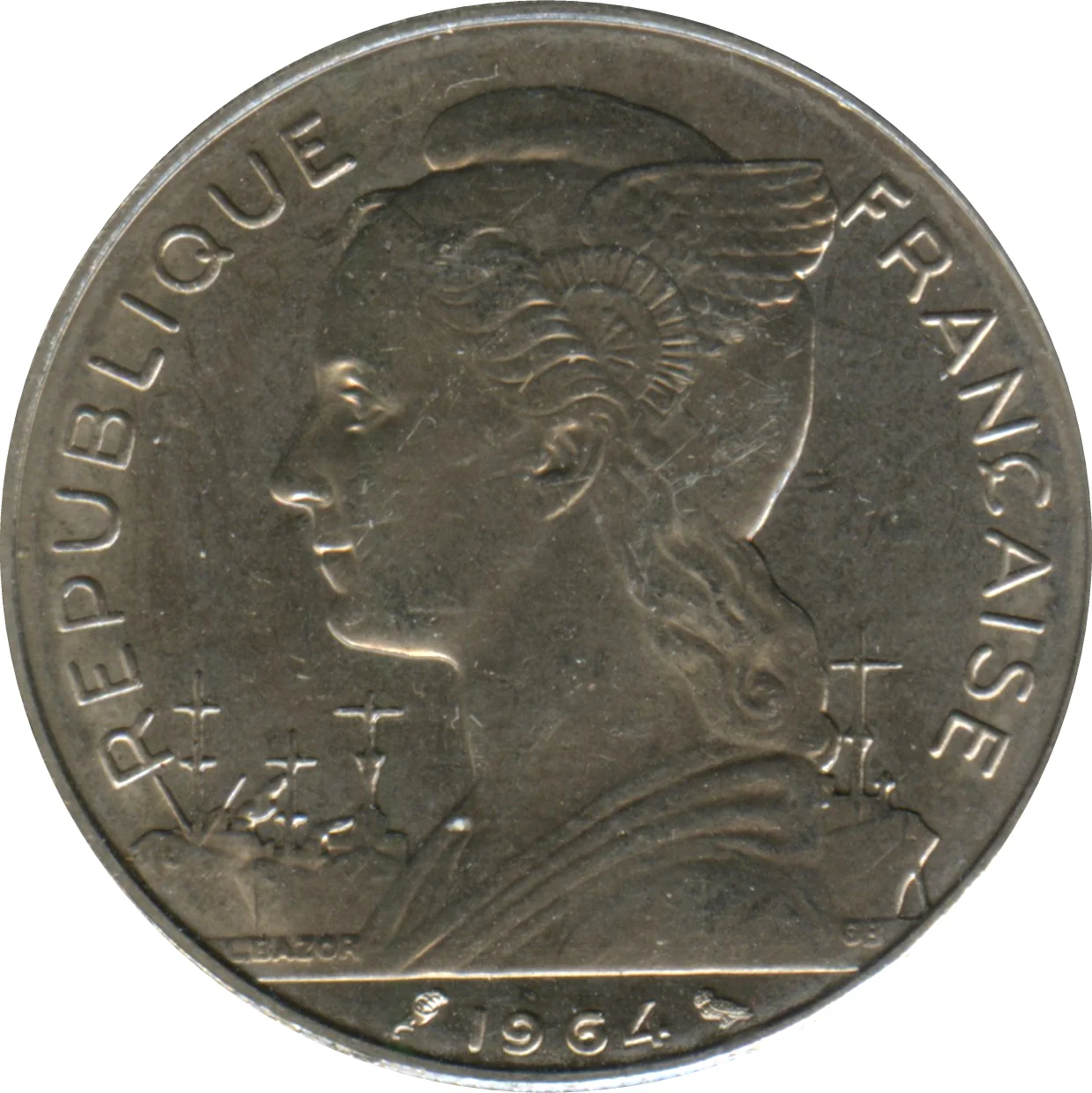
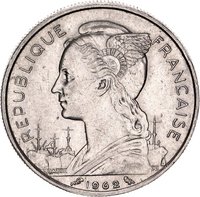
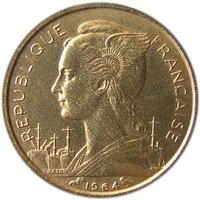
Marianne faces left in a winged Phrygian cap, with four ships behind her and the date below.
Inscription:
REPUBLIQUE FRANÇAISE
L.BAZOR GB
1964
L.BAZOR GB
1964
Translation:
FRENCH REPUBLIC
L.BAZOR GB
1964
L.BAZOR GB
1964
Script: Latin
Language: French
Engraver: Lucien Georges Bazor
Reverse
Description:
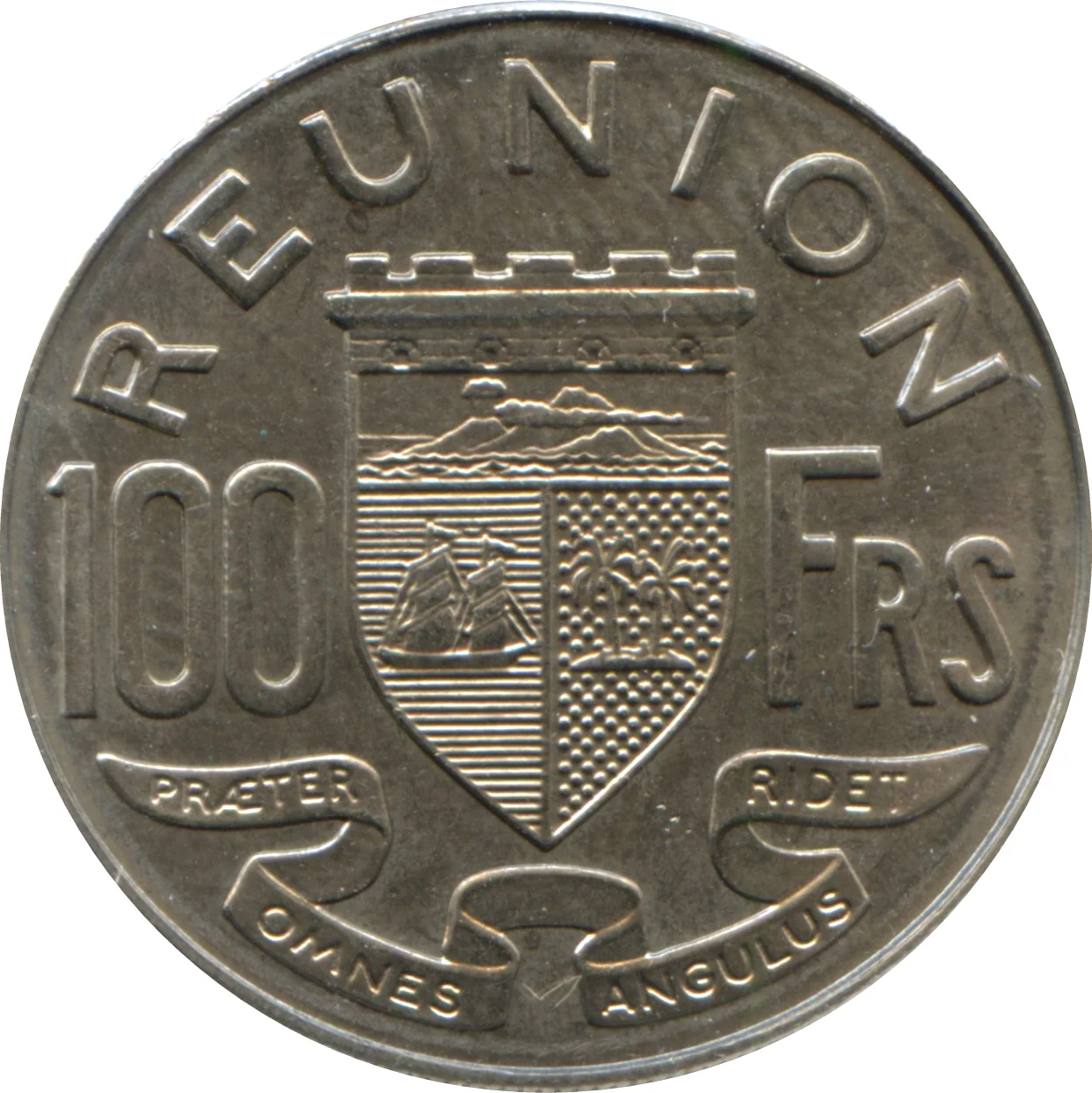
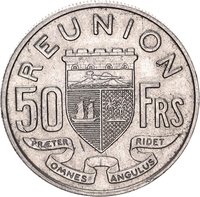
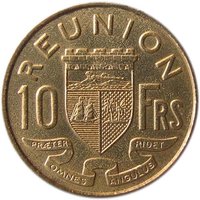
Shield of Saint-Denis divides value, motto "PRÆTER OMNES ANGULUS RIDET" on ribbon below.
Inscription:
REUNION
100 FRS
PRÆTER OMNES ANGULUS RIDET
100 FRS
PRÆTER OMNES ANGULUS RIDET
Translation:
Reunion
100 Francs
Before all others, the corner smiles
100 Francs
Before all others, the corner smiles
Script: Latin
Engraver: Lucien Georges Bazor
Edge
Milled
Categories
| Transportation> Watercraft |
Mints
| Name | Mark |
|---|---|
| Monnaie de Paris | — |
Mintings
| Year | Mint Mark | Mintage | Quality | Collection |
|---|---|---|---|---|
| 1964 | — | 2,000,000 | ||
| 1969 | — | 200,000 | ||
| 1970 | — | 150,000 | ||
| 1971 | — | 200,000 | ||
| 1972 | — | 300,000 | ||
| 1973 | — | 550,000 |
Historical background
In 1964, Réunion, as an overseas department of France, operated under the French Franc (FRF) as its official currency. The island's monetary system was fully integrated with mainland France, meaning the Banque de France issued the currency and set monetary policy. There was no separate Réunionese franc or independent central banking authority; the local economy was directly tied to the financial conditions and stability of the metropolitan franc zone.
This period fell within the era of the Bretton Woods system, where the French franc had a fixed exchange rate. For Réunion, this provided a stable and predictable currency environment, crucial for an economy heavily dependent on imports and subsidies from mainland France. The primary agricultural exports, notably sugar, were traded in francs, insulating local producers from foreign exchange risk but also tethering the island's economic fortunes directly to French fiscal and monetary decisions.
The currency situation reflected Réunion's political status, emphasizing its assimilation into France rather than any monetary autonomy. While this integration guaranteed stability and facilitated trade and aid flows from the metropole, it also meant Réunion had no independent tools to address local economic challenges, such as high unemployment or structural trade deficits. The franc in circulation was identical to that used in Paris, symbolizing and reinforcing the department's profound economic and political connection to its colonial ruler.
This period fell within the era of the Bretton Woods system, where the French franc had a fixed exchange rate. For Réunion, this provided a stable and predictable currency environment, crucial for an economy heavily dependent on imports and subsidies from mainland France. The primary agricultural exports, notably sugar, were traded in francs, insulating local producers from foreign exchange risk but also tethering the island's economic fortunes directly to French fiscal and monetary decisions.
The currency situation reflected Réunion's political status, emphasizing its assimilation into France rather than any monetary autonomy. While this integration guaranteed stability and facilitated trade and aid flows from the metropole, it also meant Réunion had no independent tools to address local economic challenges, such as high unemployment or structural trade deficits. The franc in circulation was identical to that used in Paris, symbolizing and reinforcing the department's profound economic and political connection to its colonial ruler.
🌱 Common