

50 cents (Accession of Elizabeth II) – Australia
Add to wishlist
Circulating commemorative coins
Commemoration: 25th Anniversary of the Accession of Elizabeth II
Series: Royal Related 50 Cent Coins
Australia
Context
Material
Diameter: 31.51 mm
Weight: 15.55 g
Thickness: 3 mm
Shape: Dodecagonal
Standard: Silver half ounce
Technique: Milled
Alignment: Medal alignment
flip
References
KM: #
Numista: #5524
Value
Exchange value: 0.50 AUD
Inflation-adjusted value: 3.84 AUD
Obverse
Description:
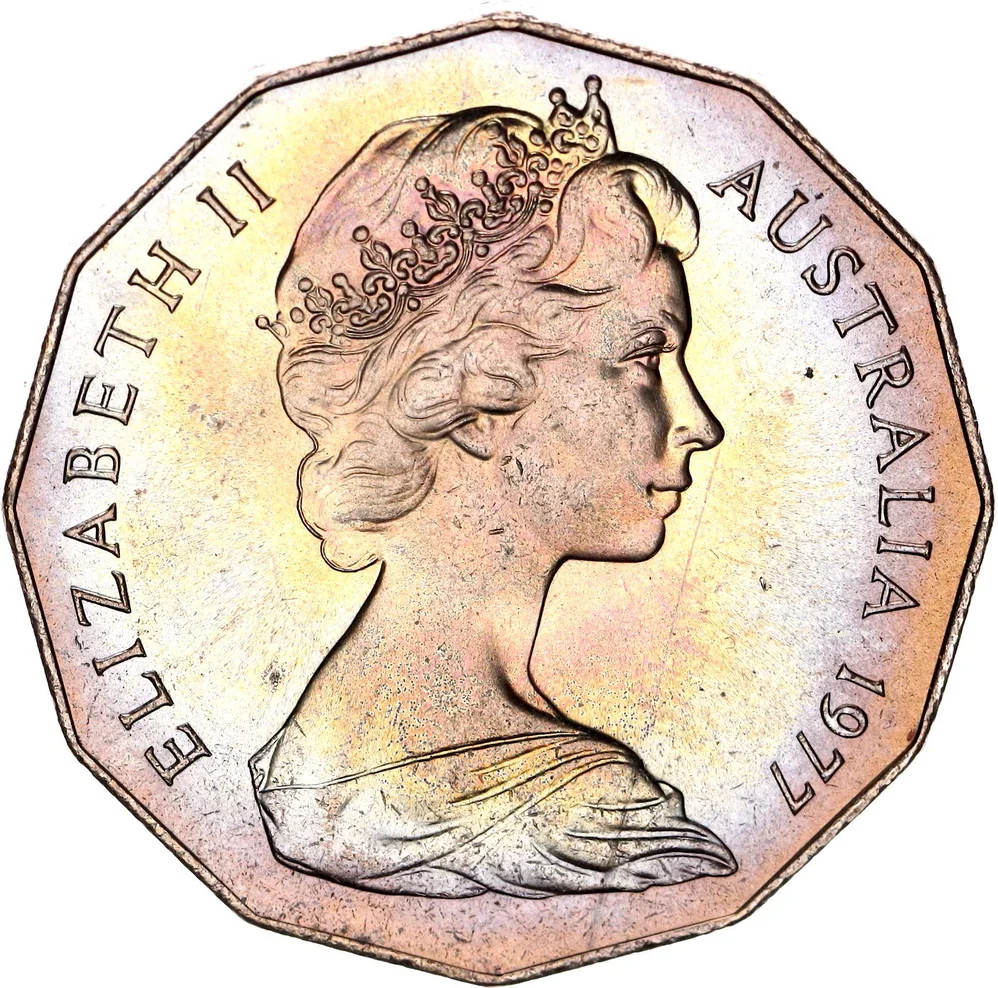
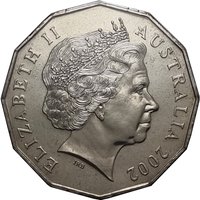
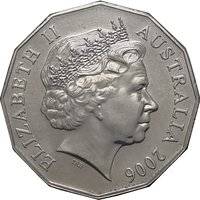
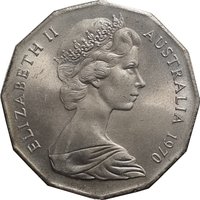
Queen Elizabeth II facing right in the Girls of Great Britain and Ireland Tiara.
Inscription:
ELIZABETH II
AUSTRALIA 1977
AUSTRALIA 1977
Script: Latin
Designer: Arnold Machin
Reverse
Description:
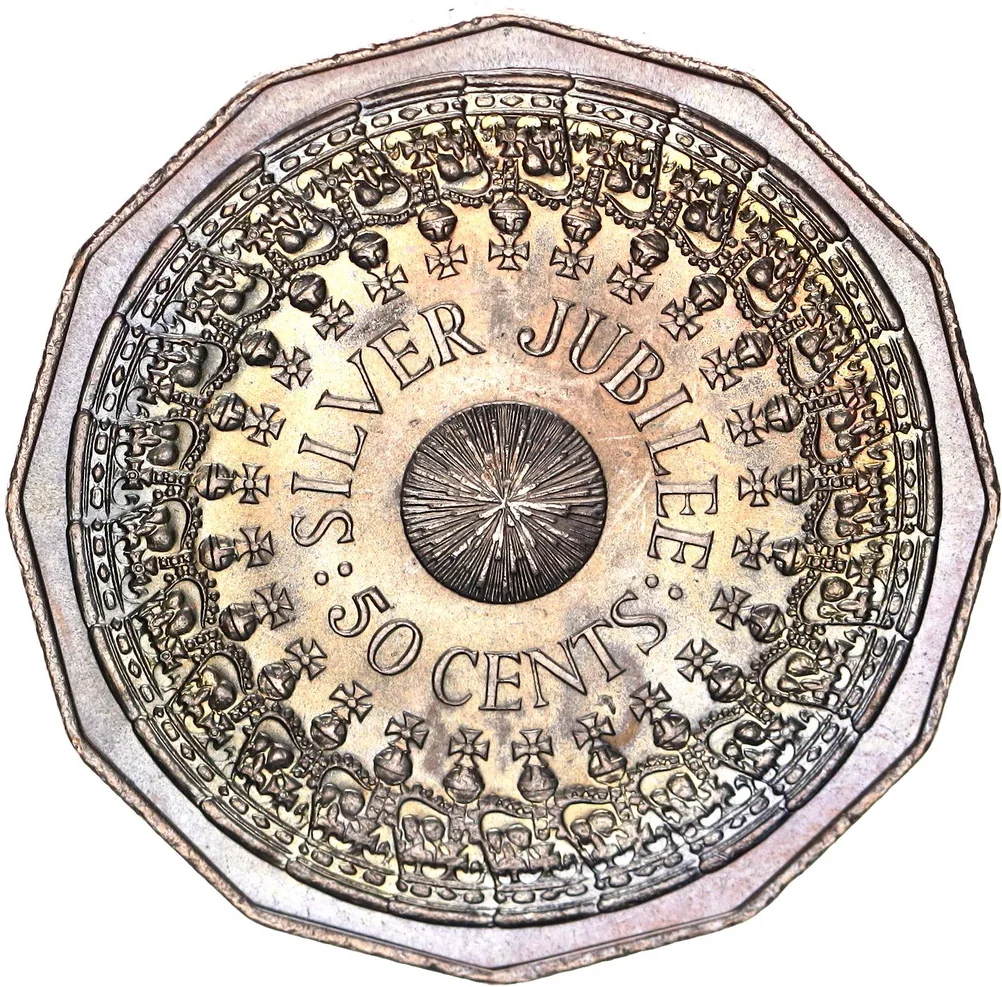
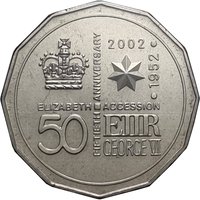
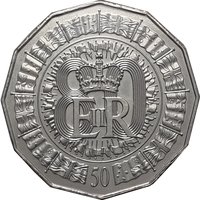
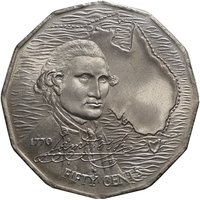
Twenty-five overlapping crowns encircling a starburst with lettering and value.
Inscription:
:SILVER JUBILEE:
50 CENTS
50 CENTS
Script: Latin
Designer: Stuart Devlin
Edge
12 Sided Smooth
Categories
| Event> Coronation |
| Person> Monarch |
Mints
| Name | Mark |
|---|---|
| Royal Australian Mint | — |
Mintings
| Year | Mint Mark | Mintage | Quality | Collection |
|---|---|---|---|---|
| 1977 | — | 128,010 | BU | |
| 1977 | — | 25,067,000 | ||
| 1977 | — | 55,006 | Proof |
Historical background
In 1977, Australia's currency situation was defined by its recent transition to a managed float and the lingering effects of the breakdown of the Bretton Woods system. Since September 1974, the Australian dollar had been pegged to a trade-weighted basket of currencies, a system designed to provide more stability than a peg to the US dollar alone. However, this period was one of significant economic strain, with high inflation (around 13% in 1975) and unemployment, which placed consistent downward pressure on the currency. The Reserve Bank of Australia was actively intervening to manage the value within set boundaries, a challenging task amidst global oil shocks and domestic wage-price spirals.
The year itself was a transitional calm before a significant policy shift. The Australian dollar remained within a relatively narrow band against its trade-weighted index, but underlying pressures were building. The election of the Fraser government in late 1975 had ushered in a more market-oriented approach, and there was growing debate about moving to a more flexible exchange rate to better absorb external shocks. While the formal move to a float was still six years away (in 1983), 1977 represented a period where the limitations of the managed basket peg were becoming increasingly apparent to policymakers and economists.
Consequently, the currency landscape in 1977 was one of controlled vulnerability. The peg provided a nominal anchor but required substantial foreign exchange reserves to defend, and it often conflicted with domestic monetary policy goals. The experience of this period, marked by the difficulty of maintaining a fixed parity in a world of volatile capital flows and high inflation, was crucial in building the intellectual and practical case for the financial deregulation and the free float that would follow in the 1980s.
The year itself was a transitional calm before a significant policy shift. The Australian dollar remained within a relatively narrow band against its trade-weighted index, but underlying pressures were building. The election of the Fraser government in late 1975 had ushered in a more market-oriented approach, and there was growing debate about moving to a more flexible exchange rate to better absorb external shocks. While the formal move to a float was still six years away (in 1983), 1977 represented a period where the limitations of the managed basket peg were becoming increasingly apparent to policymakers and economists.
Consequently, the currency landscape in 1977 was one of controlled vulnerability. The peg provided a nominal anchor but required substantial foreign exchange reserves to defend, and it often conflicted with domestic monetary policy goals. The experience of this period, marked by the difficulty of maintaining a fixed parity in a world of volatile capital flows and high inflation, was crucial in building the intellectual and practical case for the financial deregulation and the free float that would follow in the 1980s.
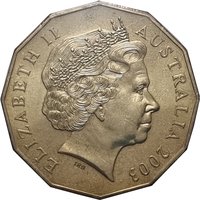
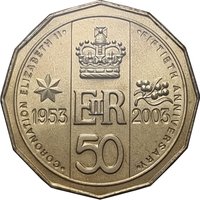
Series: Royal Related 50 Cent Coins
🌱 Very Common