

2 francs – French Settlements of Oceania
Add to wishlist
France
Context
Year: 1949
Country: France
Issuer: French Settlements of Oceania
Period:
(1946—1957)
Currency:
(since 1945)
Demonetized: Yes
Total mintage: 1,000,000
Material
References
KM: #
Numista: #5487
Value
Exchange value: 2 XPF
Obverse
Description:
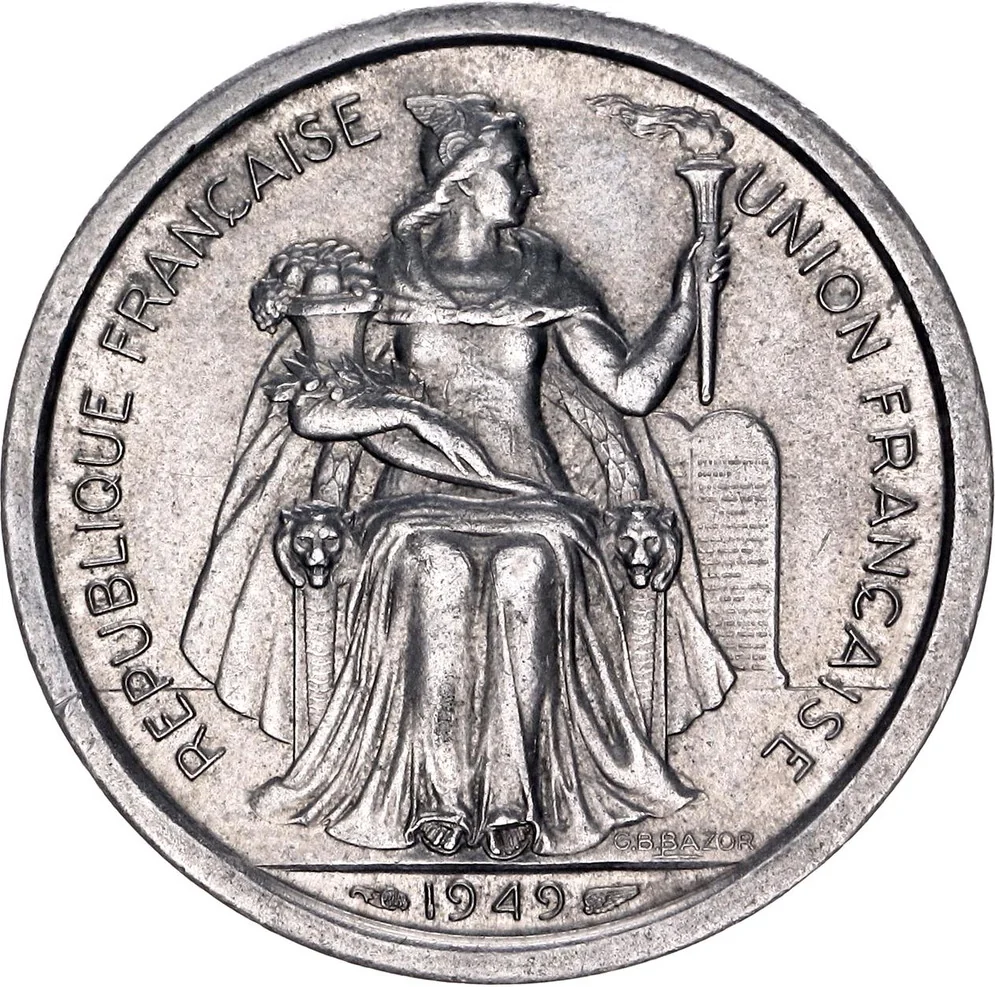
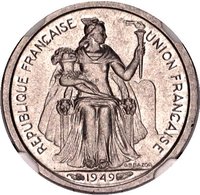
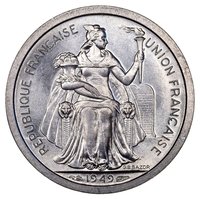
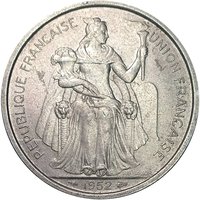
Seated Marianne wears a Phrygian cap and holds a cornucopia of fruits and a lighted torch.
Inscription:
REPUBLIQUE FRANÇAISE UNION FRANÇAISE
G.B.BAZOR
1949
G.B.BAZOR
1949
Translation:
FRENCH REPUBLIC FRENCH UNION
G.B.BAZOR
1949
G.B.BAZOR
1949
Script: Latin
Language: French
Engraver: Lucien Georges Bazor
Reverse
Description:
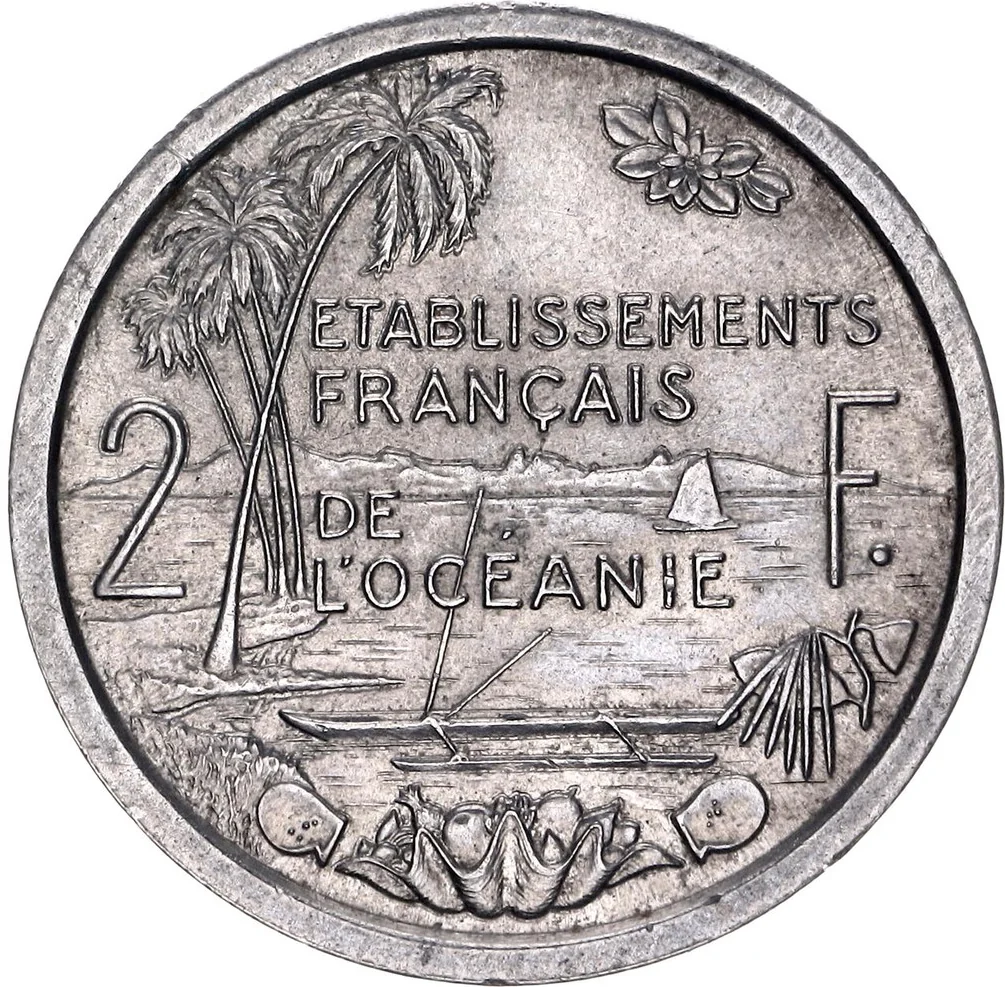
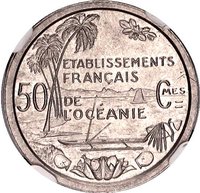
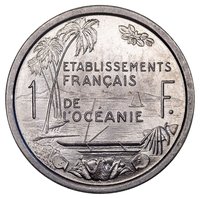
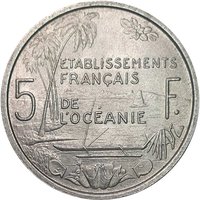
Tropical island with palm trees, boats, fruit, and a flower.
Inscription:
ETABLISSEMENTS
FRANÇAIS
2 F.
DE
L'OCÉANIE
FRANÇAIS
2 F.
DE
L'OCÉANIE
Translation:
FRENCH ESTABLISHMENTS
IN OCEANIA
2 F.
IN OCEANIA
2 F.
Script: Latin
Language: French
Engraver: Lucien Georges Bazor
Edge
Plain
Categories
| Symbol> Allegory |
| Plant> Tree |
| Symbol> Cornucopia |
| Transportation> Watercraft |
Mints
| Name | Mark |
|---|---|
| Monnaie de Paris | — |
Mintings
| Year | Mint Mark | Mintage | Quality | Collection |
|---|---|---|---|---|
| 1949 | — | 1,000,000 |
Historical background
In 1949, the currency situation in the French Settlements of Oceania (today's French Polynesia) was defined by its status as part of the French Union. The official legal tender was the CFP franc (Franc des Colonies Françaises du Pacifique), a distinct currency created in December 1945 alongside its West African counterpart. Its creation was a direct result of the Bretton Woods agreements, as France sought to stabilize its colonial monetary zones by pegging them to a strong anchor. The CFP franc was initially set at a fixed exchange rate with the French metropolitan franc, but its value was ultimately pegged to the US dollar, reflecting the dominant American economic influence in the Pacific region post-World War II.
This monetary system served two key purposes for France. First, it provided economic stability and facilitated trade within France's Pacific territories (New Caledonia, French Polynesia, and later the Wallis and Futuna islands) by creating a common, secure currency. Second, it firmly integrated these distant territories into the French economic sphere, ensuring monetary dependence on Paris. The fixed exchange rate and guarantee by the French Treasury meant that the currency's value was shielded from local volatility, but it also meant that monetary policy was entirely directed from France, with no local autonomy.
The year 1949 fell within a period of transition and reconstruction. World War II had profoundly disrupted the islands, with the US military presence bringing an influx of dollars and goods. The post-war reassertion of French administrative control included re-establishing the CFP franc as the sole official currency to normalize the economy. While the CFP franc provided stability, the local economy remained constrained by its dependency on France and the limited scope of its island-based, export-oriented economy (primarily copra and vanilla). Thus, the currency situation mirrored the political reality: the settlements were firmly under French sovereignty, with their economic life regulated by a currency managed from the other side of the world.
This monetary system served two key purposes for France. First, it provided economic stability and facilitated trade within France's Pacific territories (New Caledonia, French Polynesia, and later the Wallis and Futuna islands) by creating a common, secure currency. Second, it firmly integrated these distant territories into the French economic sphere, ensuring monetary dependence on Paris. The fixed exchange rate and guarantee by the French Treasury meant that the currency's value was shielded from local volatility, but it also meant that monetary policy was entirely directed from France, with no local autonomy.
The year 1949 fell within a period of transition and reconstruction. World War II had profoundly disrupted the islands, with the US military presence bringing an influx of dollars and goods. The post-war reassertion of French administrative control included re-establishing the CFP franc as the sole official currency to normalize the economy. While the CFP franc provided stability, the local economy remained constrained by its dependency on France and the limited scope of its island-based, export-oriented economy (primarily copra and vanilla). Thus, the currency situation mirrored the political reality: the settlements were firmly under French sovereignty, with their economic life regulated by a currency managed from the other side of the world.
🌱 Common