

10 escudos – Portugal
Add to wishlist
Portugal
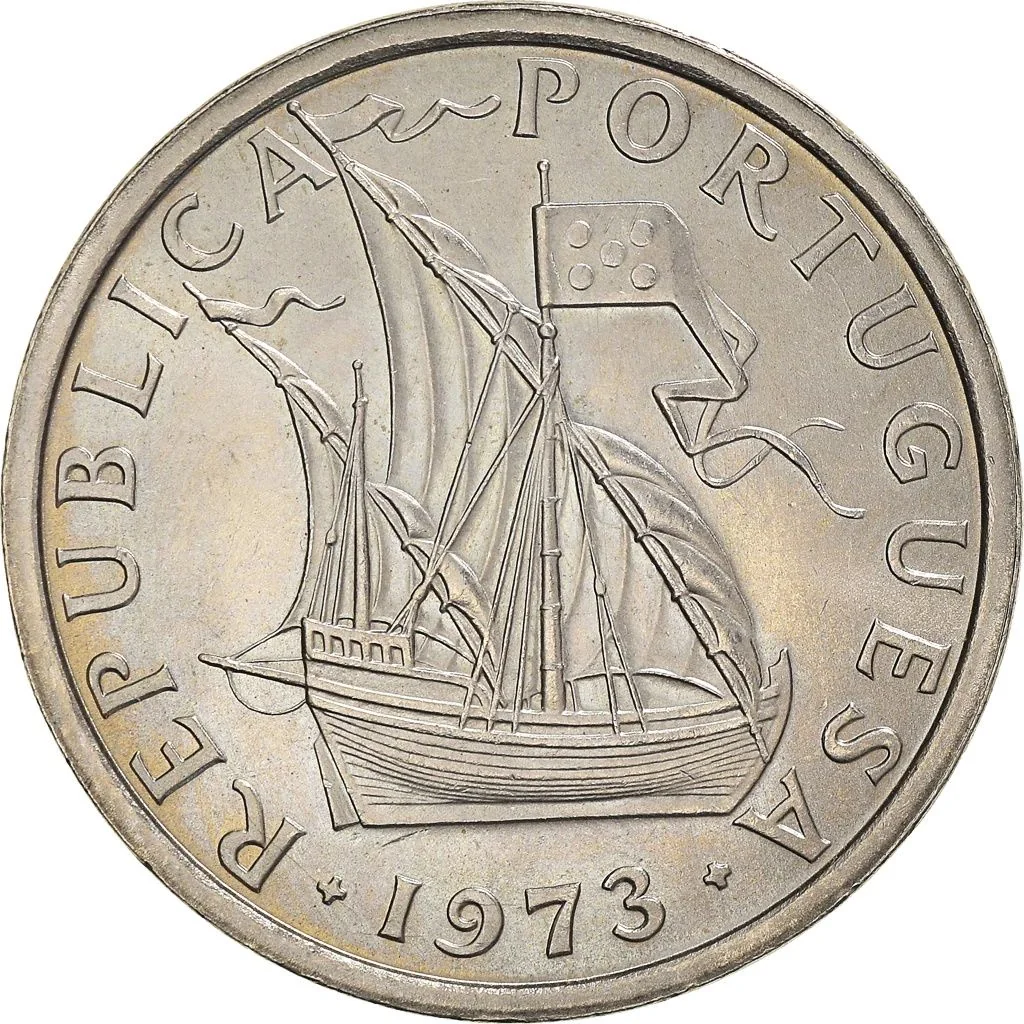
Obverse
Description:
Sailing ship right, country name encircling, date beneath.
Inscription:
REPUBLICA PORTUGUESA
+ 1974 +
+ 1974 +
Translation:
Portuguese Republic
+ 1974 +
+ 1974 +
Script: Latin
Language: Portuguese
Engraver: Jaime Martins Barata
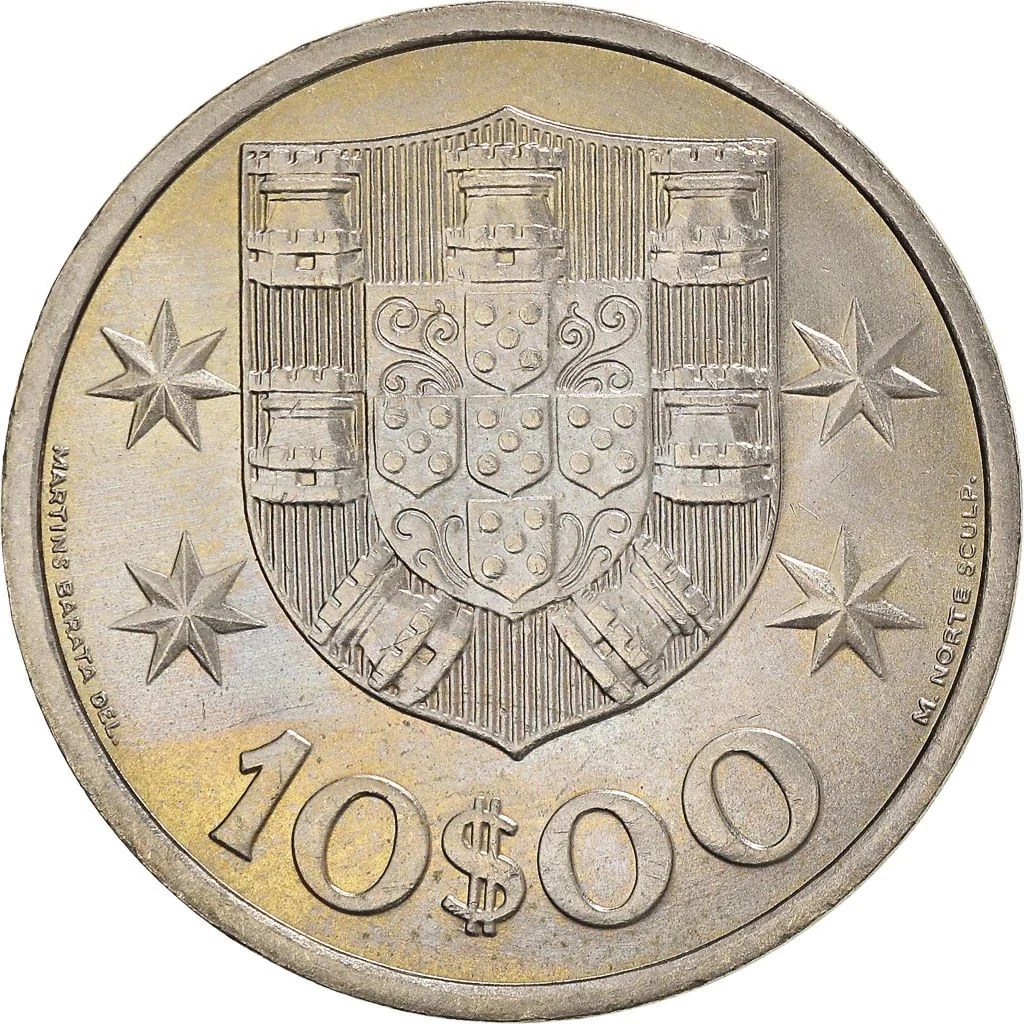
Reverse
Description:
Arms of Portugal, four stars, value beneath.
Inscription:
10$00
MARTINS BARATA DEL.
M. NORTE SCULP.
MARTINS BARATA DEL.
M. NORTE SCULP.
Script: Latin
Engraver: Marcelino Norte de Almeida
Edge
Smooth with inscription
Legend:
ESPERANÇA FRATERNIDADE CONFIANÇA
Translation:
Hope Fraternity Trust
Language: Portuguese
Categories
| Symbols> Coat of Arms |
| Transportation> Watercraft |
Mints
| Name | Mark |
|---|---|
| Imprensa Nacional - Casa da Moeda | — |
Mintings
| Year | Mint Mark | Mintage | Quality | Collection |
|---|---|---|---|---|
| 1971 | — | 3,876,209 | ||
| 1972 | — | 2,693,638 | ||
| 1973 | — | 5,418,415 | ||
| 1974 | — | 4,042,812 |
Historical background
In 1971, Portugal's currency situation was intrinsically linked to the Estado Novo regime's economic policies and the pressures of maintaining its colonial empire. The national currency, the Portuguese escudo, operated under a fixed exchange rate system, pegged to the U.S. dollar as part of the Bretton Woods international monetary framework. This peg provided a degree of stability but required strict capital controls and management by the Banco de Portugal to defend the escudo's value, particularly as the costs of the colonial wars in Africa (Angola, Mozambique, and Guinea-Bissau) placed an immense and growing strain on public finances and foreign reserves.
Domestically, the economy was characterized by protectionism, state-directed investment, and limited industrialization. While the 1960s had seen some growth through tourism and emigration remittances, the financial burden of the wars was unsustainable. The government was forced to run budget deficits, leading to inflationary pressures that the fixed exchange rate and controlled economy struggled to mask. This created a fragile equilibrium where the official escudo value was maintained, but underlying economic weaknesses were becoming increasingly apparent.
Internationally, 1971 was a pivotal year due to the collapse of the Bretton Woods system. President Nixon's suspension of the dollar's convertibility into gold in August triggered a global currency crisis, leading to the realignment of major currencies. For Portugal, this external shock destabilized the foundation of its own fixed peg. The escudo was subsequently revalued slightly against the dollar in the Smithsonian Agreement in December, but this was a temporary measure. The event exposed the vulnerability of Portugal's managed currency to global forces, compounding its existing colonial-era fiscal pressures and setting the stage for the profound economic challenges that would follow the 1974 Carnation Revolution.
Domestically, the economy was characterized by protectionism, state-directed investment, and limited industrialization. While the 1960s had seen some growth through tourism and emigration remittances, the financial burden of the wars was unsustainable. The government was forced to run budget deficits, leading to inflationary pressures that the fixed exchange rate and controlled economy struggled to mask. This created a fragile equilibrium where the official escudo value was maintained, but underlying economic weaknesses were becoming increasingly apparent.
Internationally, 1971 was a pivotal year due to the collapse of the Bretton Woods system. President Nixon's suspension of the dollar's convertibility into gold in August triggered a global currency crisis, leading to the realignment of major currencies. For Portugal, this external shock destabilized the foundation of its own fixed peg. The escudo was subsequently revalued slightly against the dollar in the Smithsonian Agreement in December, but this was a temporary measure. The event exposed the vulnerability of Portugal's managed currency to global forces, compounding its existing colonial-era fiscal pressures and setting the stage for the profound economic challenges that would follow the 1974 Carnation Revolution.
Series: System 1969-1980

🌱 Very Common