

Peru
Context

Material
References
KM: #Click to copy to clipboard208
Numista: #5414
Value
Exchange value: 0.01 PEH
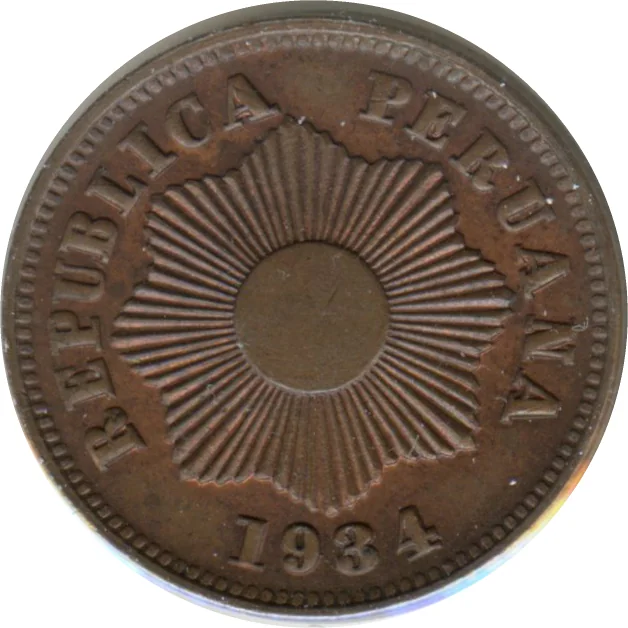
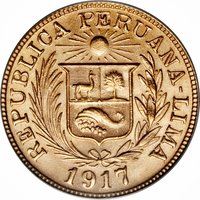
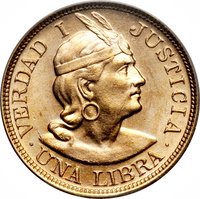
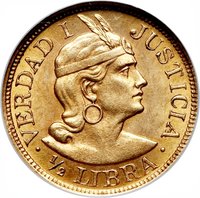
Obverse
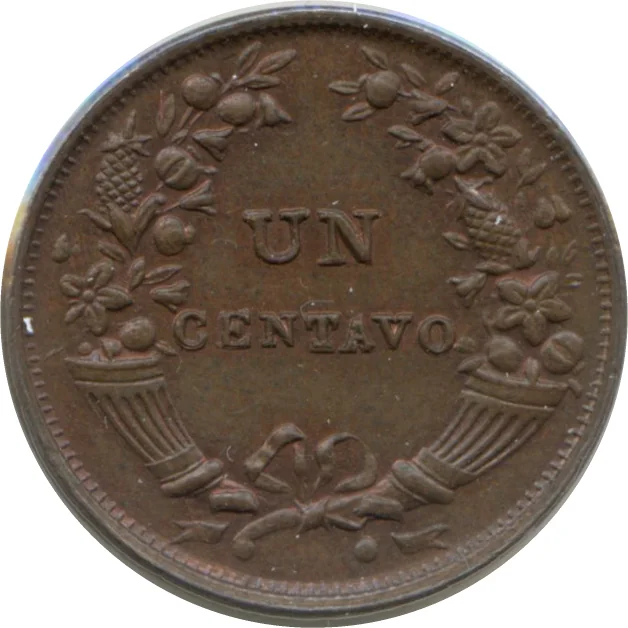
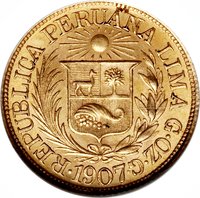
Reverse
Edge
Plain
Categories
| Symbol> Cornucopia |
| Symbol> Sun |
Mintings
| Year | Mint Mark | Mintage | Quality | Collection |
|---|---|---|---|---|
| 1901 | — | 600,000 | ||
| 1904 | — | 1,000,000 | ||
| 1933 | — | 275,000 | ||
| 1934 | — | 1,185,000 | ||
| 1935 | — | 1,105,000 | ||
| 1936 | — | 565,000 | ||
| 1937 | — | 735,000 | ||
| 1938 | — | 340,000 | ||
| 1939 | — | 1,225,000 | ||
| 1940 | — | 1,250,000 | ||
| 1941 | — | 2,593,000 |
Historical background
In 1901, Peru's currency situation was characterized by a complex and unstable bimetallic system, a legacy of the economic devastation following the War of the Pacific (1879-1884). The national currency, the Peruvian silver sol, coexisted with gold coins like the libra and the inca, but their exchange rates fluctuated wildly based on the volatile international market prices for silver and gold. This period was marked by a severe shortage of circulating coinage, as the government's ability to mint new money was hampered by a crippling external debt and the loss of key revenue-generating territories. The scarcity of small-denomination coins for daily transactions became a significant public grievance and a brake on economic recovery.
The root of the instability lay in the global decline of silver's value, which caused the silver sol to depreciate sharply against the gold-backed currencies of Peru's major trading partners, like Great Britain. This depreciation increased the real burden of Peru's substantial foreign debt, which was denominated in gold sterling. Internally, the system was chaotic; various older coins from the colonial era and earlier republic circulated alongside newer issues, and banknotes from private banks had limited acceptance and credibility. The state's fiscal weakness meant it could not guarantee convertibility, leading to widespread discounting and confusion in commerce.
Consequently, the year 1901 fell within a protracted period of monetary debate and transition. Policymakers and economists increasingly recognized the necessity of moving to a gold standard to stabilize the currency, attract foreign investment, and facilitate trade. This pressure would culminate in the major monetary reform of 1901, Law No. 1537 (passed in December), which formally adopted the gold standard and introduced the libra peruana (Peruvian pound) as the new monetary unit, pegged to the British pound sterling. Thus, 1901 stands as the pivotal final year of the chaotic silver-based system and the legislative beginning of a new, though challenging, era of gold-backed currency.
The root of the instability lay in the global decline of silver's value, which caused the silver sol to depreciate sharply against the gold-backed currencies of Peru's major trading partners, like Great Britain. This depreciation increased the real burden of Peru's substantial foreign debt, which was denominated in gold sterling. Internally, the system was chaotic; various older coins from the colonial era and earlier republic circulated alongside newer issues, and banknotes from private banks had limited acceptance and credibility. The state's fiscal weakness meant it could not guarantee convertibility, leading to widespread discounting and confusion in commerce.
Consequently, the year 1901 fell within a protracted period of monetary debate and transition. Policymakers and economists increasingly recognized the necessity of moving to a gold standard to stabilize the currency, attract foreign investment, and facilitate trade. This pressure would culminate in the major monetary reform of 1901, Law No. 1537 (passed in December), which formally adopted the gold standard and introduced the libra peruana (Peruvian pound) as the new monetary unit, pegged to the British pound sterling. Thus, 1901 stands as the pivotal final year of the chaotic silver-based system and the legislative beginning of a new, though challenging, era of gold-backed currency.
🌱 Common