

Peru
Context

Material
References
KM: #Click to copy to clipboard209
Numista: #46645
Value
Exchange value: 5 PEH
Bullion value: $611.16
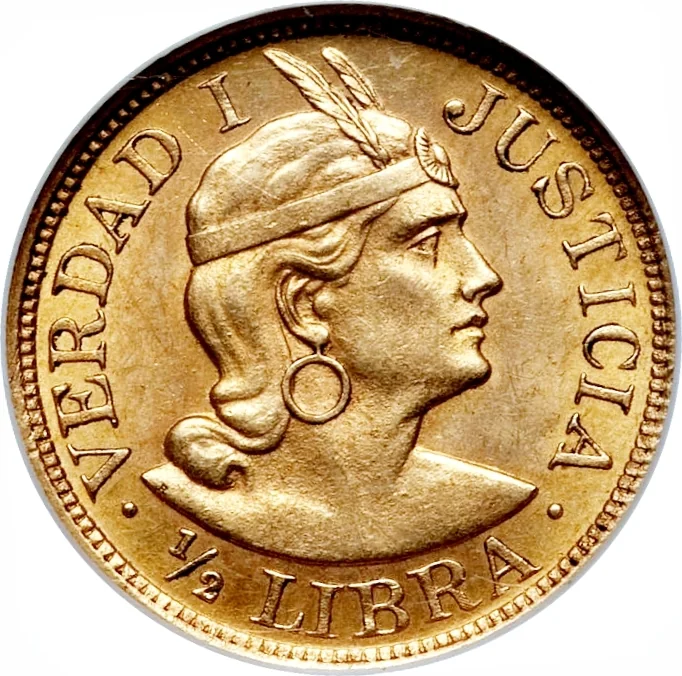
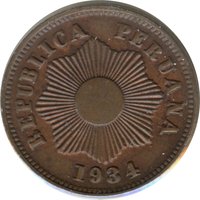
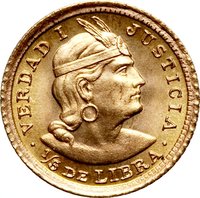
Obverse
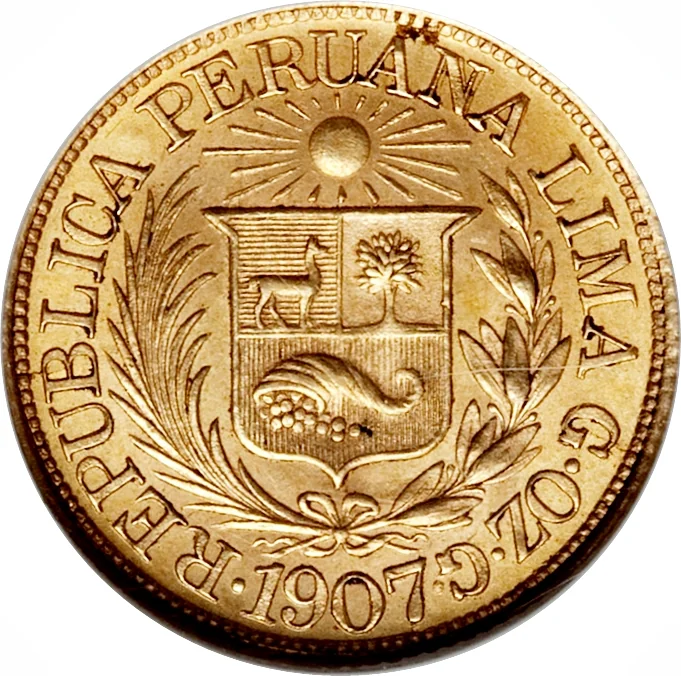
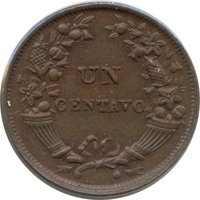
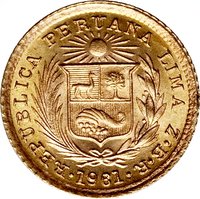
Reverse
Edge
Reeded
Mints
| Name | Mark |
|---|---|
| Lima | — |
Mintings
| Year | Mint Mark | Mintage | Quality | Collection |
|---|---|---|---|---|
| 1902 | RF | 7,800 | ||
| 1903 | RF | 7,245 | ||
| 1904 | RF | 8,360 | ||
| 1905 | GF | — | ||
| 1905 | RF | 8,010 | ||
| 1906 | GF | 9,176 | ||
| 1907 | GG | — | ||
| 1908 | GG | 8,180 | ||
| 1953 | BR | 9,210 | ||
| 1955 | BR | 14,000 | ||
| 1961 | BR | 752 | ||
| 1962 | BR | 4,286 | ||
| 1963 | BR | 908 | ||
| 1964 | BR | 10,000 | ||
| 1965 | BR | 5,490 | ||
| 1966 | BR | 44,000 | ||
| 1967 | BR | — | ||
| 1968 | BR | — | ||
| 1968 | BB | 14,000 | ||
| 1969 | BB | 4,400 |
Historical background
In 1902, Peru's currency situation was characterized by a complex and unstable bimetallic system, a legacy of the 19th century. The official monetary standard was the libra peruana de oro (Peruvian gold pound), established in 1897, which was pegged to the British pound sterling. However, in practice, the silver sol remained the dominant medium of everyday commerce. This created a dual system where transactions were often conducted in silver, while international trade and government finances were anchored to gold, leading to frequent exchange rate fluctuations and uncertainty.
The core instability stemmed from the global decline in the value of silver, which had been precipitous since the 1870s. As the intrinsic silver content of the sol coins fell far below their nominal gold value, it encouraged the hoarding and export of full-weight gold coins, causing a scarcity of sound currency in the domestic economy. This depreciation of silver also eroded the government's fiscal position, as it collected taxes in depreciating silver but had to service foreign debts in gold-backed currencies. The result was persistent inflationary pressure and a lack of public confidence in the monetary system.
Recognizing these profound weaknesses, the Peruvian government was actively moving toward major reform. The year 1902 fell within a period of study and transition that would culminate in the pivotal monetary law of December 1901, which took full effect in 1903. This reform officially abandoned bimetallism, demonetized silver, and placed Peru on a strict gold standard with a new currency unit, the libra peruana, backed by gold reserves. Thus, the situation in 1902 was one of the final years of a problematic silver-based circulation, poised on the brink of a decisive shift toward a modern, gold-backed monetary system intended to stabilize the economy and attract foreign investment.
The core instability stemmed from the global decline in the value of silver, which had been precipitous since the 1870s. As the intrinsic silver content of the sol coins fell far below their nominal gold value, it encouraged the hoarding and export of full-weight gold coins, causing a scarcity of sound currency in the domestic economy. This depreciation of silver also eroded the government's fiscal position, as it collected taxes in depreciating silver but had to service foreign debts in gold-backed currencies. The result was persistent inflationary pressure and a lack of public confidence in the monetary system.
Recognizing these profound weaknesses, the Peruvian government was actively moving toward major reform. The year 1902 fell within a period of study and transition that would culminate in the pivotal monetary law of December 1901, which took full effect in 1903. This reform officially abandoned bimetallism, demonetized silver, and placed Peru on a strict gold standard with a new currency unit, the libra peruana, backed by gold reserves. Thus, the situation in 1902 was one of the final years of a problematic silver-based circulation, poised on the brink of a decisive shift toward a modern, gold-backed monetary system intended to stabilize the economy and attract foreign investment.
⭐ Rare