

Obverse
Description:
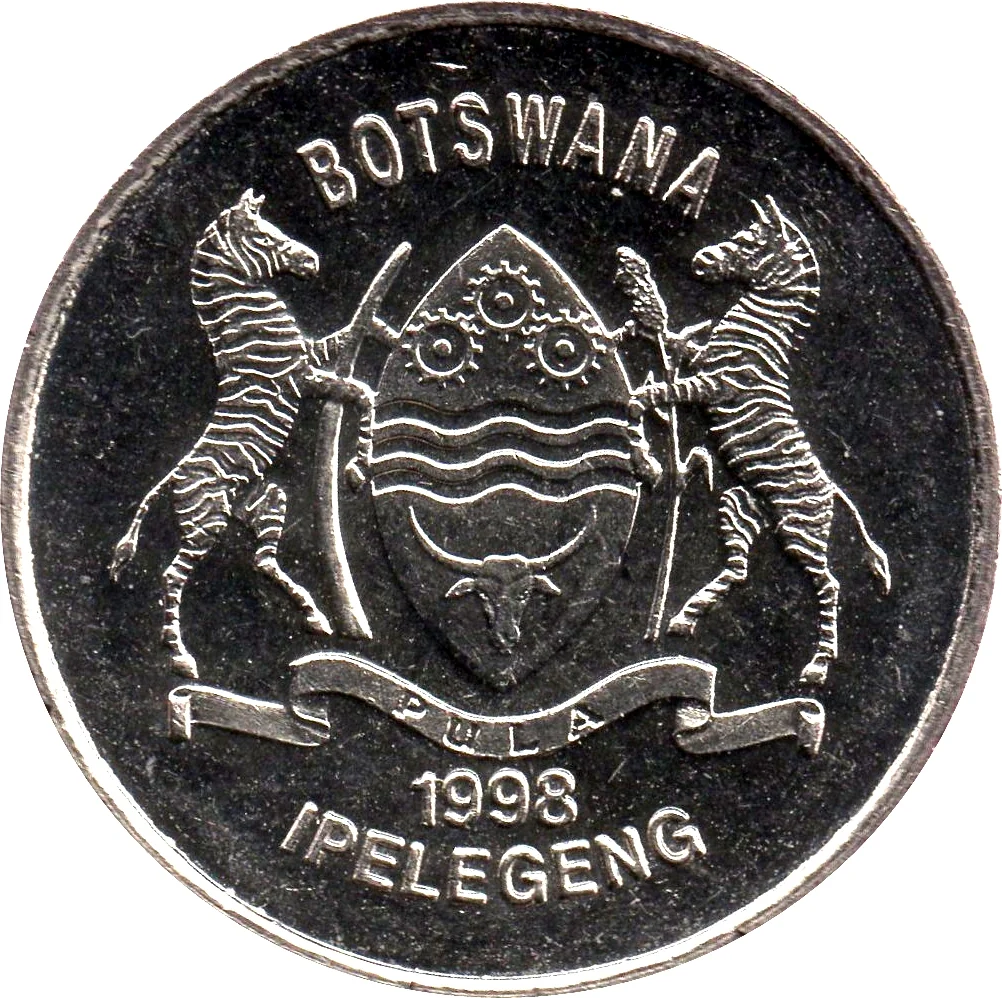
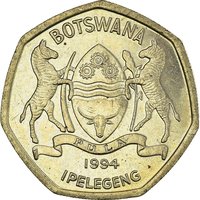
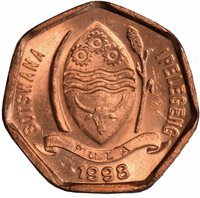
National arms, supported, dated below.
Inscription:
BOTSWANA
PULA
1998
IPELEGENG
PULA
1998
IPELEGENG
Translation:
BOTSWANA
RAIN
1998
SELF-RELIANCE
RAIN
1998
SELF-RELIANCE
Script: Latin
Engraver: Michael Hibbit
Reverse
Description:
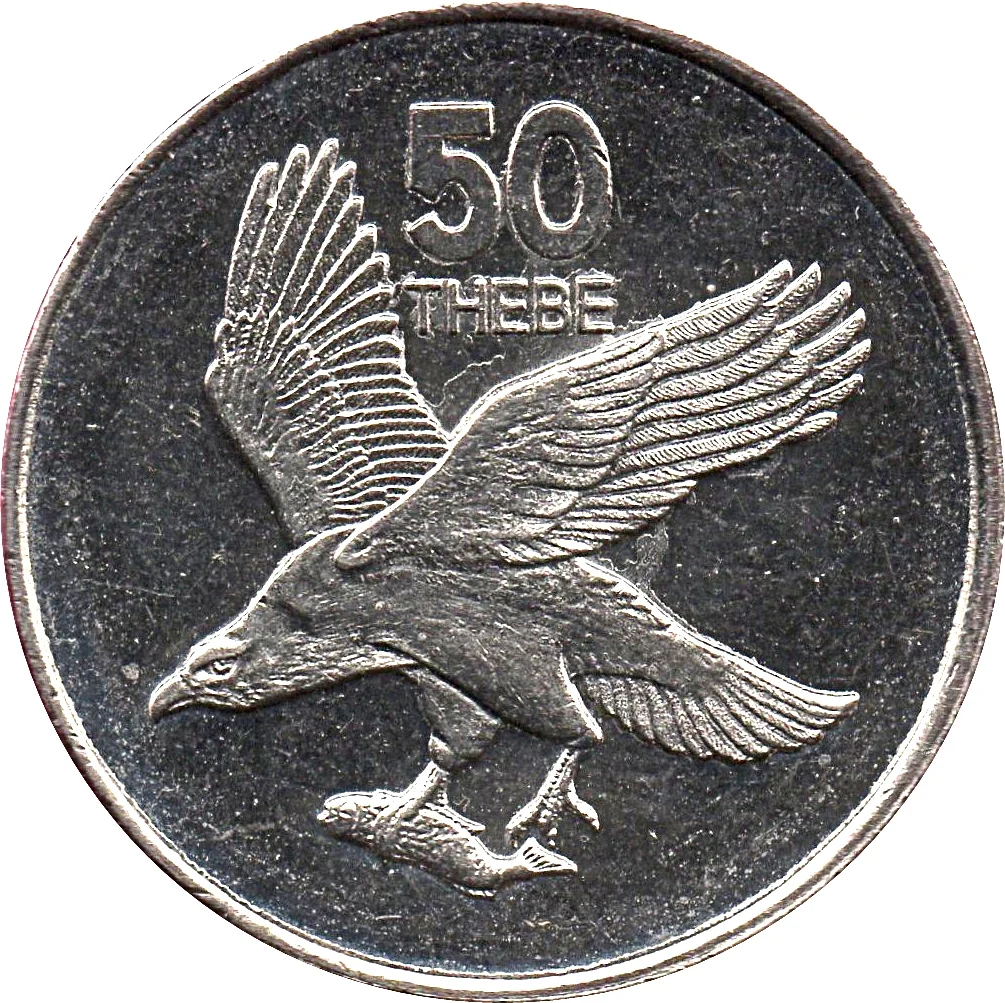
African Fish Eagle flying left with fish, denomination above.
Inscription:
50
THEBE
THEBE
Script: Latin
Engraver: Michael Hibbit
Edge
Plain
Mints
| Name | Mark |
|---|---|
| South African Mint | — |
Mintings
| Year | Mint Mark | Mintage | Quality | Collection |
|---|---|---|---|---|
| 1996 | — | — | ||
| 1998 | — | — | ||
| 2001 | — | — |
Historical background
In 1996, Botswana's currency situation was characterized by stability and strength, underpinned by the country's prudent economic management and robust diamond-led growth. The national currency, the Pula (meaning "rain" in Setswana), was pegged to a basket of currencies, primarily the South African Rand and the International Monetary Fund's Special Drawing Rights (SDRs). This basket peg, managed by the Bank of Botswana, was a strategic tool to mitigate volatility from any single currency, particularly the Rand, given Botswana's close trade ties with South Africa. The Pula had undergone a controlled devaluation in 1992, and by 1996, this adjustment had helped maintain export competitiveness without triggering significant inflationary pressures.
The broader economic context was exceptionally positive. Botswana was experiencing sustained economic expansion, fueled by its diamond wealth under a sound governance framework. This generated substantial foreign exchange reserves, which provided a formidable buffer for the currency peg and instilled strong confidence in the Pula, both domestically and internationally. Inflation, a historical concern, was being effectively managed, having fallen from double digits in the early 1990s to around 10% by mid-decade, contributing to the currency's real stability.
Consequently, 1996 did not see a currency crisis or major monetary policy shift. Instead, it represented a period of consolidation within a longer narrative of macroeconomic success. The focus of authorities was on maintaining the disciplined framework that had served the country well, using diamond revenues to build reserves and invest for future diversification. The stability of the Pula was a key indicator of Botswana's exceptional economic story in a region often plagued by currency instability, setting the stage for the country's eventual credit rating upgrades and reputation as Africa's model of sustained economic management.
The broader economic context was exceptionally positive. Botswana was experiencing sustained economic expansion, fueled by its diamond wealth under a sound governance framework. This generated substantial foreign exchange reserves, which provided a formidable buffer for the currency peg and instilled strong confidence in the Pula, both domestically and internationally. Inflation, a historical concern, was being effectively managed, having fallen from double digits in the early 1990s to around 10% by mid-decade, contributing to the currency's real stability.
Consequently, 1996 did not see a currency crisis or major monetary policy shift. Instead, it represented a period of consolidation within a longer narrative of macroeconomic success. The focus of authorities was on maintaining the disciplined framework that had served the country well, using diamond revenues to build reserves and invest for future diversification. The stability of the Pula was a key indicator of Botswana's exceptional economic story in a region often plagued by currency instability, setting the stage for the country's eventual credit rating upgrades and reputation as Africa's model of sustained economic management.
🌱 Very Common