

5 thebe – Botswana
Add to wishlist
Botswana
Context
Material
Diameter: 16.9 mm
Weight: 2.41 g
Thickness: 1.75 mm
Shape: Heptagonal
Technique: Milled
Alignment: Medal alignment
flip
References
KM: #
Numista: #5410
Value
Exchange value: 0.05 BWP
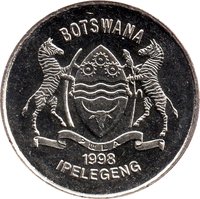
Obverse
Description:
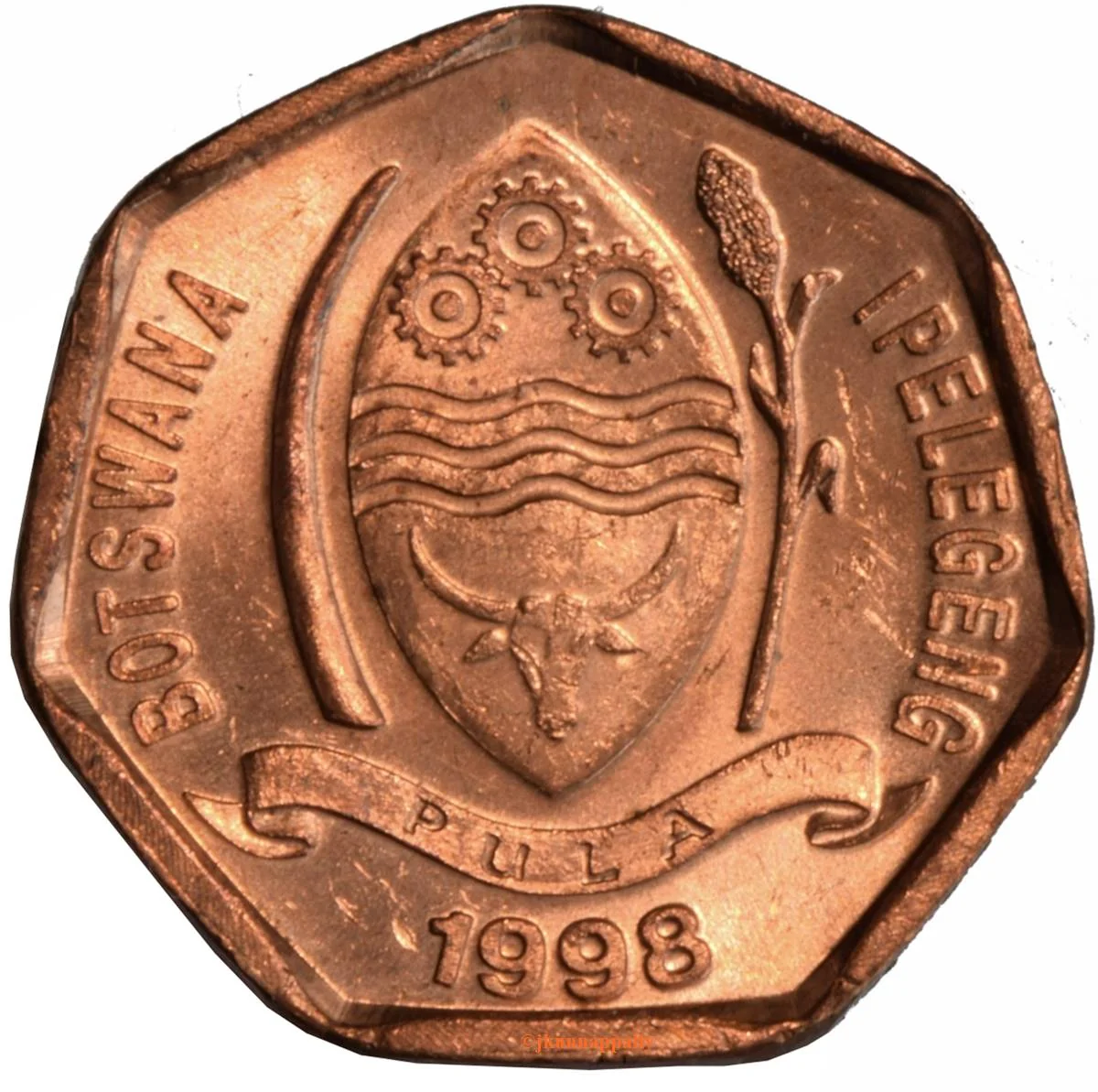
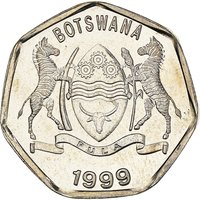
National Arms of Botswana, dated below.
Inscription:
BOTSWANA IPELEGENG
PULA
1998
PULA
1998
Translation:
BOTSWANA SELF-RELIANCE
PULA
1998
PULA
1998
Script: Latin
Engraver: Michael Hibbit
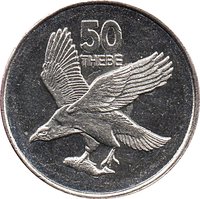
Reverse
Description:
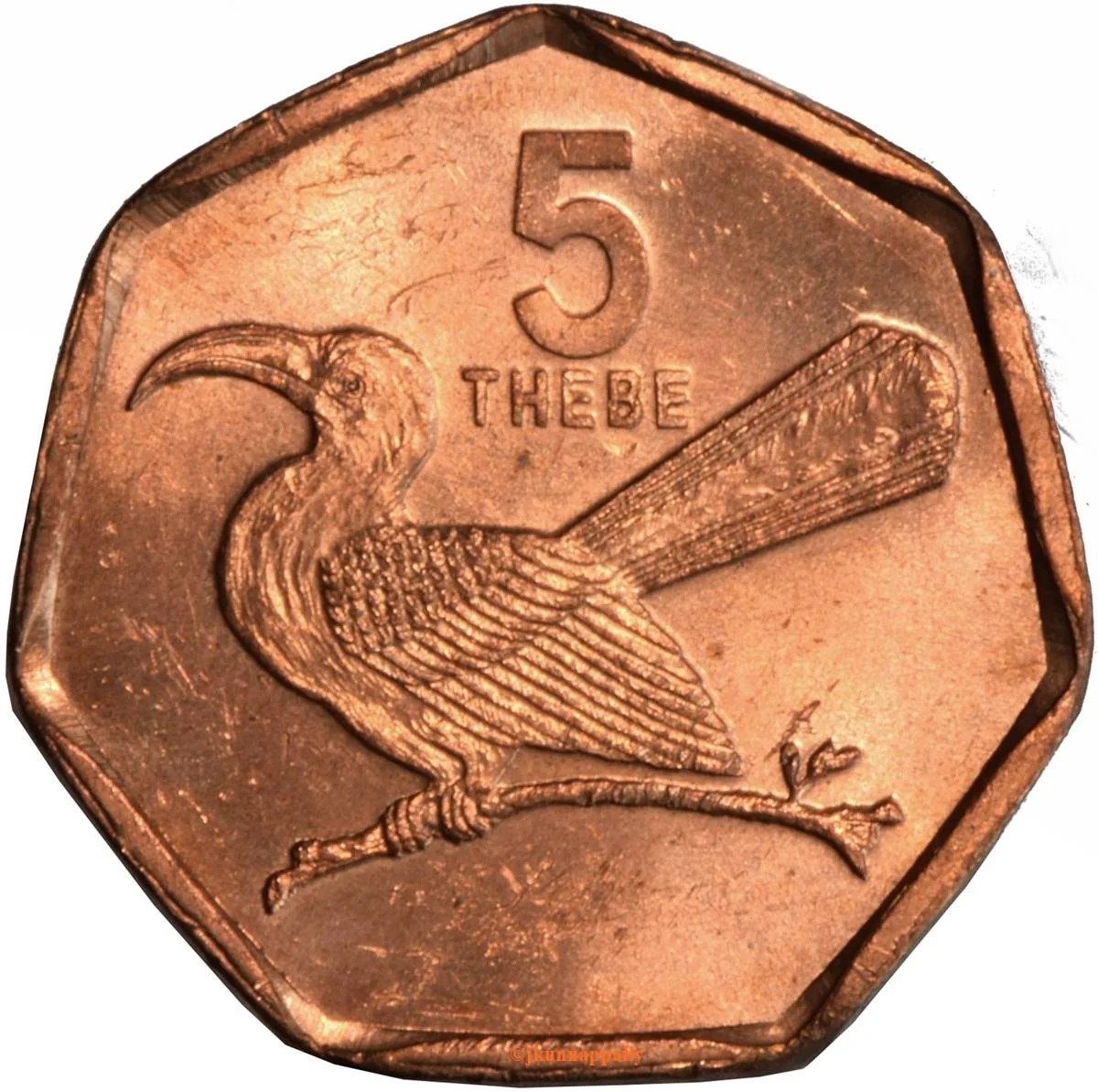
Red-billed hornbill left, top value.
Inscription:
5
THEBE
THEBE
Script: Latin
Engraver: Michael Hibbit
Edge
Plain
Categories
| Animal> Bird |
| Symbols> Coat of Arms |
Mints
| Name | Mark |
|---|---|
| South African Mint | — |
Mintings
| Year | Mint Mark | Mintage | Quality | Collection |
|---|---|---|---|---|
| 1998 | — | — | ||
| 2002 | — | — | ||
| 2007 | — | — | ||
| 2009 | — | — |
Historical background
In 1998, Botswana's currency situation was defined by the stability and strength of the Pula, a notable exception in a region often plagued by economic volatility. This stability was directly tied to the country's prudent fiscal management and its substantial foreign exchange reserves, accumulated from decades of profitable diamond mining under the Debswana partnership with De Beers. The Pula was—and remains—pegged to a basket of currencies, primarily the South African Rand and the International Monetary Fund's Special Drawing Rights (SDRs), a mechanism designed to insulate the economy from the fluctuations of any single currency.
However, the year was significantly impacted by the fallout from the 1997-1998 Asian Financial Crisis, which triggered a sharp decline in global demand for diamonds and other minerals. This exposed Botswana's vulnerability as a resource-dependent economy, leading to a substantial drop in export earnings and government revenue. Consequently, the country recorded its first budget deficit in over 15 years in the 1998/99 fiscal year, putting pressure on the reserves that underpinned the Pula's peg.
Despite these external shocks, the fundamental strength of Botswana's macroeconomic framework prevented a currency crisis. The government responded with conservative adjustments, including modest cuts in public spending, rather than drastic devaluation. The Pula maintained its credibility, and the downturn proved temporary. Thus, 1998 stands as a testament to Botswana's resilient economic governance, where a managed currency peg and robust reserves successfully weathered a severe external shock without the destabilizing currency collapses seen elsewhere in the developing world during that period.
However, the year was significantly impacted by the fallout from the 1997-1998 Asian Financial Crisis, which triggered a sharp decline in global demand for diamonds and other minerals. This exposed Botswana's vulnerability as a resource-dependent economy, leading to a substantial drop in export earnings and government revenue. Consequently, the country recorded its first budget deficit in over 15 years in the 1998/99 fiscal year, putting pressure on the reserves that underpinned the Pula's peg.
Despite these external shocks, the fundamental strength of Botswana's macroeconomic framework prevented a currency crisis. The government responded with conservative adjustments, including modest cuts in public spending, rather than drastic devaluation. The Pula maintained its credibility, and the downturn proved temporary. Thus, 1998 stands as a testament to Botswana's resilient economic governance, where a managed currency peg and robust reserves successfully weathered a severe external shock without the destabilizing currency collapses seen elsewhere in the developing world during that period.
🌱 Very Common