

¼ dollar – United States
Add to wishlist
United States
Context
Years: 1932–1964
Issuer: United States
Period:
(since 1776)
Currency:
(since 1785)
Subdivision: ¼ dollar = 25 Cents
Total mintage: 3,728,428,181
Material
References
KM: #
Numista: #54
Value
Exchange value: ¼ USD = $0.25
Bullion value: $13.69
Inflation-adjusted value: 5.28 USD
Obverse
Description:
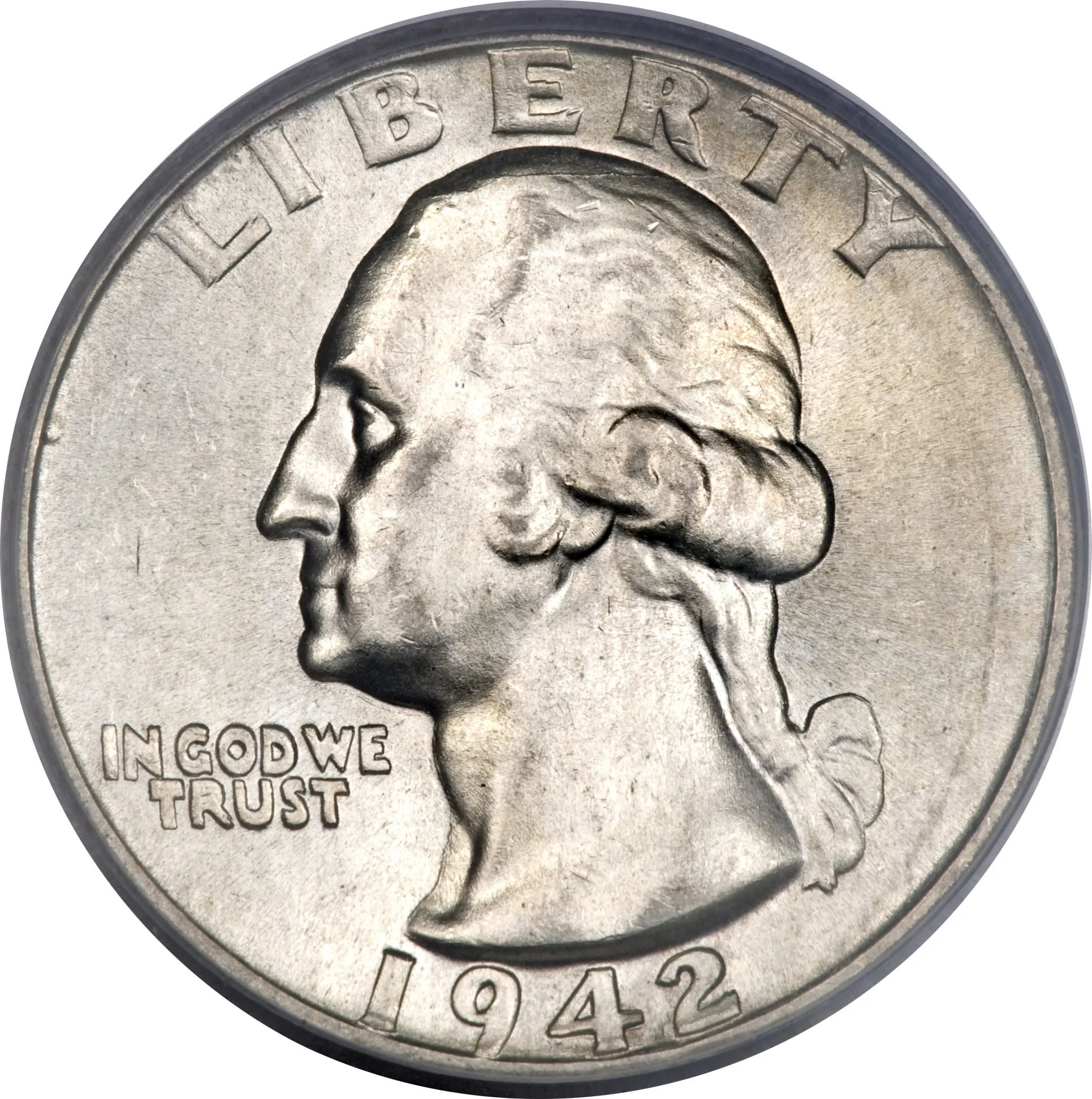
George Washington facing left, with "LIBERTY" and "IN GOD WE TRUST."
Inscription:
LIBERTY
IN GOD WE
TRUST
JF
1942
IN GOD WE
TRUST
JF
1942
Script: Latin
Engraver: John Flanagan
Reverse
Description:
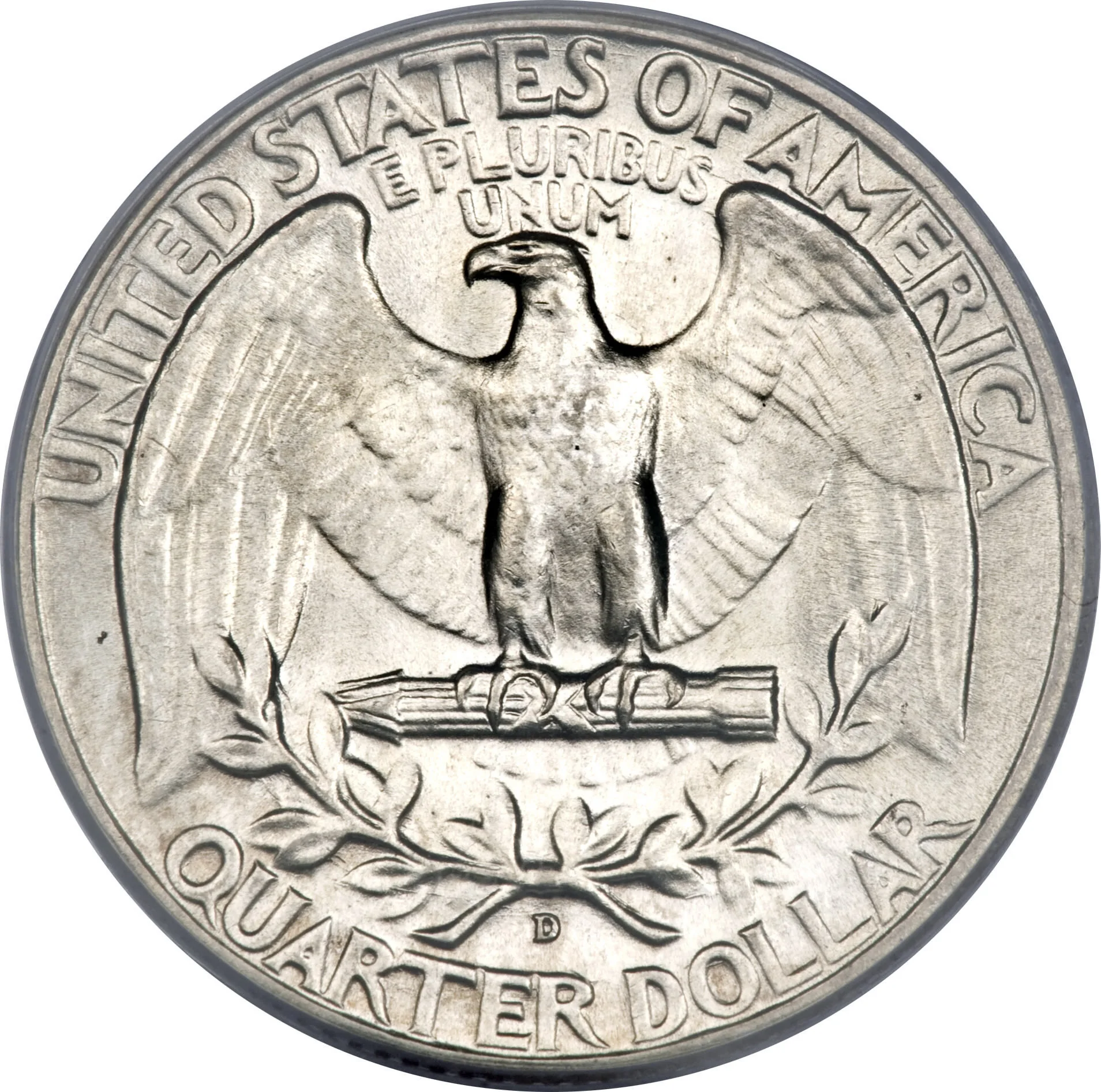
An eagle perched on arrows, flanked by olive sprays, encircled by "E PLURIBUS UNUM," "UNITED STATES OF AMERICA," and the face value.
Inscription:
UNITED STATES OF AMERICA
E PLURIBUS
UNUM
D
QUARTER DOLLAR
E PLURIBUS
UNUM
D
QUARTER DOLLAR
Translation:
United States of America
Out of Many, One
D
Quarter Dollar
Out of Many, One
D
Quarter Dollar
Script: Latin
Engraver: John Flanagan
Edge
Reeded (119 reeds)
Categories
| Person> Politician |
| Animal> Bird> Eagle |
| Person> Military leader |
| Symbol> Wreath |
| Object> Cold weapons |
Mints
| Name | Mark |
|---|---|
| United States Mint of Philadelphia | — |
| United States Mint of Denver | D |
| United States Mint of San Francisco | S |
Mintings
| Year | Mint Mark | Mintage | Quality | Collection |
|---|---|---|---|---|
| 1932 | S | 408,000 | ||
| 1932 | D | 436,800 | ||
| 1932 | — | 5,404,000 | ||
| 1934 | — | 31,912,052 | ||
| 1934 | D | 3,527,200 | ||
| 1935 | — | 32,484,000 | ||
| 1935 | D | 5,780,000 | ||
| 1935 | S | 5,660,000 | ||
| 1936 | D | 5,374,000 | ||
| 1936 | S | 3,828,000 | ||
| 1936 | — | 41,303,837 | ||
| 1936 | — | 3,837 | Proof | |
| 1937 | — | 19,701,542 | ||
| 1937 | D | 7,189,600 | ||
| 1937 | S | 1,652,000 | ||
| 1937 | — | 5,542 | Proof | |
| 1938 | — | 8,045 | Proof | |
| 1938 | — | 9,480,045 | ||
| 1938 | S | 2,832,000 | ||
| 1939 | S | 2,628,000 | ||
| 1939 | — | 33,548,795 | ||
| 1939 | — | 8,795 | Proof | |
| 1939 | D | 7,092,000 | ||
| 1940 | — | 35,715,246 | ||
| 1940 | — | 11,246 | Proof | |
| 1940 | D | 2,797,600 | ||
| 1940 | S | 8,244,000 | ||
| 1941 | — | 79,047,287 | ||
| 1941 | — | 15,287 | Proof | |
| 1941 | D | 16,714,800 | ||
| 1941 | S | 16,080,000 | ||
| 1942 | — | 102,117,123 | ||
| 1942 | — | 21,123 | Proof | |
| 1942 | D | 17,487,200 | ||
| 1942 | S | 19,384,000 | ||
| 1943 | — | 99,700,000 | ||
| 1943 | D | 16,095,600 | ||
| 1943 | S | 21,700,000 | ||
| 1944 | — | 104,956,000 | ||
| 1944 | D | 14,600,800 | ||
| 1944 | S | 12,560,000 | ||
| 1945 | — | 74,372,000 | ||
| 1945 | D | 12,341,600 | ||
| 1945 | S | 17,004,001 | ||
| 1946 | — | 53,436,000 | ||
| 1946 | D | 9,072,800 | ||
| 1946 | S | 4,204,000 | ||
| 1947 | — | 22,556,000 | ||
| 1947 | D | 15,338,400 | ||
| 1947 | S | 5,532,000 | ||
| 1948 | — | 35,196,000 | ||
| 1948 | D | 16,766,800 | ||
| 1948 | S | 15,960,000 | ||
| 1949 | — | 9,312,000 | ||
| 1949 | D | 10,068,400 | ||
| 1950 | — | 24,971,512 | ||
| 1950 | — | 51,386 | Proof | |
| 1950 | D | — | ||
| 1950 | S | — | ||
| 1951 | — | 43,505,602 | ||
| 1951 | — | 57,500 | Proof | |
| 1951 | D | 35,354,800 | ||
| 1951 | S | 9,048,000 | ||
| 1952 | — | 38,862,073 | ||
| 1952 | — | 81,980 | Proof | |
| 1952 | D | 49,795,200 | ||
| 1952 | S | 13,707,800 | ||
| 1953 | — | 18,664,920 | ||
| 1953 | — | 128,800 | Proof | |
| 1953 | D | — | ||
| 1953 | S | 14,016,000 | ||
| 1954 | — | 54,645,503 | ||
| 1954 | — | 233,300 | Proof | |
| 1954 | D | 42,305,500 | ||
| 1954 | S | 11,834,722 | ||
| 1955 | — | 18,558,381 | ||
| 1955 | — | 378,200 | Proof | |
| 1955 | D | 3,182,400 | ||
| 1956 | D | 32,334,500 | ||
| 1956 | — | 44,813,384 | ||
| 1956 | — | 669,384 | Proof | |
| 1957 | — | 47,779,952 | ||
| 1957 | — | 1,247,952 | Proof | |
| 1957 | D | 77,924,160 | ||
| 1958 | — | 7,235,652 | ||
| 1958 | — | 875,652 | Proof | |
| 1958 | D | 78,124,900 | ||
| 1959 | — | 25,533,291 | ||
| 1959 | — | 1,149,291 | Proof | |
| 1959 | D | 62,054,232 | ||
| 1960 | — | 1,691,602 | Proof | |
| 1960 | D | 63,000,324 | ||
| 1960 | — | 30,855,602 | ||
| 1961 | — | 40,064,244 | ||
| 1961 | — | 3,028,244 | Proof | |
| 1961 | D | 83,656,928 | ||
| 1962 | — | 39,374,019 | ||
| 1962 | — | 3,218,019 | Proof | |
| 1962 | D | 127,554,756 | ||
| 1963 | — | 77,391,645 | ||
| 1963 | — | 3,075,645 | Proof | |
| 1963 | D | 135,288,184 | ||
| 1964 | — | 564,341,347 | ||
| 1964 | — | 3,950,762 | Proof | |
| 1964 | D | 704,135,528 |
Historical background
In 1932, the United States was in the depths of the Great Depression, and its currency situation was defined by deflation, hoarding, and a crisis of confidence in the banking system. The money supply had contracted violently by nearly a third since 1929, as bank failures—over 1,400 in 1932 alone—wiped out savings and destroyed deposits. With prices falling sharply, the real value of debts soared, crushing farmers, homeowners, and businesses. This deflationary spiral created a perverse incentive: the dollar was gaining purchasing power simply by being held, leading to widespread hoarding of cash, which further starved the economy of circulating currency and credit.
The nation remained on the classical gold standard, a system that severely constrained the Federal Reserve's ability to respond. To maintain gold convertibility, the Fed had raised interest rates in 1931 to stem gold outflows, a move that tragically deepened the economic collapse. Gold itself was being withdrawn from the system, both by foreign central banks and by domestic citizens seeking a safe-haven asset, legally converting their paper dollars into gold coins and bars. This "internal drain" on bank reserves weakened the financial system further, creating a vicious cycle of instability.
Politically, the currency situation fueled desperation and radical proposals. The Hoover administration attempted to restore confidence through the creation of the Reconstruction Finance Corporation to lend to banks, but it was too limited in scope. Meanwhile, populist demands for monetary inflation grew loud, including calls for the free coinage of silver and direct currency issues to pay veterans, culminating in the "Bonus Army" march on Washington. This turbulent backdrop set the stage for Franklin D. Roosevelt's election and the dramatic monetary reforms he would enact in 1933, including abandoning the gold standard for domestic transactions and declaring a national bank holiday to end the paralyzing run on the financial system.
The nation remained on the classical gold standard, a system that severely constrained the Federal Reserve's ability to respond. To maintain gold convertibility, the Fed had raised interest rates in 1931 to stem gold outflows, a move that tragically deepened the economic collapse. Gold itself was being withdrawn from the system, both by foreign central banks and by domestic citizens seeking a safe-haven asset, legally converting their paper dollars into gold coins and bars. This "internal drain" on bank reserves weakened the financial system further, creating a vicious cycle of instability.
Politically, the currency situation fueled desperation and radical proposals. The Hoover administration attempted to restore confidence through the creation of the Reconstruction Finance Corporation to lend to banks, but it was too limited in scope. Meanwhile, populist demands for monetary inflation grew loud, including calls for the free coinage of silver and direct currency issues to pay veterans, culminating in the "Bonus Army" march on Washington. This turbulent backdrop set the stage for Franklin D. Roosevelt's election and the dramatic monetary reforms he would enact in 1933, including abandoning the gold standard for domestic transactions and declaring a national bank holiday to end the paralyzing run on the financial system.
🌱 Very Common