

2 dinars – Tunisia
Add to wishlist
Tunisia
Context
Material
Diameter: 29.4 mm
Weight: 11.2 g
Thickness: 1.9 mm
Shape: Tridecagonal
Composition: Copper-nickel
Magnetic: No
Technique: Milled
Alignment: Coin alignment
flip
References
KM: #
Numista: #53901
Value
Exchange value: 2 TND
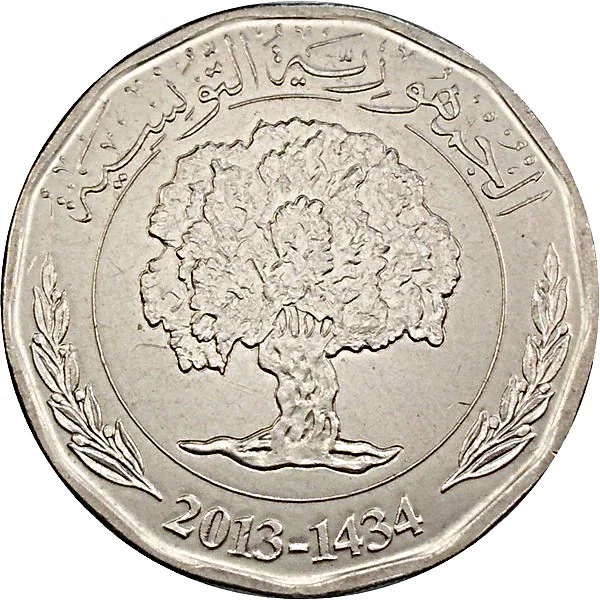
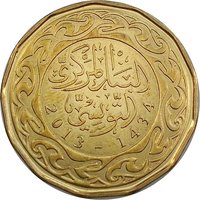
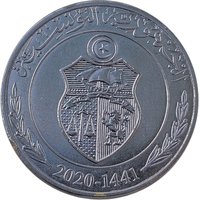
Obverse
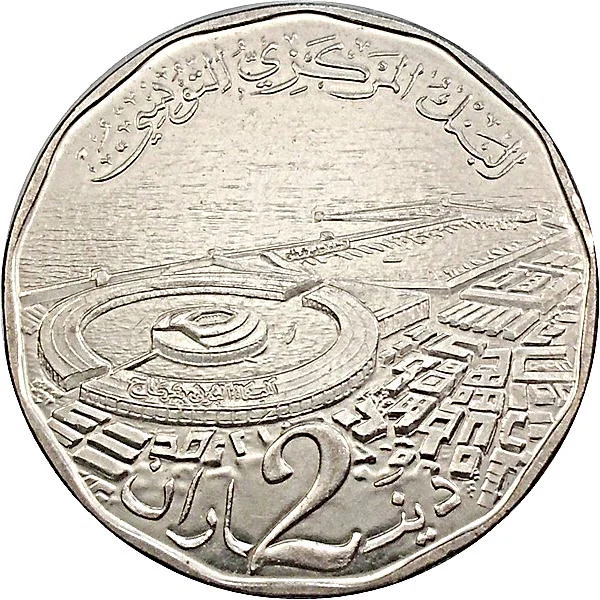
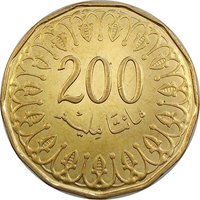
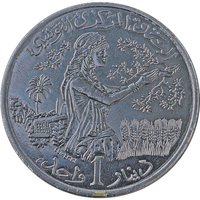
Reverse
Edge
Mintings
| Year | Mint Mark | Mintage | Quality | Collection |
|---|---|---|---|---|
| 2013 | — | — |
Historical background
In 2013, Tunisia's currency situation was characterized by mounting pressure on the Tunisian dinar and a critical depletion of foreign exchange reserves, stemming from the political and economic instability that followed the 2011 revolution. The country was grappling with a widening trade deficit, declining tourism revenue, and a slowdown in foreign direct investment—key sources of hard currency. Concurrently, social unrest and a protracted political transition hindered economic reforms, leading to repeated downgrades of the country's credit rating and increasing the cost of international borrowing. The Central Bank of Tunisia (BCT) was forced to intervene heavily to defend the dinar, which was pegged to a basket of currencies, leading reserves to fall to alarmingly low levels, covering just over three months of imports by mid-year.
This currency crisis was symptomatic of deeper structural problems. A legacy of economic mismanagement, coupled with post-revolutionary demands for higher wages and subsidies, strained public finances and fueled inflation. The government, led by the Islamist Ennahda party in a coalition, faced difficult choices between implementing necessary but unpopular austerity measures to secure an IMF loan and addressing urgent social demands. The lack of a clear, credible economic strategy eroded investor confidence, leading to capital flight and speculative pressures on the dinar. The BCT's interventions, while slowing the depreciation, were unsustainable and further eroded the financial buffers needed for economic stability.
By the end of 2013, the situation culminated in a decisive shift. In December, under the technocratic government led by Prime Minister Mehdi Jomaa, Tunisia finally secured a $1.74 billion Stand-By Arrangement from the IMF. This agreement was contingent on commitments to reduce the fiscal deficit, phase out energy subsidies, and enact structural reforms to liberalize the economy. While the IMF program provided immediate liquidity and averted a balance of payments crisis, it formally marked the end of the heavily managed exchange rate regime, setting the stage for a gradual but necessary depreciation of the dinar to correct imbalances and restore competitiveness in the coming years.
This currency crisis was symptomatic of deeper structural problems. A legacy of economic mismanagement, coupled with post-revolutionary demands for higher wages and subsidies, strained public finances and fueled inflation. The government, led by the Islamist Ennahda party in a coalition, faced difficult choices between implementing necessary but unpopular austerity measures to secure an IMF loan and addressing urgent social demands. The lack of a clear, credible economic strategy eroded investor confidence, leading to capital flight and speculative pressures on the dinar. The BCT's interventions, while slowing the depreciation, were unsustainable and further eroded the financial buffers needed for economic stability.
By the end of 2013, the situation culminated in a decisive shift. In December, under the technocratic government led by Prime Minister Mehdi Jomaa, Tunisia finally secured a $1.74 billion Stand-By Arrangement from the IMF. This agreement was contingent on commitments to reduce the fiscal deficit, phase out energy subsidies, and enact structural reforms to liberalize the economy. While the IMF program provided immediate liquidity and averted a balance of payments crisis, it formally marked the end of the heavily managed exchange rate regime, setting the stage for a gradual but necessary depreciation of the dinar to correct imbalances and restore competitiveness in the coming years.
🌱 Common