

1 dinar – Tunisia
Add to wishlist
Tunisia
Context
Material
References
KM: #
Numista: #257573
Value
Exchange value: 1 TND
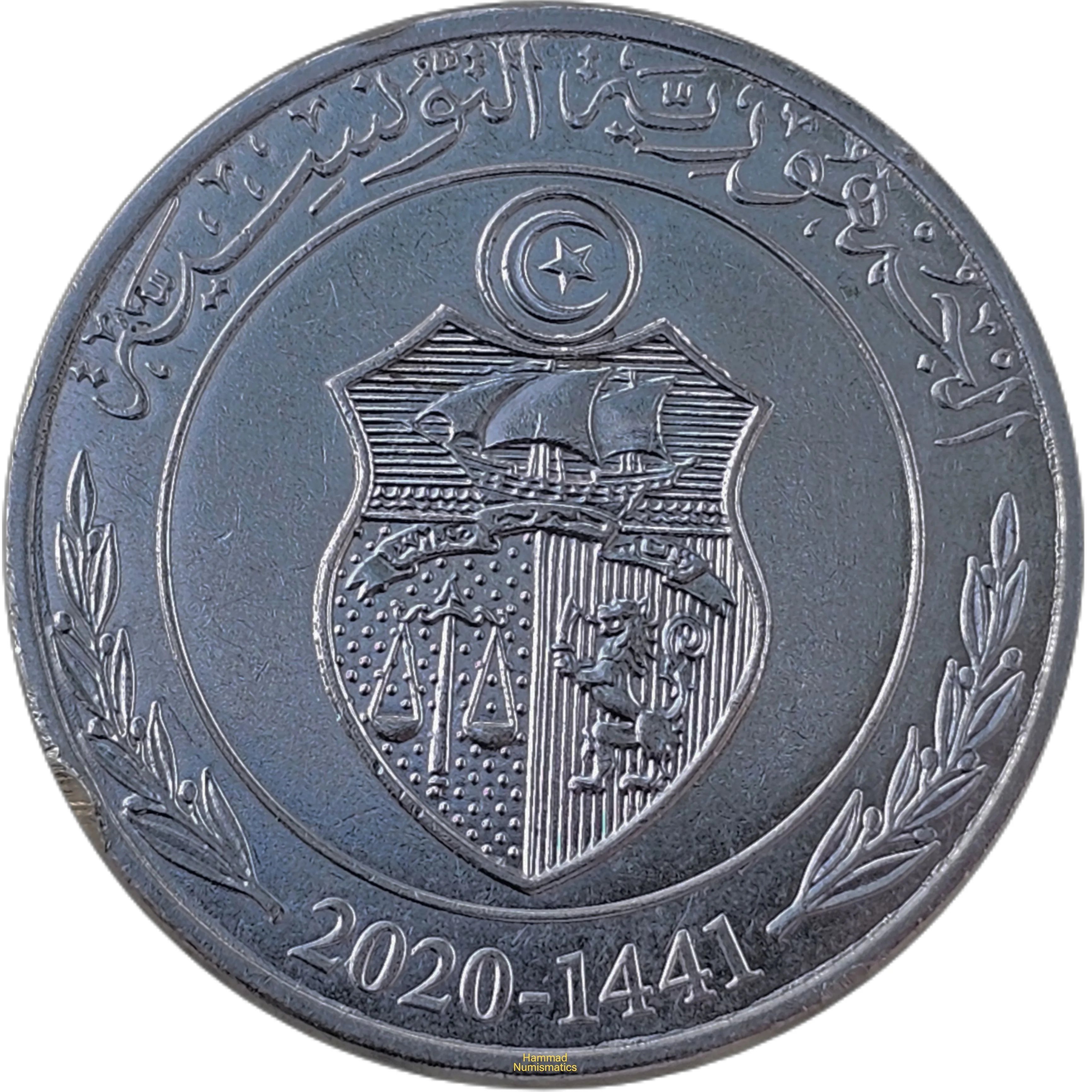
Obverse
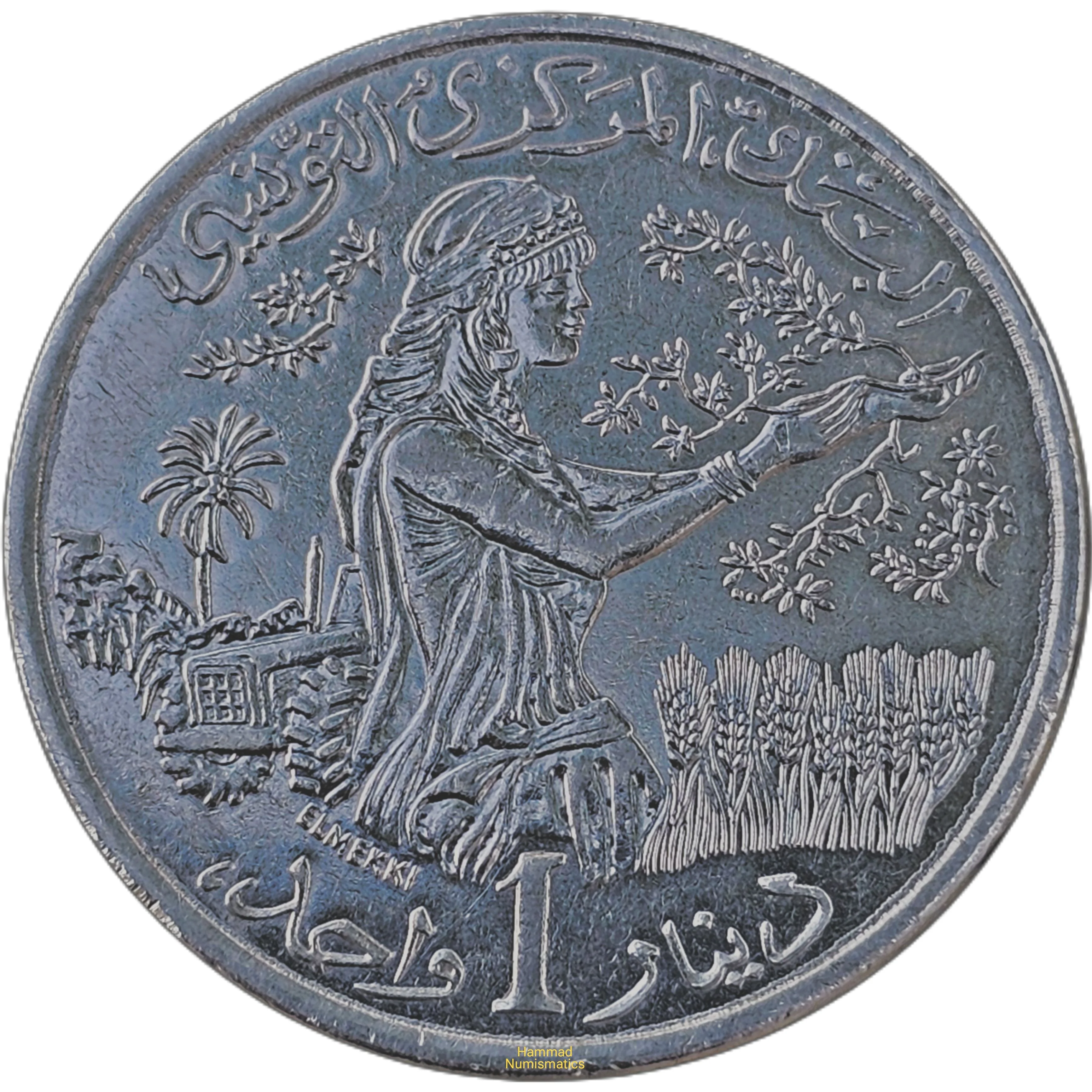
Reverse
Description:
Woman in field with text above and denomination below.
Inscription:
البنك المركزي التونسي
ELMEKKI
دينار 1 واحد
ELMEKKI
دينار 1 واحد
Translation:
Central Bank of Tunisia
ELMEKKI
1 One Dinar
ELMEKKI
1 One Dinar
Script: Arabic
Engraver: Hatem El Mekki
Edge
Plain
Mintings
| Year | Mint Mark | Mintage | Quality | Collection |
|---|---|---|---|---|
| 2020 | — | — |
Historical background
In 2020, Tunisia's currency situation was characterized by significant pressure on the Tunisian dinar (TND) and a deepening economic crisis exacerbated by the COVID-19 pandemic. The dinar had been on a managed float for years, steadily depreciating against major currencies to boost export competitiveness, but this trend accelerated. Key challenges included a large and persistent current account deficit, dwindling foreign exchange reserves, and a heavy reliance on imports for essential goods like food and energy. The pandemic delivered a severe external shock, crippling the vital tourism sector—a major source of foreign currency—and reducing remittances from abroad, further straining the country's balance of payments.
Domestically, the situation was compounded by political instability, slow growth, and high public debt. The Central Bank of Tunisia (BCT) intervened to prop up the dinar and preserve reserves, which fell to precarious levels, covering only a few months of imports. Inflation remained a concern, as the weaker dinar increased the cost of imports, contributing to rising prices for basic commodities. The government sought financial assistance, engaging in difficult negotiations with the International Monetary Fund (IMF) for a new loan program, which was contingent on implementing unpopular reforms such as reducing public subsidies and restructuring state-owned enterprises.
Overall, 2020 was a pivotal year where Tunisia's long-standing economic vulnerabilities converged with the global health crisis, pushing its currency and external finances to a critical juncture. The situation underscored the urgent need for structural reforms to correct macroeconomic imbalances, attract foreign investment, and stimulate growth, all within a fragile socio-political context where austerity measures risked fueling public discontent. The year ended with the dinar at a historic low and the country facing tough choices to stabilize its economy and currency.
Domestically, the situation was compounded by political instability, slow growth, and high public debt. The Central Bank of Tunisia (BCT) intervened to prop up the dinar and preserve reserves, which fell to precarious levels, covering only a few months of imports. Inflation remained a concern, as the weaker dinar increased the cost of imports, contributing to rising prices for basic commodities. The government sought financial assistance, engaging in difficult negotiations with the International Monetary Fund (IMF) for a new loan program, which was contingent on implementing unpopular reforms such as reducing public subsidies and restructuring state-owned enterprises.
Overall, 2020 was a pivotal year where Tunisia's long-standing economic vulnerabilities converged with the global health crisis, pushing its currency and external finances to a critical juncture. The situation underscored the urgent need for structural reforms to correct macroeconomic imbalances, attract foreign investment, and stimulate growth, all within a fragile socio-political context where austerity measures risked fueling public discontent. The year ended with the dinar at a historic low and the country facing tough choices to stabilize its economy and currency.
🌱 Fairly Common