


20 centavos – Brazil
Add to wishlist
Brazil
Context
Years: 1986–1988
Issuer: Brazil
Period:
(since 1967)
Currency:
(1986—1989)
Demonetization: 16 January 1989
Total mintage: 313,500,000
Material
Diameter: 18.9 mm
Weight: 2.55 g
Thickness: 1.4 mm
Shape: Round
Composition: Stainless steel
Technique: Milled
Alignment: Coin alignment

flip
References
KM: #
Numista: #5389
Value
Exchange value: 0.20 BRC
Inflation-adjusted value: 1380521112.74 BRC
Obverse
Description:
Brazil's state emblem features a central star encircled by 27 smaller stars, with the Southern Cross inside, flanked by tobacco and coffee plants.
Inscription:
REPUBLICA FEDERATIVA DO BRASIL
15 de Novembro de 1889
15 de Novembro de 1889
Translation:
Federative Republic of Brazil
15th of November 1889
15th of November 1889
Script: Latin
Language: Portuguese
Reverse
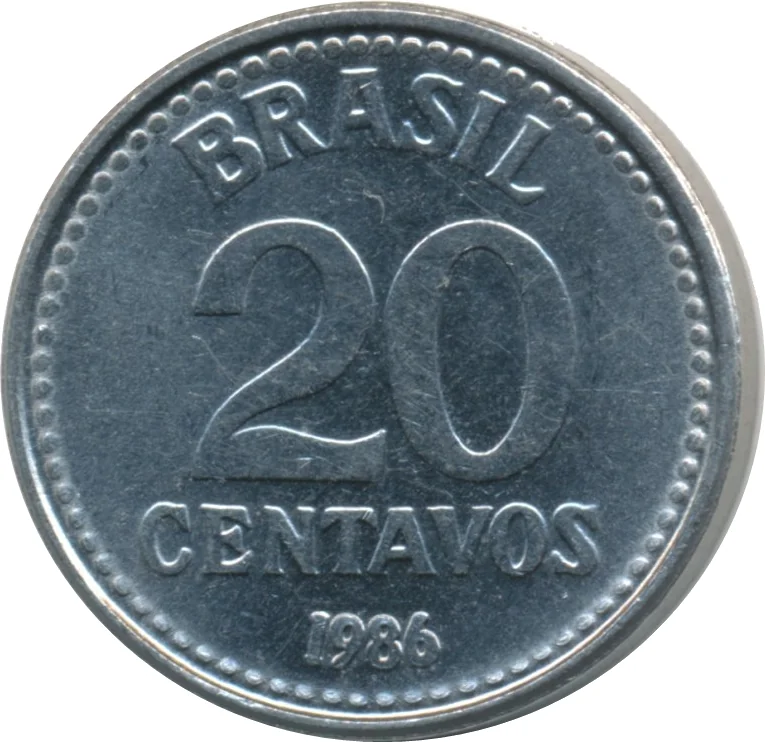
Description:
Country name above, date below.
Inscription:
BRASIL
20
CENTAVOS
1986
20
CENTAVOS
1986
Translation:
Brazil
20
Cents
1986
20
Cents
1986
Script: Latin
Language: Portuguese
Edge
Plain
Categories
| Symbols> Coat of Arms |
Mintings
| Year | Mint Mark | Mintage | Quality | Collection |
|---|---|---|---|---|
| 1986 | — | 140,000,000 | ||
| 1987 | — | 157,500,000 | ||
| 1988 | — | 16,000,000 |
Historical background
In 1986, Brazil was in the throes of its third year of the Cruzado Plan (Plano Cruzado), a radical heterodox shock program launched in February to halt hyperinflation, which had reached an annual rate of over 200%. The plan, conceived by President José Sarney's finance minister Dilson Funaro, introduced a new currency, the cruzado (Cz$), to replace the heavily devalued cruzeiro at a rate of 1 cruzado to 1,000 cruzeiros. Its most dramatic features were a sweeping price freeze, a wage freeze (with an automatic trigger for increases if inflation resurged), and a de-indexation of the economy, aiming to break inertial inflation by shock therapy.
Initially celebrated as a miracle, the plan created a dangerous artificial stability. With prices frozen but liquidity high, a massive consumer boom ensued, rapidly depleting inventories. The government's refusal to adjust controlled prices, especially for public services and key commodities, led to severe distortions, shortages, and the emergence of a black market. By mid-1986, the fiscal deficit ballooned as the government subsidized prices and increased spending ahead of crucial congressional elections, while the trade surplus evaporated due to increased imports and stagnant exports.
The situation unraveled in the latter half of the year. The inherent imbalances made the price freeze unsustainable, and the government began making ad-hoc adjustments, eroding public confidence. In November, following the elections, the government introduced the Cruzado Plan II, which imposed new taxes and announced staggered price increases. This move shattered the plan's credibility and triggered an immediate return of rampant inflation. By December 1986, Brazil was plunging back into an inflationary spiral, setting the stage for years of further failed stabilization plans and setting the economic and political context for the eventual rise of the Real Plan nearly a decade later.
Initially celebrated as a miracle, the plan created a dangerous artificial stability. With prices frozen but liquidity high, a massive consumer boom ensued, rapidly depleting inventories. The government's refusal to adjust controlled prices, especially for public services and key commodities, led to severe distortions, shortages, and the emergence of a black market. By mid-1986, the fiscal deficit ballooned as the government subsidized prices and increased spending ahead of crucial congressional elections, while the trade surplus evaporated due to increased imports and stagnant exports.
The situation unraveled in the latter half of the year. The inherent imbalances made the price freeze unsustainable, and the government began making ad-hoc adjustments, eroding public confidence. In November, following the elections, the government introduced the Cruzado Plan II, which imposed new taxes and announced staggered price increases. This move shattered the plan's credibility and triggered an immediate return of rampant inflation. By December 1986, Brazil was plunging back into an inflationary spiral, setting the stage for years of further failed stabilization plans and setting the economic and political context for the eventual rise of the Real Plan nearly a decade later.
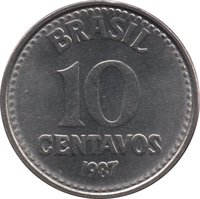
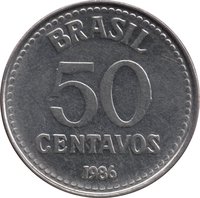
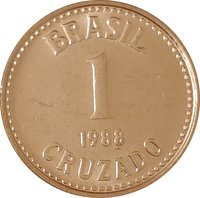
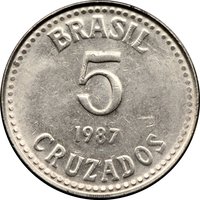
Series: 1986 Brazil circulation coins






🌱 Very Common