

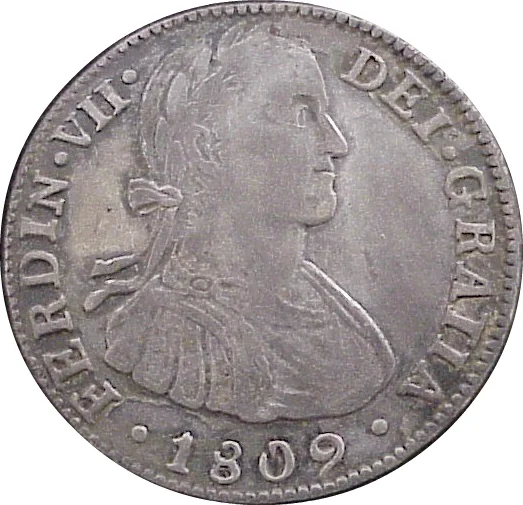
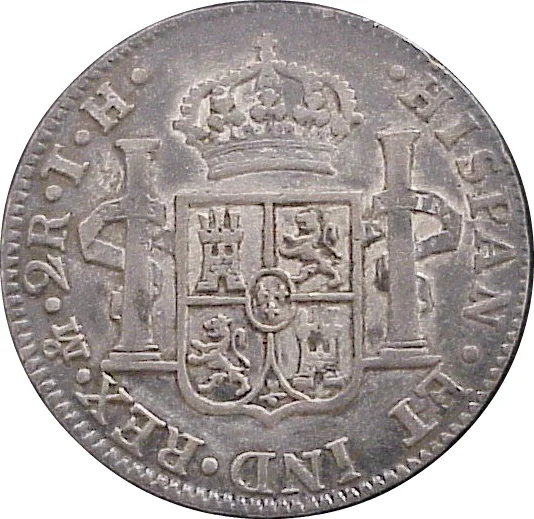
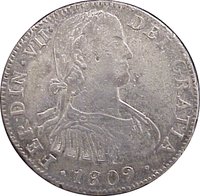
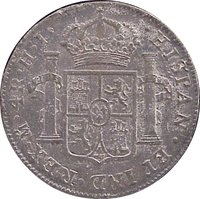
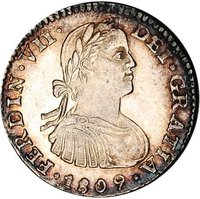
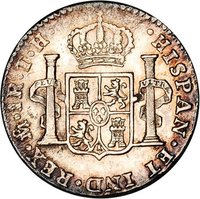
2 reales – New Spain
Add to wishlist
Mexico
Context
Years: 1809–1811
Country: Mexico
Issuer: New Spain
Ruler: Ferdinand VII
Currency:
(1535—1897)
Demonetized: Yes
Material
References
KM: #
Numista: #53710
Value
Bullion value: $15.00
Obverse
Reverse
Edge
Mints
| Name | Mark |
|---|---|
| Mexican Mint | — |
Mintings
| Year | Mint Mark | Mintage | Quality | Collection |
|---|---|---|---|---|
| 1809 | Mo | — | ||
| 1810 | Mo | — | ||
| 1811 | Mo | — |
Historical background
In 1809, the currency system of New Spain was a complex and strained reflection of the viceroyalty's deep political and economic anxieties. The official monetary unit was the silver peso, or "real de a ocho," which was globally respected for its high purity and weight, forming the backbone of both local commerce and international trade. However, the system was bifurcated: alongside this strong silver coinage, there existed a vast quantity of low-denomination moneda de vellón—copper coins used for everyday transactions by the populace. The chronic shortage of these small coins created severe practical hardships for the common people, hindering daily market exchanges and fueling social discontent.
The financial pressures of the Napoleonic Wars in Europe directly impacted New Spain. The Peninsular War (1808-1814) had cut off regular communication and subsidy flows from Spain, forcing the colonial government in Mexico City to seek new revenues to fund both its own administration and the war effort against French occupation in the mother country. In response, authorities increasingly resorted to printing paper money and issuing debased coinage, a practice that sowed distrust in the currency. This monetary expansion, aimed at covering urgent fiscal shortfalls, began to trigger inflationary pressures, eroding purchasing power at a time of growing economic uncertainty.
Beneath these immediate fiscal crises lay the tectonic shifts of political legitimacy. The 1808 crisis of the Spanish monarchy, with the abdication of Ferdinand VII, created a power vacuum that challenged the very foundation of colonial authority. As juntas formed in Spain and in American cities claiming sovereignty, the question of who had the right to issue money and levy taxes became intensely politicized. The currency situation in 1809 was thus more than an economic issue; it was a tangible symbol of crumbling imperial control, setting the stage for the financial chaos that would accompany the outbreak of the Mexican War of Independence just a year later.
The financial pressures of the Napoleonic Wars in Europe directly impacted New Spain. The Peninsular War (1808-1814) had cut off regular communication and subsidy flows from Spain, forcing the colonial government in Mexico City to seek new revenues to fund both its own administration and the war effort against French occupation in the mother country. In response, authorities increasingly resorted to printing paper money and issuing debased coinage, a practice that sowed distrust in the currency. This monetary expansion, aimed at covering urgent fiscal shortfalls, began to trigger inflationary pressures, eroding purchasing power at a time of growing economic uncertainty.
Beneath these immediate fiscal crises lay the tectonic shifts of political legitimacy. The 1808 crisis of the Spanish monarchy, with the abdication of Ferdinand VII, created a power vacuum that challenged the very foundation of colonial authority. As juntas formed in Spain and in American cities claiming sovereignty, the question of who had the right to issue money and levy taxes became intensely politicized. The currency situation in 1809 was thus more than an economic issue; it was a tangible symbol of crumbling imperial control, setting the stage for the financial chaos that would accompany the outbreak of the Mexican War of Independence just a year later.
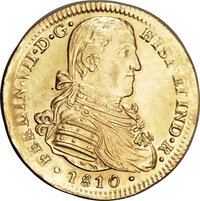
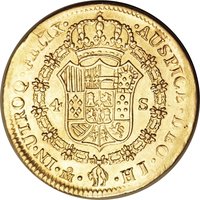
Series: 1809 New Spain circulation coins
💎 Extremely Rare