

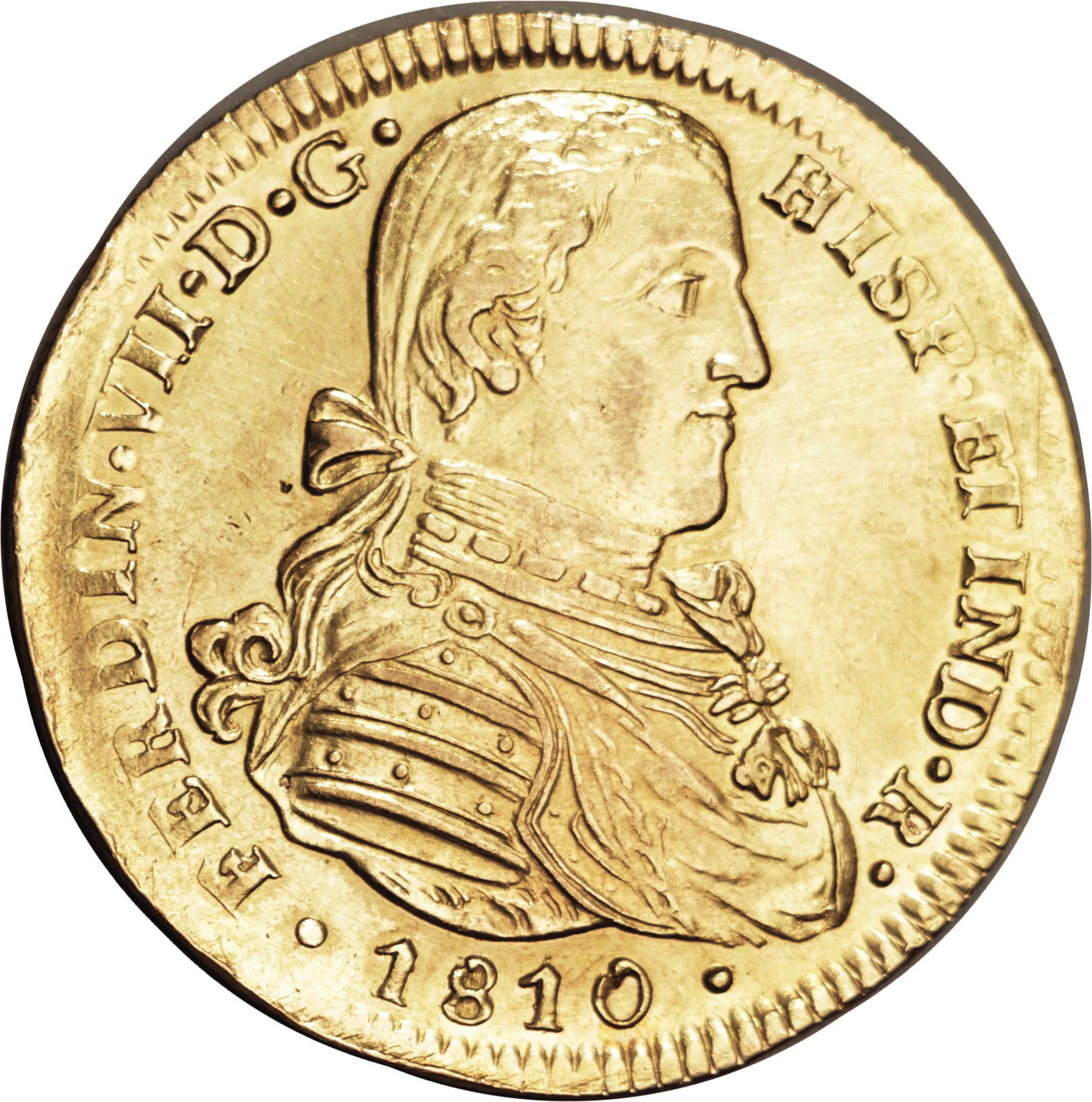
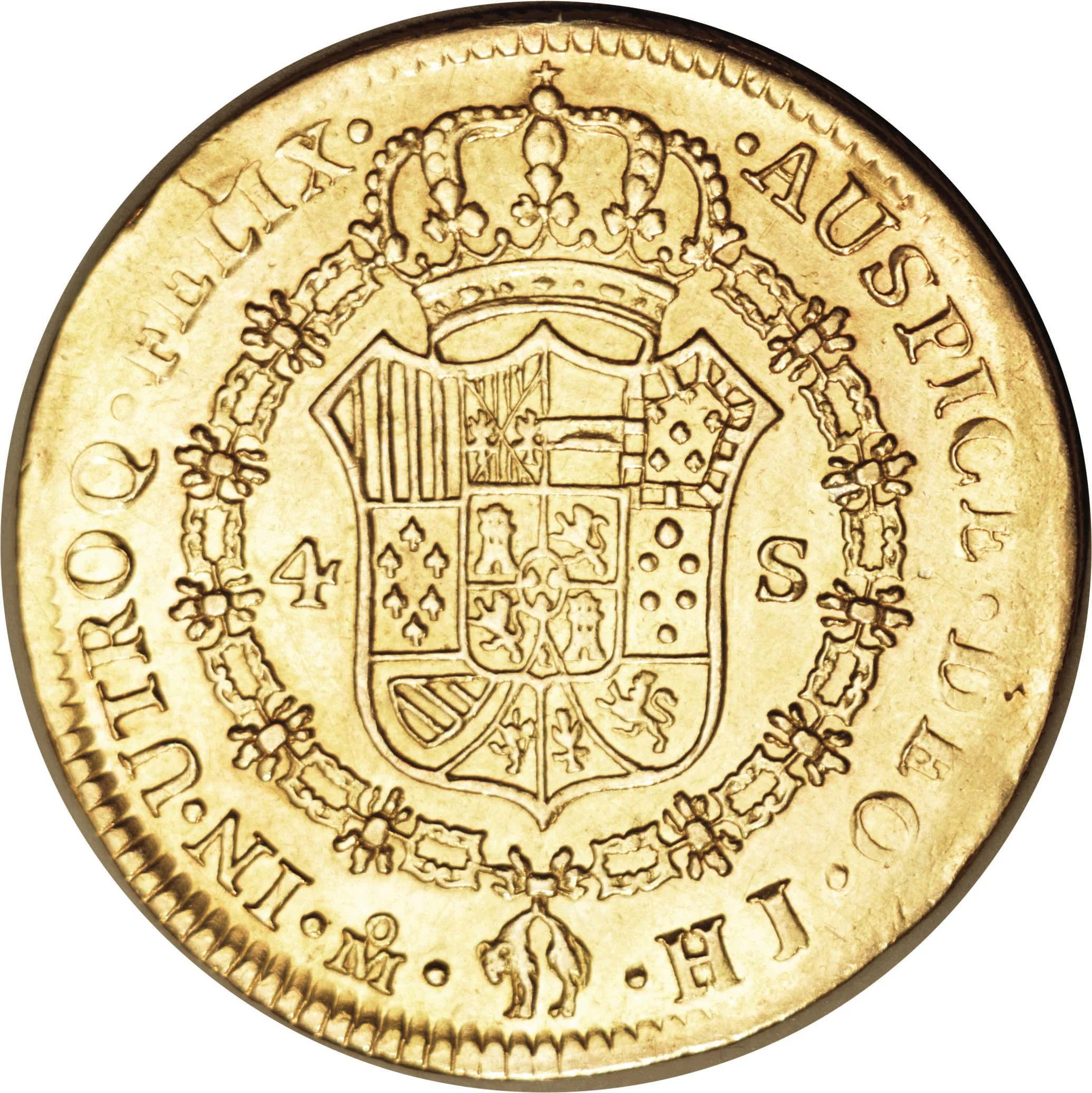
4 escudos – New Spain
Add to wishlist
Mexico
Context
Years: 1810–1812
Country: Mexico
Issuer: New Spain
Ruler: Ferdinand VII
Currency:
(1535—1897)
Demonetized: Yes
Material
References
KM: #
Numista: #15094
Value
Bullion value: $1820.12
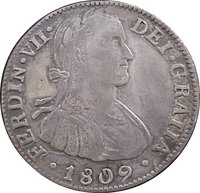
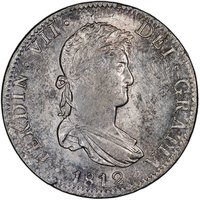
Obverse
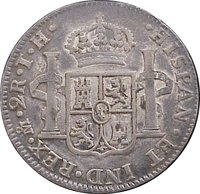
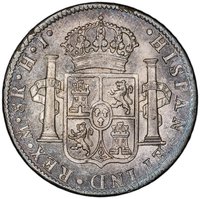
Reverse
Edge
Mintings
| Year | Mint Mark | Mintage | Quality | Collection |
|---|---|---|---|---|
| 1810 | HJ | — | ||
| 1811 | HJ | — | ||
| 1812 | HJ | — |
Historical background
By 1810, the currency system of New Spain was a complex and strained reflection of the viceroyalty's deep economic and political fissures. Officially, the monetary structure was based on the silver real and the gold escudo, with coins minted at the renowned Mexico City Mint. However, decades of European warfare, particularly Spain's conflicts with Britain, had severely disrupted Atlantic trade and drained silver—the colony's lifeblood—to fund the metropole's struggles. This chronic shortage of official coinage was the central problem, creating a scarcity of circulating medium that crippled everyday commerce and stifled economic activity across all social classes.
To fill this void, a patchwork of substitute currencies emerged. The most widespread was tlacos—crude, token-like copper coins issued by merchants, hacienda owners, and even churches, valid only within their specific local domains or businesses. Furthermore, the Church and merchant guilds issued vales, or promissory notes, which circulated as a form of paper credit. While this system provided a necessary lubricant for the economy, it was inherently unstable, prone to counterfeiting and devaluation, and reinforced a fragmented, insular economic landscape where large estate owners and clergy wielded significant monetary power.
The currency crisis was both a symptom and a catalyst of the growing unrest that would erupt in the Grito de Dolores in September 1810. The scarcity of sound money disproportionately burdened the lower classes and castas, who were paid in and relied upon easily debased tlacos, while the elite protected their wealth in silver and land. When Father Miguel Hidalgo issued his call to arms, the insurgents immediately targeted locations of monetary power, sacking the Guanajuato mint and treasury. The ensuing war would then catastrophically worsen the situation, as both royalist and insurgent forces began issuing their own emergency paper money and seizing bullion, completing the collapse of New Spain's unified currency system and plunging the economy into deeper chaos.
To fill this void, a patchwork of substitute currencies emerged. The most widespread was tlacos—crude, token-like copper coins issued by merchants, hacienda owners, and even churches, valid only within their specific local domains or businesses. Furthermore, the Church and merchant guilds issued vales, or promissory notes, which circulated as a form of paper credit. While this system provided a necessary lubricant for the economy, it was inherently unstable, prone to counterfeiting and devaluation, and reinforced a fragmented, insular economic landscape where large estate owners and clergy wielded significant monetary power.
The currency crisis was both a symptom and a catalyst of the growing unrest that would erupt in the Grito de Dolores in September 1810. The scarcity of sound money disproportionately burdened the lower classes and castas, who were paid in and relied upon easily debased tlacos, while the elite protected their wealth in silver and land. When Father Miguel Hidalgo issued his call to arms, the insurgents immediately targeted locations of monetary power, sacking the Guanajuato mint and treasury. The ensuing war would then catastrophically worsen the situation, as both royalist and insurgent forces began issuing their own emergency paper money and seizing bullion, completing the collapse of New Spain's unified currency system and plunging the economy into deeper chaos.
✨ Legendary