

50 lepta – Greece
Add to wishlist
Greece
Context
Years: 1966–1970
Issuer: Greece
Ruler: Constantine II
Currency:
(1954—2001)
Demonetized: Yes
Total mintage: 40,160,000
Material
References
KM: #
Numista: #536
Value
Exchange value: 0.50 GRD
Inflation-adjusted value: 48.79 GRD
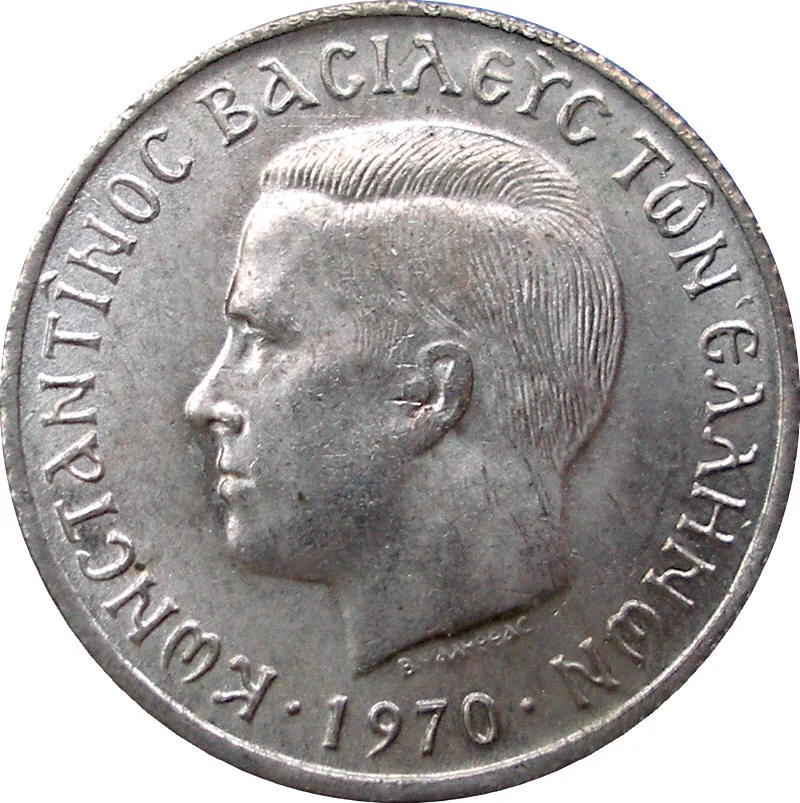
Obverse
Description:
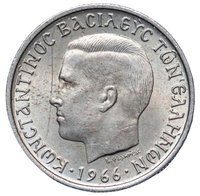
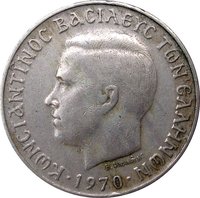
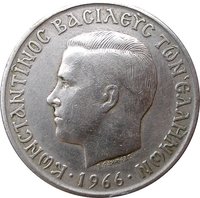
Young Constantine II, left. Date below.
Inscription:
ΚωΝCΤaΝΤΙΝΟC ΒaCΙλΕΥC ΤωΝ ΕλλΗΝωΝ
·1970·
·1970·
Translation:
Constantine, King of the Greeks
·1970·
·1970·
Script: Greek
Language: Greek
Engraver: Vasos Falireas
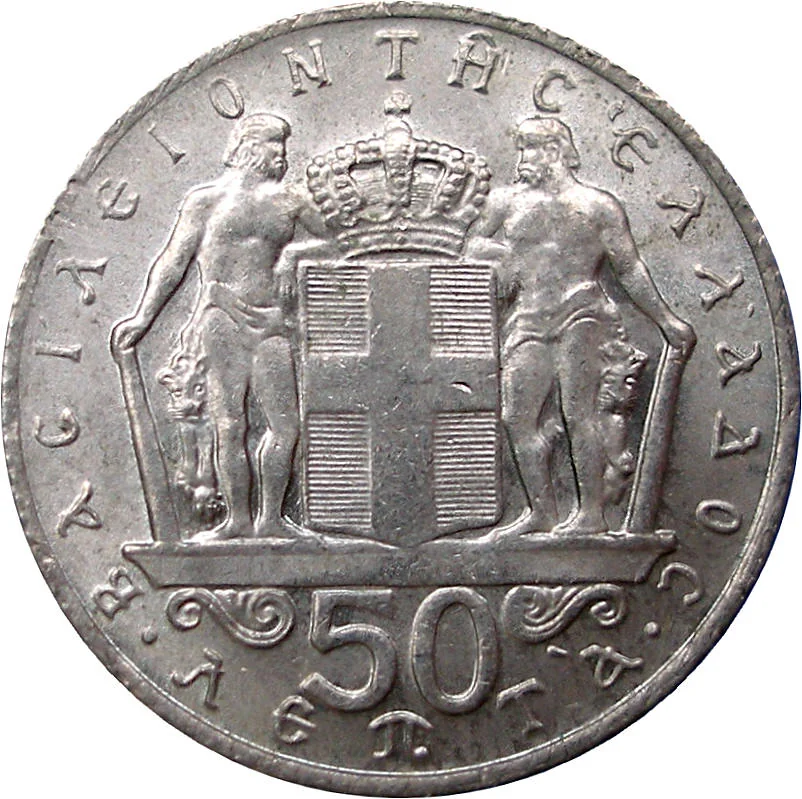
Reverse
Description:
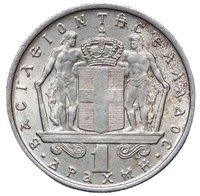
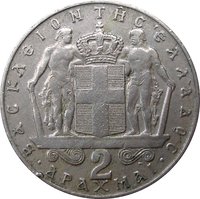
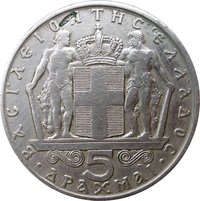
Crowned shield with cross, defenders, denomination below.
Inscription:
ΒaCΙλΕΙΟΝ ΤΗC ΕλλaΔΟC
• 50 λEπTa •
• 50 λEπTa •
Translation:
Kingdom of Greece
• 50 Lepta •
• 50 Lepta •
Script: Greek
Language: Greek
Engraver: Vasos Falireas
Edge
Reeded
Mints
| Name | Mark |
|---|---|
| Kremnica | — |
| Mumbai / Bombay | — |
Mintings
| Year | Mint Mark | Mintage | Quality | Collection |
|---|---|---|---|---|
| 1966 | — | — | Proof | |
| 1966 | — | 30,000,000 | ||
| 1970 | — | 10,160,000 |
Historical background
In 1966, Greece's currency situation was defined by the drachma operating under a fixed exchange rate regime, pegged to the U.S. dollar as part of the Bretton Woods international monetary system. This stability was underpinned by a period of remarkable economic growth, the "Greek Economic Miracle," which saw rapid industrialization and infrastructure development fueled by foreign investment and tourism. The Bank of Greece maintained strict capital controls and managed the currency within a narrow band, fostering an environment of monetary stability that supported this economic expansion and bolstered international confidence.
However, this apparent stability masked underlying structural weaknesses. The economy was becoming increasingly dependent on volatile sectors like shipping and tourism, while inflation was a persistent, though managed, concern. More critically, the political landscape was growing unstable; the centrist government of Georgios Papandreou was in crisis following the "Apostasy" of 1965, which led to a period of political turmoil and weakened governance. This political fragility raised subtle concerns among economic observers about the state's ability to maintain long-term fiscal and monetary discipline.
Ultimately, the currency stability of 1966 proved to be the calm before the storm. The fixed exchange rate and capital controls would be severely tested in the coming years. The political tensions culminated in a military coup in April 1967, leading to the authoritarian rule of the "Regime of the Colonels." This junta, combined with global economic shifts and the eventual collapse of the Bretton Woods system in the early 1970s, would set the stage for the drachma's later difficulties, including devaluations and high inflation, eroding the orderly monetary picture of the mid-1960s.
However, this apparent stability masked underlying structural weaknesses. The economy was becoming increasingly dependent on volatile sectors like shipping and tourism, while inflation was a persistent, though managed, concern. More critically, the political landscape was growing unstable; the centrist government of Georgios Papandreou was in crisis following the "Apostasy" of 1965, which led to a period of political turmoil and weakened governance. This political fragility raised subtle concerns among economic observers about the state's ability to maintain long-term fiscal and monetary discipline.
Ultimately, the currency stability of 1966 proved to be the calm before the storm. The fixed exchange rate and capital controls would be severely tested in the coming years. The political tensions culminated in a military coup in April 1967, leading to the authoritarian rule of the "Regime of the Colonels." This junta, combined with global economic shifts and the eventual collapse of the Bretton Woods system in the early 1970s, would set the stage for the drachma's later difficulties, including devaluations and high inflation, eroding the orderly monetary picture of the mid-1960s.
Series: 1966 Greece circulation coins
🌱 Very Common