

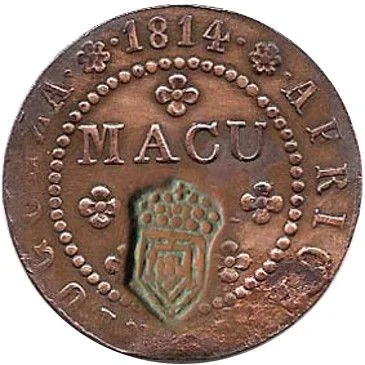
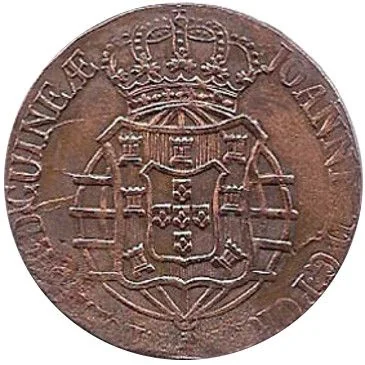
1 macuta – Angola
Add to wishlist
Angola
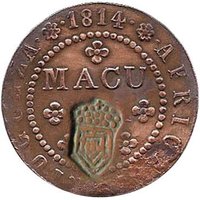
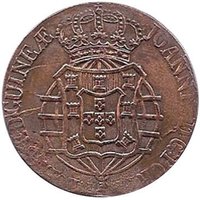
Material
Diameter: 30 mm
Weight: 7.8 g
Shape: Round
Composition: Copper
Standard: Silver quarter ounce
Magnetic: No
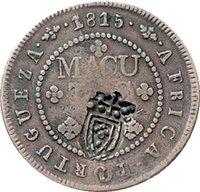
Technique: Countermarked
References
KM: #
Numista: #53448
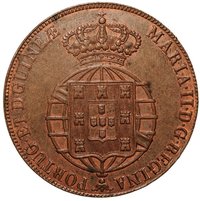
Obverse
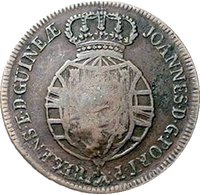
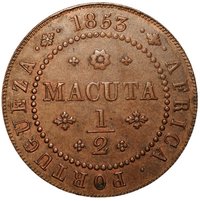
Reverse
Edge
Plain
Mintings
| Year | Mint Mark | Mintage | Quality | Collection |
|---|---|---|---|---|
| 1853 | — | — |
Historical background
In 1853, the currency situation in Angola, then a Portuguese colony, was characterized by a complex and often chaotic multiplicity of monetary systems. The official currency was the Portuguese real, but its circulation and authority were limited primarily to the coastal administrative centers like Luanda and Benguela. The Portuguese state faced chronic shortages of coined money, leading to a reliance on a system of paper apólices (treasury bonds) for larger transactions within the colonial administration and trade. However, these were often discounted heavily and contributed to a climate of monetary instability.
The true engine of the Angolan economy, however, was the transatlantic slave trade, which, though officially abolished by Portugal in 1836, continued illicitly well into the 1850s. This trade dictated the dominant currency in the interior: the fazenda (plural: fazendas), which was not a coin but a standardized unit of trade goods, such as cloth, rum, guns, and beads. The value of goods, labor, and most tragically, enslaved people, was calculated in these commodity bundles. Concurrently, in the eastern regions connected to overland trade routes, traditional currencies like nzimbu shells and libongos (raffia cloth squares) remained vital for local and regional markets, operating in a parallel system to the coastal trade economies.
Thus, 1853 represents a transitional and fragmented period. While Portugal attempted to impose a European-style monetary system from above, the economic reality was one of pluralism, with the commodity-based fazenda acting as the de facto standard for the colony's dominant commerce. This fragmentation reflected Angola’s position between a fading slave-based economy and an incipient era of so-called "legitimate trade" in commodities like beeswax and ivory, which would eventually necessitate more standardized currency but had not yet done so by the mid-19th century.
The true engine of the Angolan economy, however, was the transatlantic slave trade, which, though officially abolished by Portugal in 1836, continued illicitly well into the 1850s. This trade dictated the dominant currency in the interior: the fazenda (plural: fazendas), which was not a coin but a standardized unit of trade goods, such as cloth, rum, guns, and beads. The value of goods, labor, and most tragically, enslaved people, was calculated in these commodity bundles. Concurrently, in the eastern regions connected to overland trade routes, traditional currencies like nzimbu shells and libongos (raffia cloth squares) remained vital for local and regional markets, operating in a parallel system to the coastal trade economies.
Thus, 1853 represents a transitional and fragmented period. While Portugal attempted to impose a European-style monetary system from above, the economic reality was one of pluralism, with the commodity-based fazenda acting as the de facto standard for the colony's dominant commerce. This fragmentation reflected Angola’s position between a fading slave-based economy and an incipient era of so-called "legitimate trade" in commodities like beeswax and ivory, which would eventually necessitate more standardized currency but had not yet done so by the mid-19th century.
✨ Legendary