

½ macuta – Angola
Add to wishlist
Angola
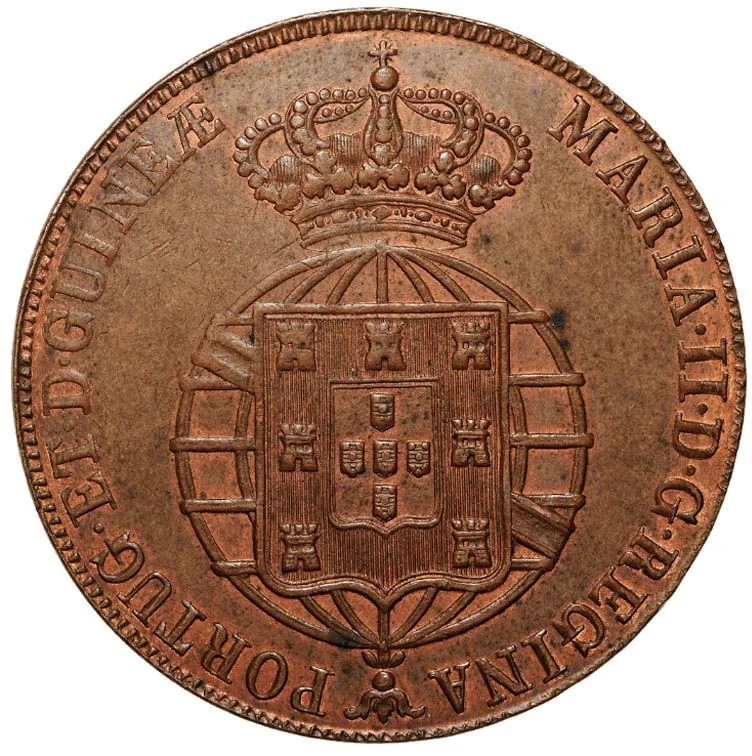
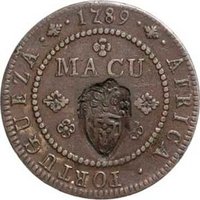
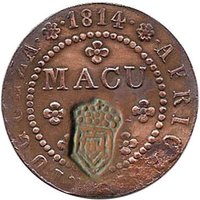
Obverse
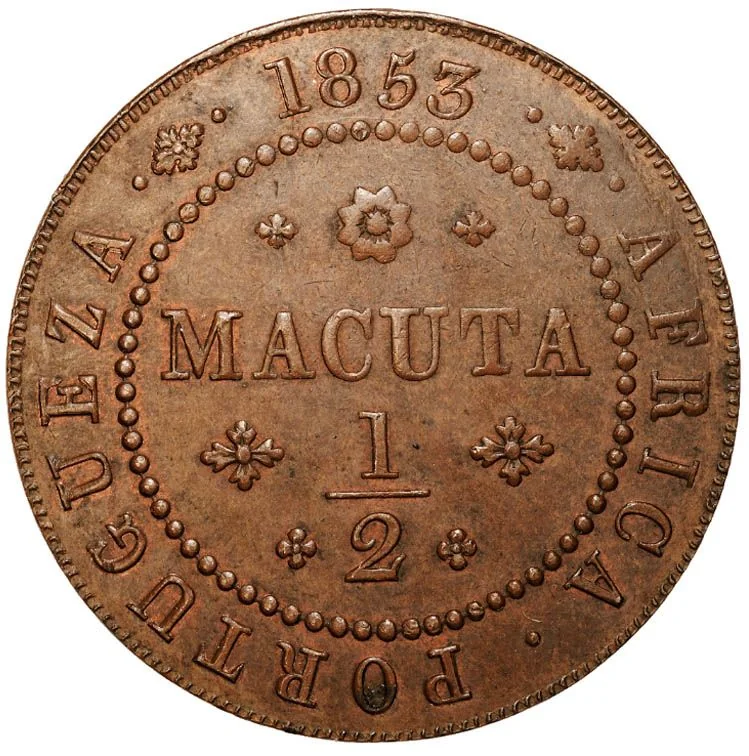
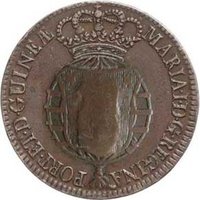
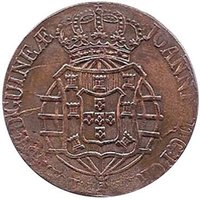
Reverse
Description:
Beaded circle with rosettes and value marks.
Inscription:
AFRICA.PORTUGEZA.1851
MACUTA
1/2
MACUTA
1/2
Script: Latin
Edge
Plain
Mints
| Name | Mark |
|---|---|
| Imprensa Nacional - Casa da Moeda | — |
Mintings
| Year | Mint Mark | Mintage | Quality | Collection |
|---|---|---|---|---|
| 1848 | — | 416,975 | ||
| 1851 | — | 104,344 | ||
| 1853 | — | 142,679 |
Historical background
In 1848, Angola was a Portuguese colony, and its currency situation was intrinsically tied to the mercantilist and extractive policies of the colonial power. The official currency was the Portuguese real, but its circulation was limited primarily to administrative centers, coastal trade hubs, and among the colonial elite. The wider economy, especially in the vast interior, operated on a complex system of multiple mediums of exchange, including traditional commodities like cloth (libongos), salt, and shells, as well as imported goods such as rum and firearms, which were used in trade, particularly the slave trade.
The period was dominated by the Atlantic slave trade, which, although officially abolished by Portugal in 1836, continued illicitly and shaped all economic activity. Currency was less important for domestic commerce than for facilitating this external trade. Portuguese authorities and sertanejos (traders from the interior) amassed wealth not in local currency but in human captives, who were the colony's primary "export." International transactions, especially with Brazilian and Cuban slave traders, were often settled in more stable foreign coinage like Spanish dollars or British pounds, highlighting the lack of a unified, trusted monetary system within Angola itself.
Furthermore, the Portuguese state faced chronic fiscal deficits and had limited capacity to enforce a single currency. Attempts to introduce and regulate coinage were largely unsuccessful beyond Luanda and Benguela. Consequently, 1848 represents a period of monetary fragmentation and instability, where the formal colonial currency system was weak and overshadowed by a thriving, brutal informal economy based on barter and human trafficking. This situation would only begin to change decades later with the final suppression of the slave trade and the shift toward a "legitimate" plantation economy.
The period was dominated by the Atlantic slave trade, which, although officially abolished by Portugal in 1836, continued illicitly and shaped all economic activity. Currency was less important for domestic commerce than for facilitating this external trade. Portuguese authorities and sertanejos (traders from the interior) amassed wealth not in local currency but in human captives, who were the colony's primary "export." International transactions, especially with Brazilian and Cuban slave traders, were often settled in more stable foreign coinage like Spanish dollars or British pounds, highlighting the lack of a unified, trusted monetary system within Angola itself.
Furthermore, the Portuguese state faced chronic fiscal deficits and had limited capacity to enforce a single currency. Attempts to introduce and regulate coinage were largely unsuccessful beyond Luanda and Benguela. Consequently, 1848 represents a period of monetary fragmentation and instability, where the formal colonial currency system was weak and overshadowed by a thriving, brutal informal economy based on barter and human trafficking. This situation would only begin to change decades later with the final suppression of the slave trade and the shift toward a "legitimate" plantation economy.
⭐ Somewhat Rare