

1 kopeck – Soviet Union
Add to wishlist
Russia
Context
Years: 1926–1935
Country: Russia
Issuer: Soviet Union
Period:
(1922—1991)
Currency:
(1924—1947)
Demonetized: Yes
Total mintage: 710,123,000
Material
References
Y: #
Numista: #5343
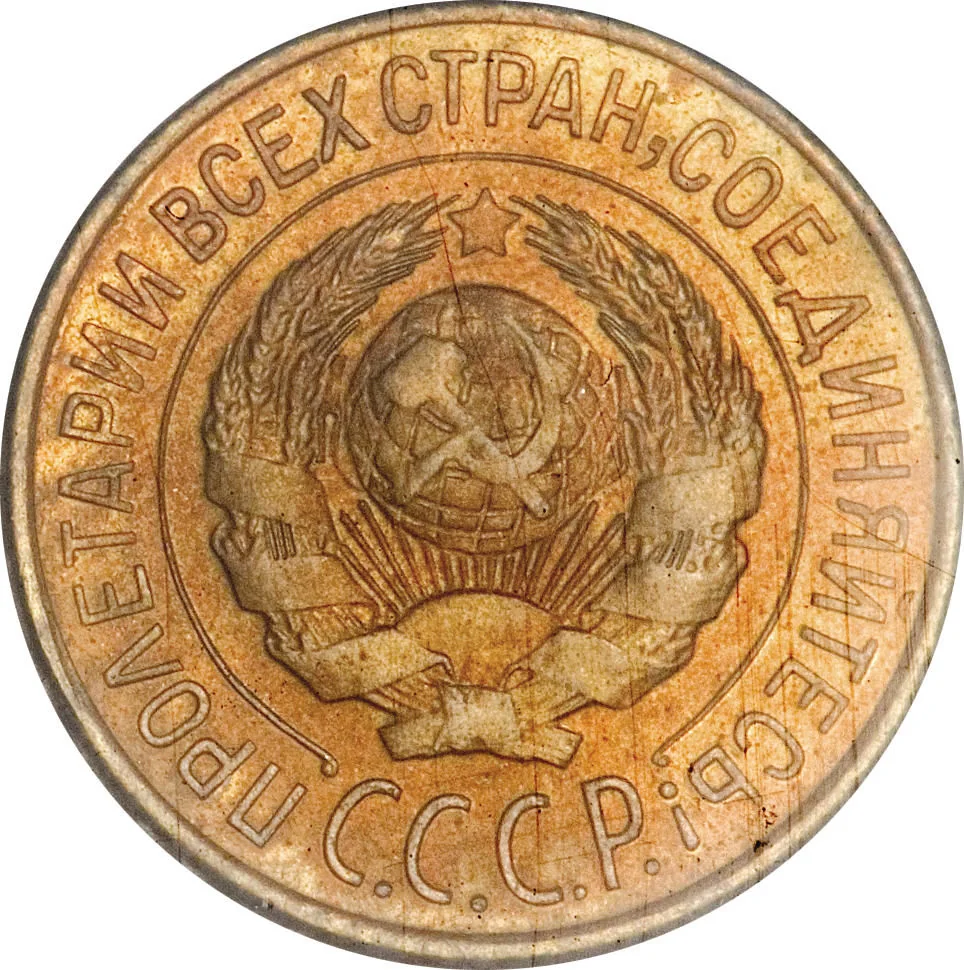
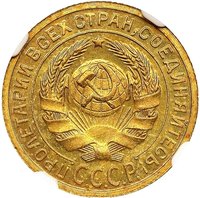
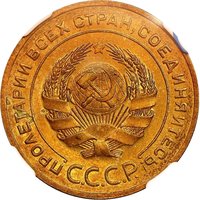
Obverse
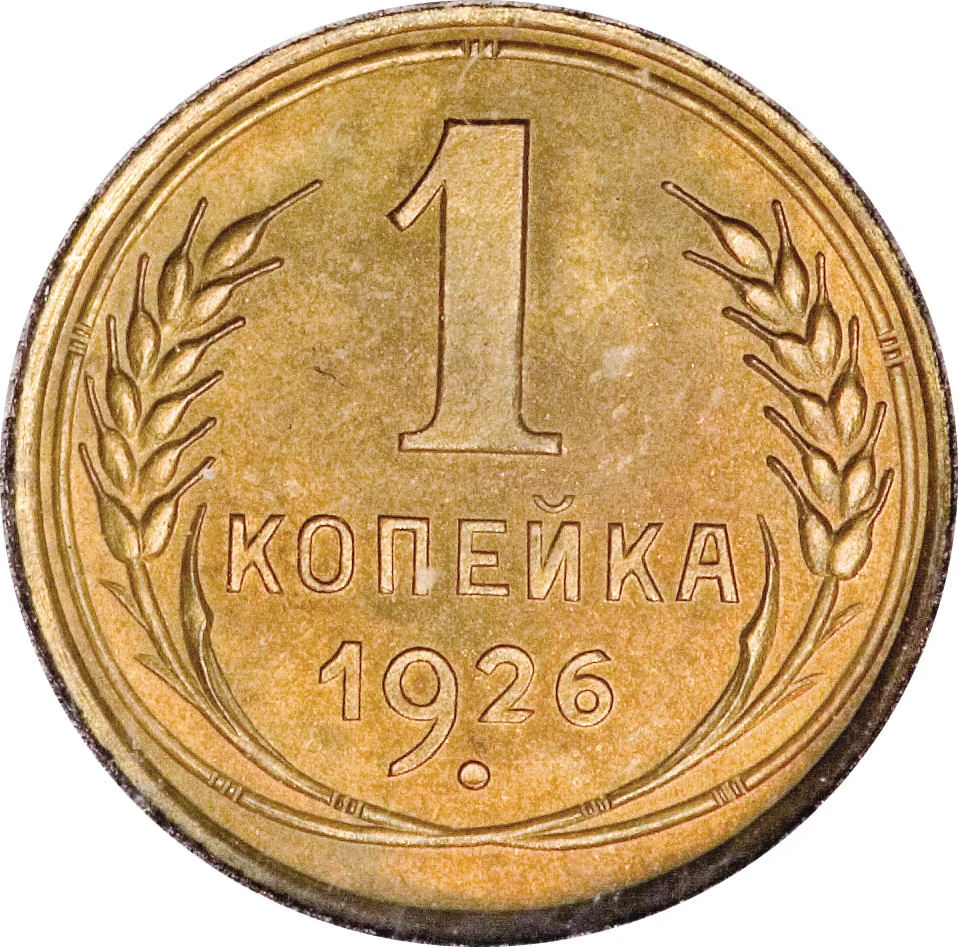
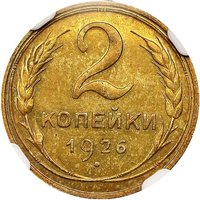
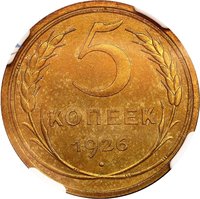
Reverse
Edge
Reeded
Mintings
| Year | Mint Mark | Mintage | Quality | Collection |
|---|---|---|---|---|
| 1926 | — | 87,915,000 | ||
| 1926 | — | — | Proof | |
| 1927 | — | — | ||
| 1928 | — | — | ||
| 1929 | — | 95,950,000 | ||
| 1930 | — | 85,351,000 | ||
| 1931 | — | 106,100,000 | ||
| 1932 | — | 56,900,000 | ||
| 1933 | — | 111,257,000 | ||
| 1934 | — | 100,245,000 | ||
| 1935 | — | 66,405,000 |
Historical background
By 1926, the Soviet Union’s currency situation was one of cautious stabilization following years of hyperinflation and monetary chaos. The introduction of the chervonets in 1922, a hard currency backed by gold and foreign exchange, had successfully restored confidence for state transactions and industry under the New Economic Policy (NEP). However, a dual-currency system persisted: the chervonets (worth 10 pre-1917 rubles) coexisted with the rapidly depreciating Sovznak, the old paper ruble, which was still being printed to cover budget deficits. This created a complex and unstable monetary environment.
The critical achievement of 1924–1925 was the final elimination of the Sovznak through a redenomination, creating a unified monetary system based on the chervonets ruble. New treasury notes (in ruble denominations) and small change coins were issued to facilitate everyday retail trade, which the high-value chervonets notes could not serve. By 1926, this reform was largely complete, resulting in the first stable Soviet currency since the Revolution. Prices were quoted in chervonets rubles, and the rampant inflation that characterized the Civil War period appeared conquered.
Nevertheless, underlying vulnerabilities remained. The gold backing of the chervonets was more theoretical than practical, as its convertibility was severely restricted. The success of the currency depended heavily on the continuation of the NEP’s market-oriented policies and a balanced state budget. By late 1926, increased state spending on industrialization and growing imbalances in trade were already putting pressure on the currency’s stability, foreshadowing the inflationary pressures and eventual return to a command economy that would mark the end of the decade. Thus, 1926 represented a brief, fragile plateau of monetary normalcy.
The critical achievement of 1924–1925 was the final elimination of the Sovznak through a redenomination, creating a unified monetary system based on the chervonets ruble. New treasury notes (in ruble denominations) and small change coins were issued to facilitate everyday retail trade, which the high-value chervonets notes could not serve. By 1926, this reform was largely complete, resulting in the first stable Soviet currency since the Revolution. Prices were quoted in chervonets rubles, and the rampant inflation that characterized the Civil War period appeared conquered.
Nevertheless, underlying vulnerabilities remained. The gold backing of the chervonets was more theoretical than practical, as its convertibility was severely restricted. The success of the currency depended heavily on the continuation of the NEP’s market-oriented policies and a balanced state budget. By late 1926, increased state spending on industrialization and growing imbalances in trade were already putting pressure on the currency’s stability, foreshadowing the inflationary pressures and eventual return to a command economy that would mark the end of the decade. Thus, 1926 represented a brief, fragile plateau of monetary normalcy.
🌱 Common