

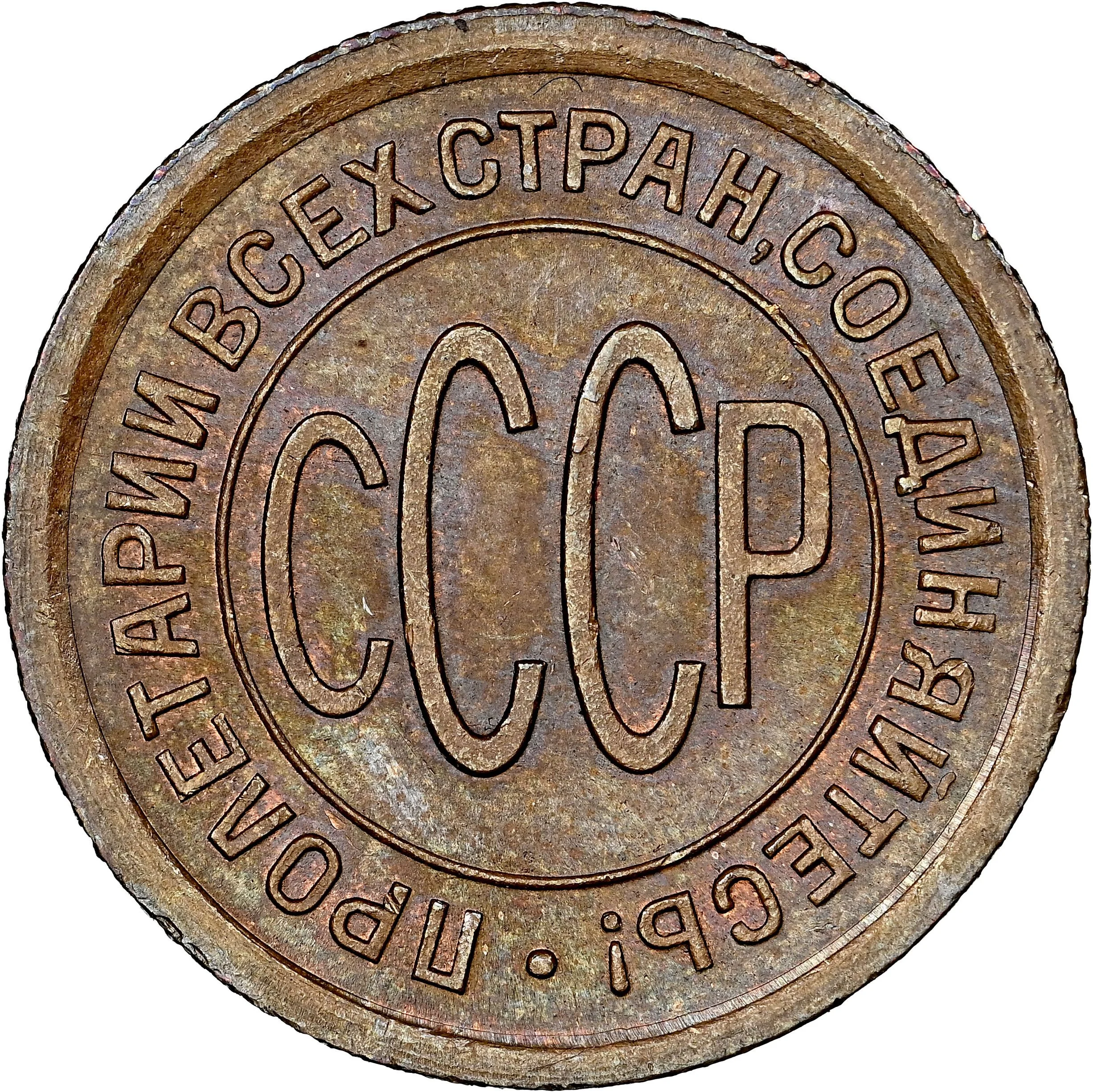
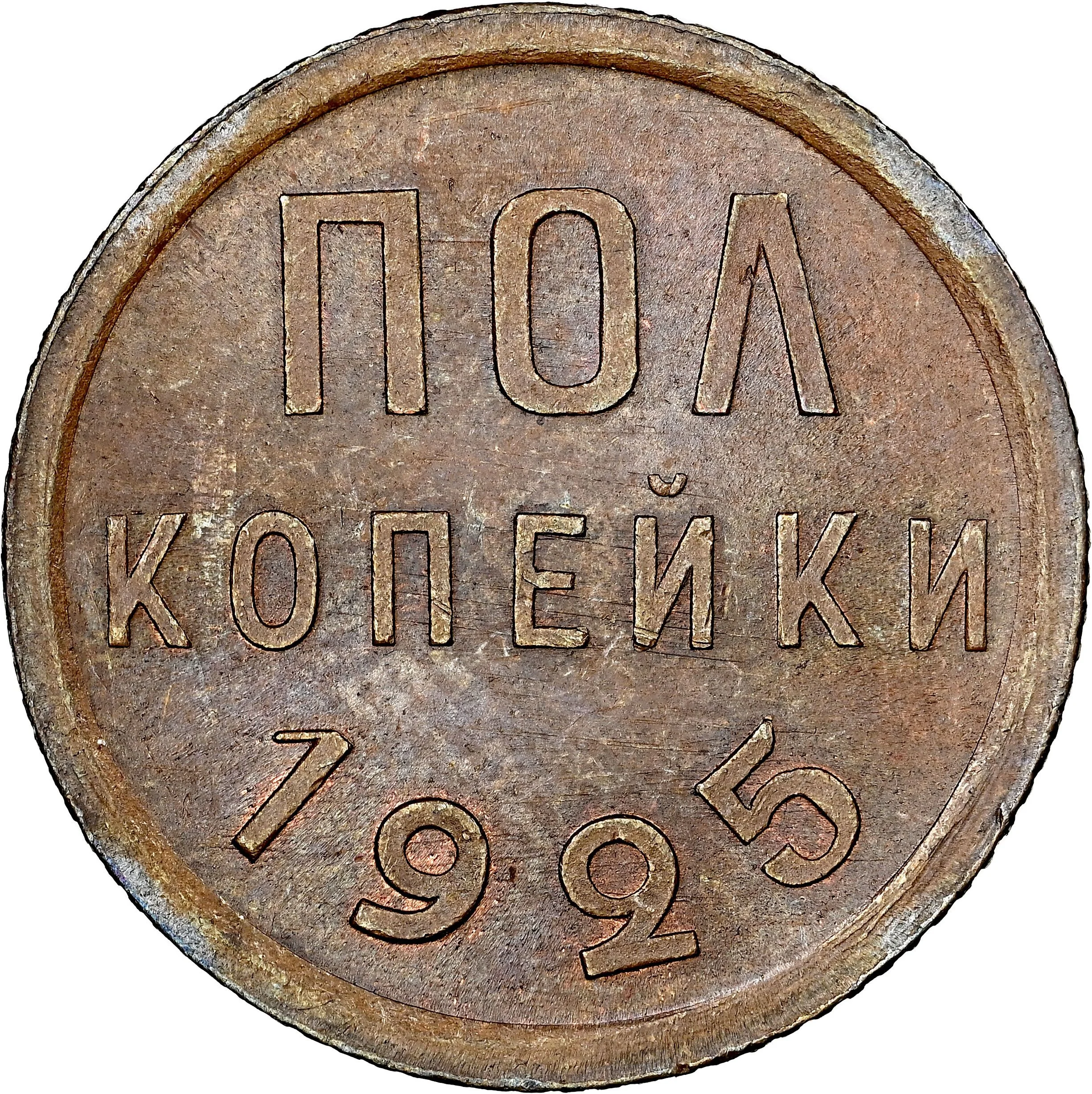
½ Kopeck – Soviet Union
Russia
Context
Years: 1925–1928
Country: Russia 
Issuer: Soviet Union 
Period:
(1922—1991)
Currency:
(1924—1947)
Demonetized: Yes
Total mintage: 90,760,000
Material
References
Y: #Click to copy to clipboard75
Numista: #14661
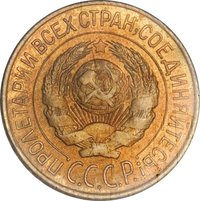
Obverse
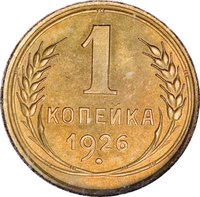
Reverse
Edge
Reeded
Mintings
| Year | Mint Mark | Mintage | Quality | Collection |
|---|---|---|---|---|
| 1925 | — | 45,380,000 | ||
| 1927 | — | 45,380,000 | ||
| 1927 | — | — | Proof | |
| 1928 | — | — |
Historical background
By 1925, the Soviet Union's currency situation was one of fragile stabilization following years of catastrophic hyperinflation. The period of War Communism (1918-1921) and the subsequent Civil War had seen the Soviet ruble become virtually worthless, leading to a widespread retreat to barter. In response, the New Economic Policy (NEP), launched in 1921, reintroduced limited market mechanisms. A key step was the monetary reform of 1922-1924, which introduced a new, parallel currency—the chervonets—backed by gold and precious metals. This hard currency was intended for state industry and wholesale trade, while a devalued "Soviet ruble" continued for everyday transactions, culminating in a 1924 decree that made the chervonets the sole official currency.
This dual-currency reform succeeded in halting hyperinflation and restoring a functioning monetary system. The chervonets, managed by the reformed State Bank (Gosbank), gained public trust and became convertible on international markets, a remarkable achievement for the isolated Soviet state. By 1925, the economy was "monetized" again, with taxes paid in cash and wages largely restored to monetary form rather than in-kind rations. This stability was crucial for the success of the NEP, facilitating the revival of agricultural trade and light industry.
However, the stability of 1925 was superficial and under growing strain. The Soviet commitment to a hard currency was inherently contradictory to its ideological drive for rapid, state-directed industrialization. Maintaining the gold-backed chervonets required fiscal and credit discipline that conflicted with the Politburo's ambitions for increased investment in heavy industry. Consequently, by mid-1925, the state began authorizing expansive short-term credits to industry, effectively printing money outside of the chervonets system. This marked the start of a controlled inflation that would gradually undermine the currency's strength, foreshadowing the end of the NEP and the return to a fully planned economy where money would become a passive instrument of accounting rather than a true store of value.
This dual-currency reform succeeded in halting hyperinflation and restoring a functioning monetary system. The chervonets, managed by the reformed State Bank (Gosbank), gained public trust and became convertible on international markets, a remarkable achievement for the isolated Soviet state. By 1925, the economy was "monetized" again, with taxes paid in cash and wages largely restored to monetary form rather than in-kind rations. This stability was crucial for the success of the NEP, facilitating the revival of agricultural trade and light industry.
However, the stability of 1925 was superficial and under growing strain. The Soviet commitment to a hard currency was inherently contradictory to its ideological drive for rapid, state-directed industrialization. Maintaining the gold-backed chervonets required fiscal and credit discipline that conflicted with the Politburo's ambitions for increased investment in heavy industry. Consequently, by mid-1925, the state began authorizing expansive short-term credits to industry, effectively printing money outside of the chervonets system. This marked the start of a controlled inflation that would gradually undermine the currency's strength, foreshadowing the end of the NEP and the return to a fully planned economy where money would become a passive instrument of accounting rather than a true store of value.
🌱 Common