

5 centésimos – Uruguay
Add to wishlist
Uruguay
Context
Years: 1977–1978
Issuer: Uruguay
Period:
(since 1825)
Currency:
(1975—1993)
Demonetization: 30 November 1991
Total mintage: 30,000,000
Material
Diameter: 22.5 mm
Weight: 2 g
Shape: Dodecagonal
Composition: Aluminium
Magnetic: No
Technique: Milled
Alignment: Medal alignment
flip
References
KM: #
Numista: #5300
Value
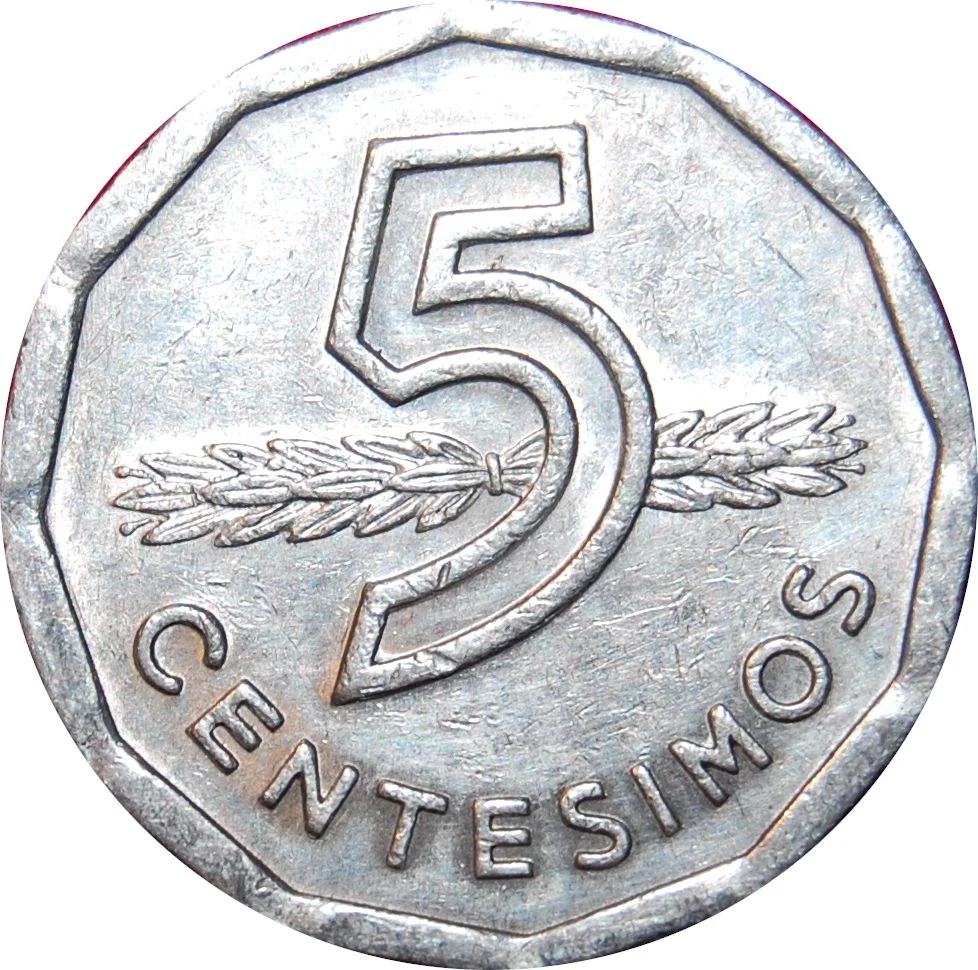
Exchange value: 0.05 UYN
Obverse
Description:
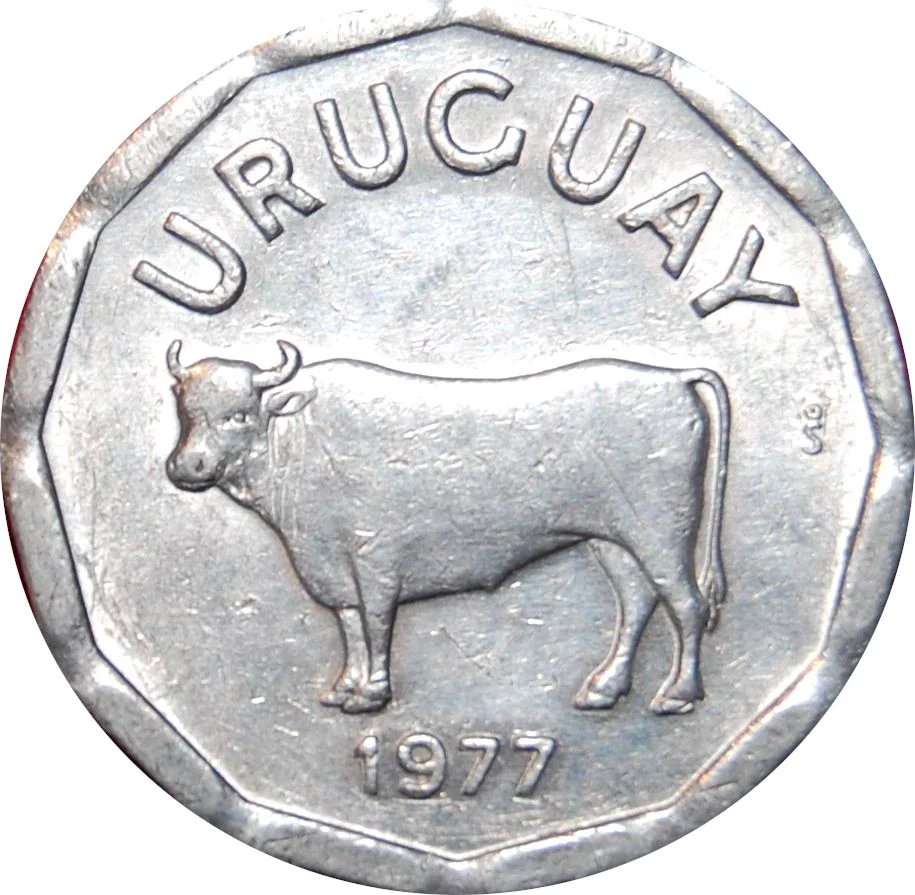
Left-facing steer with date below; country above. The steer, from the national coat of arms, symbolizes abundance.
Inscription:
URUGUAY
So
1977
So
1977
Script: Latin
Reverse
Edge
Plain
Mints
| Name | Mark |
|---|---|
| Casa de Moneda de Chile | (So) |
Mintings
| Year | Mint Mark | Mintage | Quality | Collection |
|---|---|---|---|---|
| 1977 | So | 11,000,000 | ||
| 1978 | So | 19,000,000 |
Historical background
In 1977, Uruguay was in the midst of a severe economic and financial crisis under the civic-military dictatorship that had seized power in 1973. The regime's initial attempt at a orthodox economic "shock" plan had failed, leading to deep recession, plummeting industrial output, and a massive accumulation of external debt. This period was characterized by financial repression, where the government tightly controlled the banking system and maintained an overvalued, fixed exchange rate for the Uruguayan peso as part of a failed stabilization effort, creating significant distortions.
The currency situation was defined by a stark duality. Officially, a fixed exchange rate was maintained, but this was unsustainable due to high inflation and loss of confidence. Consequently, a vast and tolerated parallel black market for US dollars flourished, where the peso traded at a significant discount. This "financial dollar" became the true benchmark for economic transactions, reflecting the widespread flight from the local currency. The public, seeking to preserve savings from inflation and devaluation risks, engaged in massive "dollarization," converting pesos into foreign currency whenever possible.
This period set the stage for the profound financial and banking crisis that would erupt in the early 1980s. The overvalued peso, combined with liberalized capital flows and high real interest rates, encouraged excessive borrowing in dollars by the private sector, believing the exchange rate would hold. By 1977, these imbalances were already entrenched, making a future dramatic devaluation and a wave of bankruptcies inevitable, ultimately leading to a collapse of the financial system.
The currency situation was defined by a stark duality. Officially, a fixed exchange rate was maintained, but this was unsustainable due to high inflation and loss of confidence. Consequently, a vast and tolerated parallel black market for US dollars flourished, where the peso traded at a significant discount. This "financial dollar" became the true benchmark for economic transactions, reflecting the widespread flight from the local currency. The public, seeking to preserve savings from inflation and devaluation risks, engaged in massive "dollarization," converting pesos into foreign currency whenever possible.
This period set the stage for the profound financial and banking crisis that would erupt in the early 1980s. The overvalued peso, combined with liberalized capital flows and high real interest rates, encouraged excessive borrowing in dollars by the private sector, believing the exchange rate would hold. By 1977, these imbalances were already entrenched, making a future dramatic devaluation and a wave of bankruptcies inevitable, ultimately leading to a collapse of the financial system.
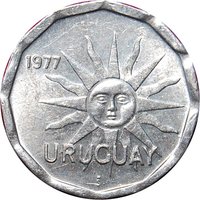
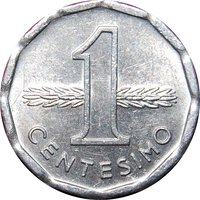
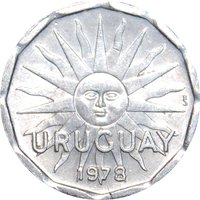
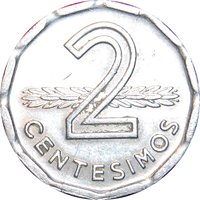
Series: 1977 Uruguay circulation coins
🌱 Common