

1 new peso – Uruguay
Add to wishlist
Uruguay
Context
Year: 1980
Issuer: Uruguay
Period:
(since 1825)
Currency:
(1975—1993)
Demonetization: 30 November 1991
Total mintage: 50,000,000
Material
Diameter: 24 mm
Weight: 6 g
Thickness: 1.74 mm
Shape: Round
Composition: Copper-nickel
Technique: Milled
Alignment: Medal alignment
flip
References
KM: #
Numista: #3475
Value
Exchange value: 1 UYN
Obverse
Description:
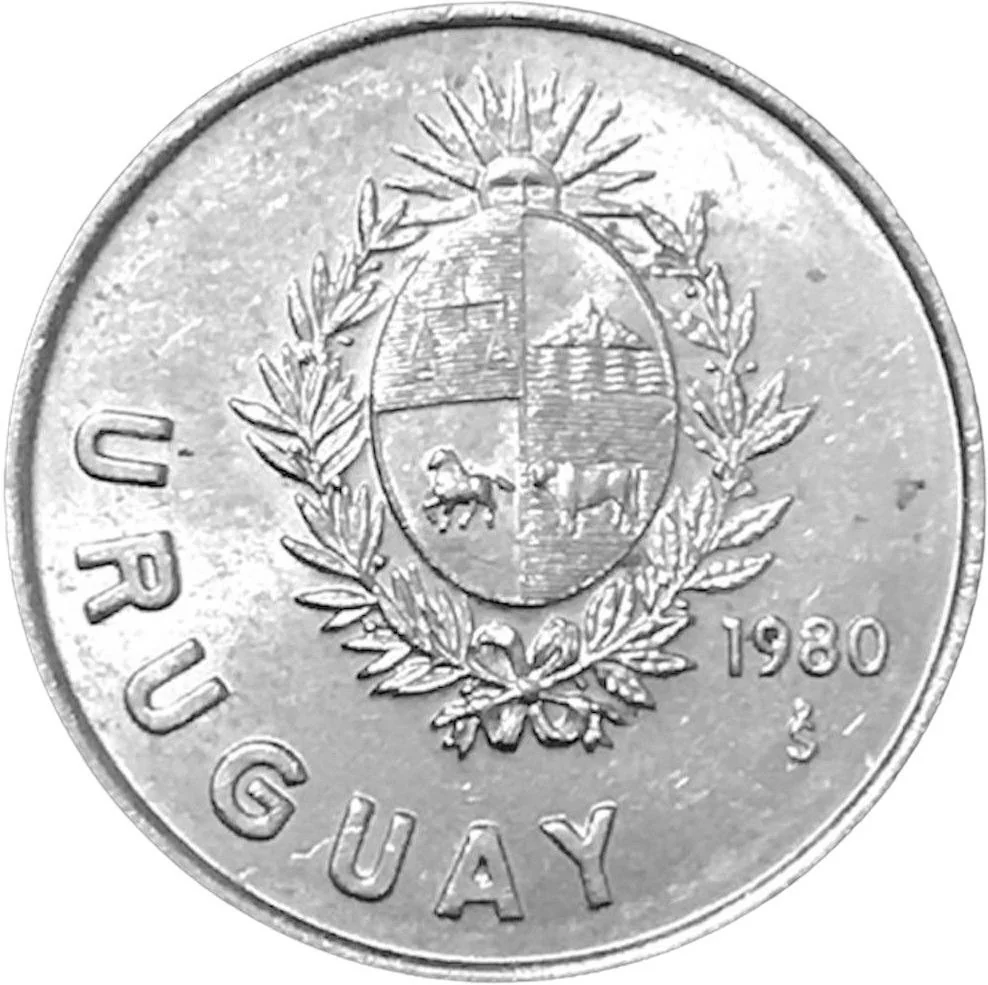
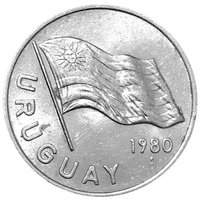
Uruguay's national arms, with the country name on the lower left and the year on the right.
Inscription:
URUGUAY 1980
So
So
Script: Latin
Reverse
Description:
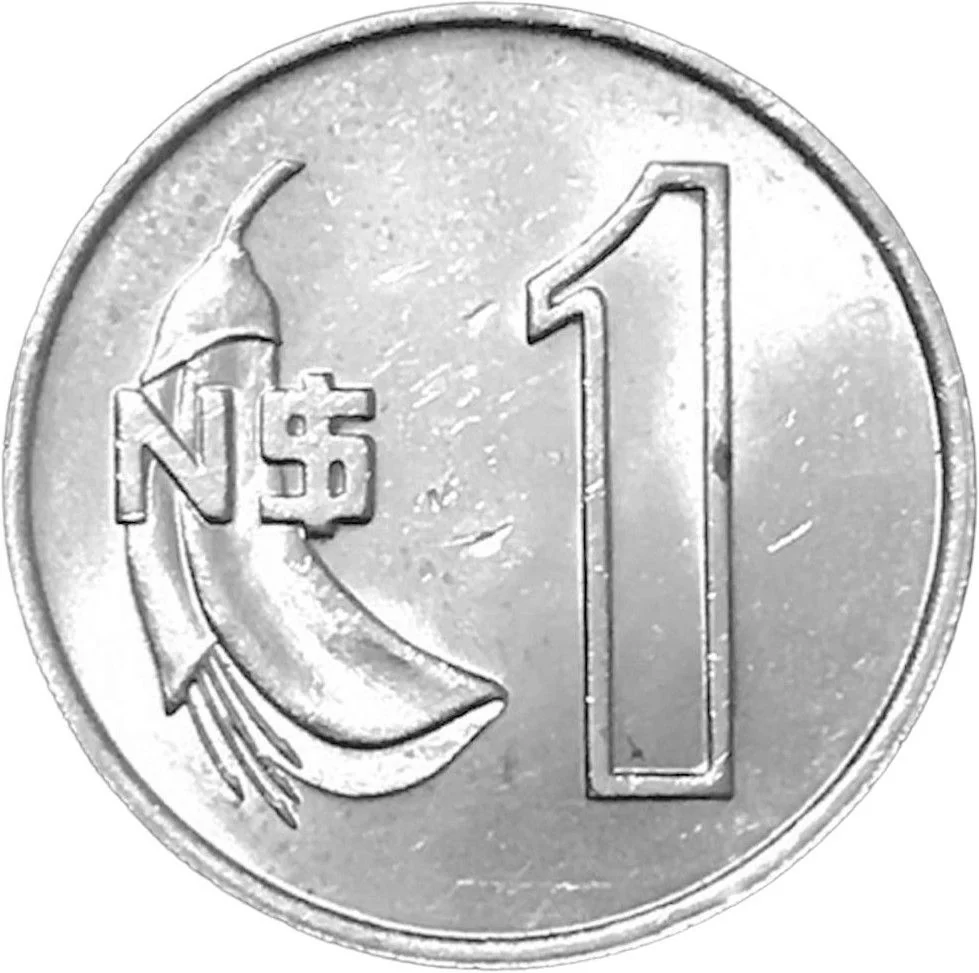
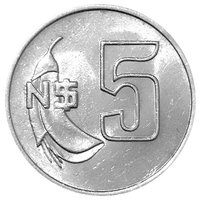
Coral flower (Erythrina cristagalli), Uruguay's national flower. Denomination left, numeral value right.
Inscription:
N$ 1
Script: Latin
Edge
Reeded
Mints
| Name | Mark |
|---|---|
| Casa de Moneda de Chile | (So) |
Mintings
| Year | Mint Mark | Mintage | Quality | Collection |
|---|---|---|---|---|
| 1980 | So | 50,000,000 |
Historical background
By 1980, Uruguay was in the advanced stages of a profound economic and financial crisis, with its currency situation at the epicenter. The decade prior had been characterized by the "tablita cambiaria," a pre-announced, crawling peg exchange rate regime implemented in 1978 by the military dictatorship. This policy aimed to curb rampant inflation by tying the Uruguayan peso to the US dollar at a gradually devaluing rate, intended to signal stability and discipline. Initially, it succeeded in reducing inflation and attracting speculative capital inflows, creating an artificial sense of prosperity.
However, the policy proved unsustainable. The pre-fixed devaluation rate soon fell far below the actual domestic inflation rate, causing the peso to become massively overvalued in real terms. This overvaluation devastated Uruguay's export competitiveness and encouraged a dramatic surge in imports, leading to a widening trade deficit and a rapid depletion of foreign reserves. Concurrently, financial liberalization had unleashed a domestic credit boom, with many Uruguayan firms and individuals borrowing heavily in dollars, believing the exchange rate guarantee was ironclad.
The currency misalignment created severe distortions, and by 1980 the cracks were undeniable. The overvalued peso, combined with a global economic downturn and rising international interest rates, pushed the country toward a balance of payments crisis. Confidence in the "tablita" evaporated, leading to capital flight and intense pressure on the peso. This precarious situation set the stage for the inevitable collapse of the regime in 1982, triggering a devastating banking crisis, a massive devaluation, and a deep economic depression that would define the early 1980s in Uruguay.
However, the policy proved unsustainable. The pre-fixed devaluation rate soon fell far below the actual domestic inflation rate, causing the peso to become massively overvalued in real terms. This overvaluation devastated Uruguay's export competitiveness and encouraged a dramatic surge in imports, leading to a widening trade deficit and a rapid depletion of foreign reserves. Concurrently, financial liberalization had unleashed a domestic credit boom, with many Uruguayan firms and individuals borrowing heavily in dollars, believing the exchange rate guarantee was ironclad.
The currency misalignment created severe distortions, and by 1980 the cracks were undeniable. The overvalued peso, combined with a global economic downturn and rising international interest rates, pushed the country toward a balance of payments crisis. Confidence in the "tablita" evaporated, leading to capital flight and intense pressure on the peso. This precarious situation set the stage for the inevitable collapse of the regime in 1982, triggering a devastating banking crisis, a massive devaluation, and a deep economic depression that would define the early 1980s in Uruguay.
🌱 Very Common