

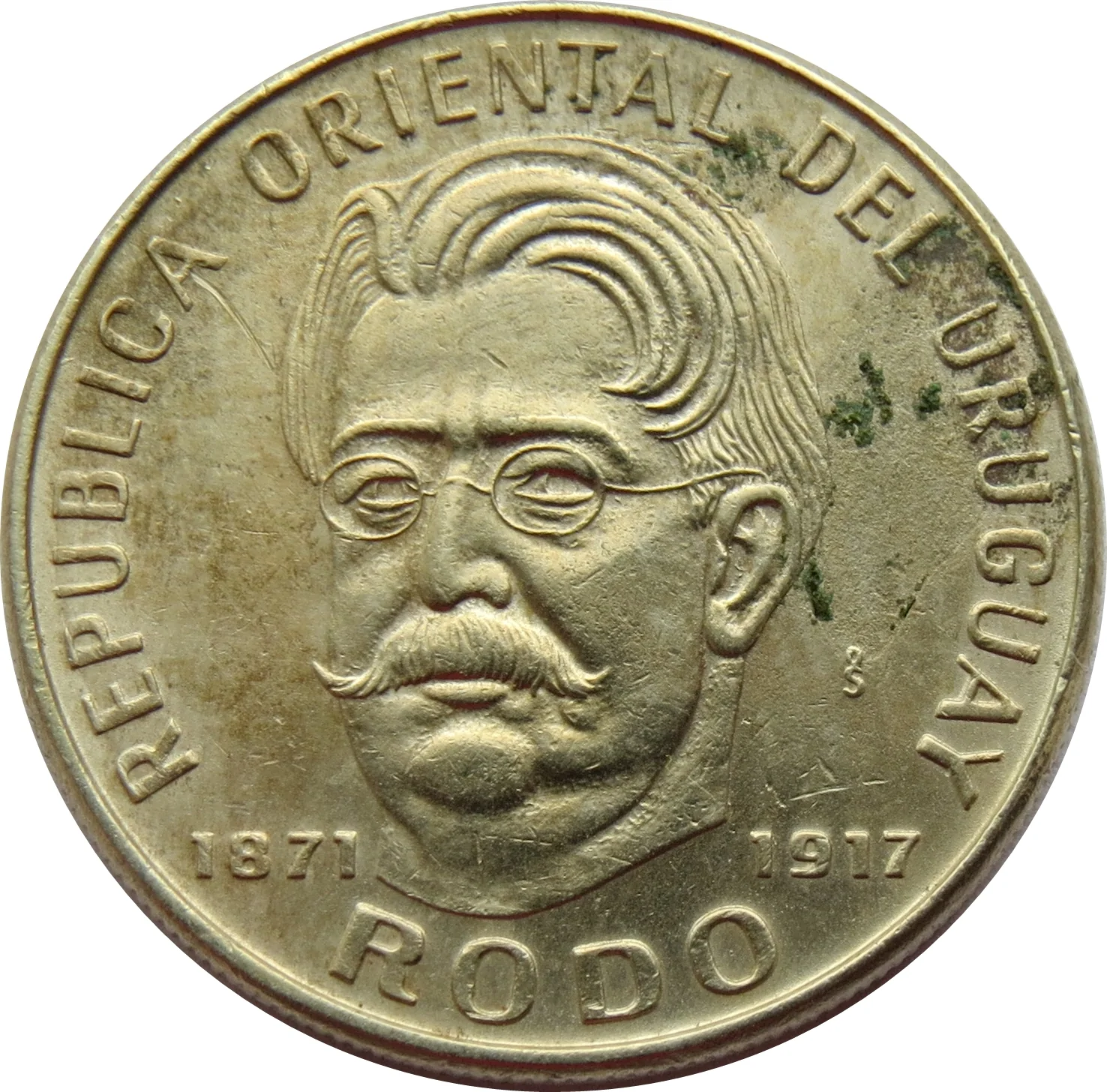
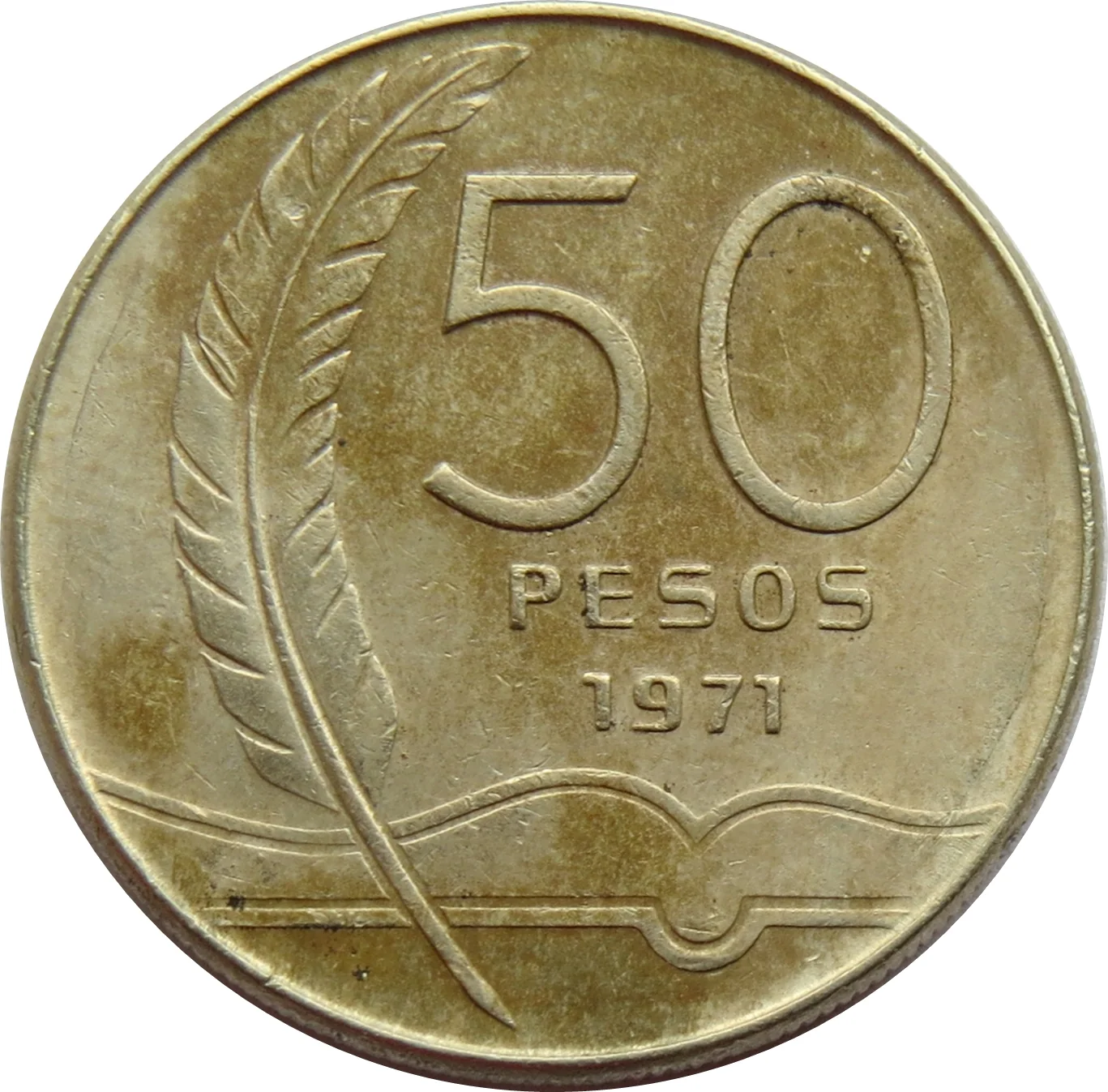
50 Pesos (José Enrique Rodó) – Uruguay
Circulating commemorative coins
Commemoration: 100th Anniversary of the Birth of José Enrique Rodó
Uruguay
Context
Year: 1971
Issuer: Uruguay 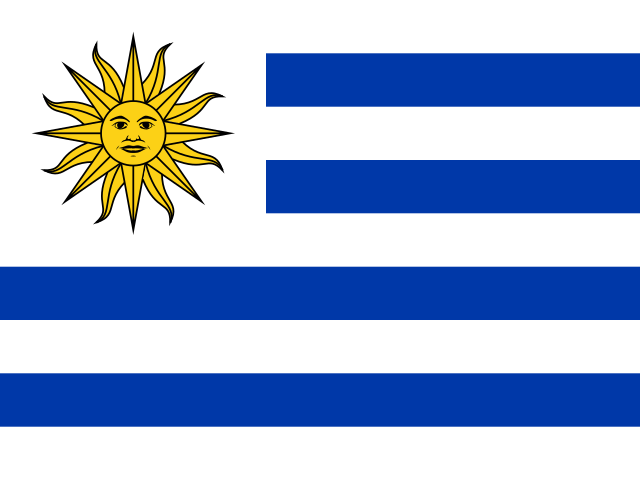
Period:
(since 1825)
Currency:
(1863—1975)
Demonetization: 1 July 1975
Total mintage: 15,000,000
Material
Diameter: 24.5 mm
Weight: 5.2 g
Thickness: 1.7 mm
Shape: Round
Composition: Nickel brass
Magnetic: No
Technique: Milled
Alignment: Medal alignment
flip
References
KM: #Click to copy to clipboard58
Numista: #5295
Value
Exchange value: 50 UYP
Obverse
Reverse
Description:
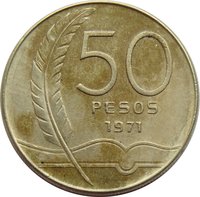
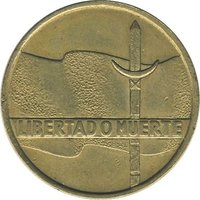
Feather logo, stylized book, denomination and year.
Inscription:
50
PESOS
1971
PESOS
1971
Script: Latin
Edge
Reeded
Categories
| Art> Literature |
| Event> Birth anniversary |
| Mustache/Beard |
Mints
| Name | Mark |
|---|---|
| Casa de Moneda de Chile | So |
Mintings
| Year | Mint Mark | Mintage | Quality | Collection |
|---|---|---|---|---|
| 1971 | So | 15,000,000 |
Historical background
In 1971, Uruguay's currency situation was characterized by severe instability and accelerating inflation, marking a critical point in the country's long-standing economic decline. This was the culmination of structural problems dating back to the 1950s, as the traditional export-led model based on wool and beef stagnated. Chronic fiscal deficits, financed by money creation from the Central Bank, had led to persistent inflation throughout the 1960s. By 1971, under President Jorge Pacheco Areco's de facto wage and price controls, these pressures erupted into a full-blown crisis, with the Uruguayan peso experiencing rapid devaluation and a sharp loss of public confidence.
The government's response was a complex web of exchange controls and multiple exchange rates in an attempt to manage the balance of payments and shield key sectors. Alongside an official rate, there existed a financial exchange rate and a black market, where the peso's value was significantly weaker. This system created distortions, encouraged speculation, and led to capital flight as citizens and businesses sought to protect their assets from eroding purchasing power. Inflation soared to approximately 35% annually, severely eroding wages and savings, and contributing to widespread social and political unrest.
This deteriorating economic backdrop, with its currency instability and inflationary spiral, was a central factor in the radicalization of politics and the erosion of democratic stability in Uruguay. The crisis fueled support for the leftist guerrilla movement, the Tupamaros, and intensified demands from both workers and the industrial elite for decisive action. Ultimately, the inability to resolve the monetary and fiscal crisis contributed to the conditions that led to the presidential crisis of 1972 and, the following year, the military coup that would establish a dictatorship lasting until 1985.
The government's response was a complex web of exchange controls and multiple exchange rates in an attempt to manage the balance of payments and shield key sectors. Alongside an official rate, there existed a financial exchange rate and a black market, where the peso's value was significantly weaker. This system created distortions, encouraged speculation, and led to capital flight as citizens and businesses sought to protect their assets from eroding purchasing power. Inflation soared to approximately 35% annually, severely eroding wages and savings, and contributing to widespread social and political unrest.
This deteriorating economic backdrop, with its currency instability and inflationary spiral, was a central factor in the radicalization of politics and the erosion of democratic stability in Uruguay. The crisis fueled support for the leftist guerrilla movement, the Tupamaros, and intensified demands from both workers and the industrial elite for decisive action. Ultimately, the inability to resolve the monetary and fiscal crisis contributed to the conditions that led to the presidential crisis of 1972 and, the following year, the military coup that would establish a dictatorship lasting until 1985.
🌱 Very Common