

1 Centesimo – Panama
Panama
Context
Material
References
KM: #Click to copy to clipboard14
Numista: #5259
Value
Exchange value: 0.01 PAB
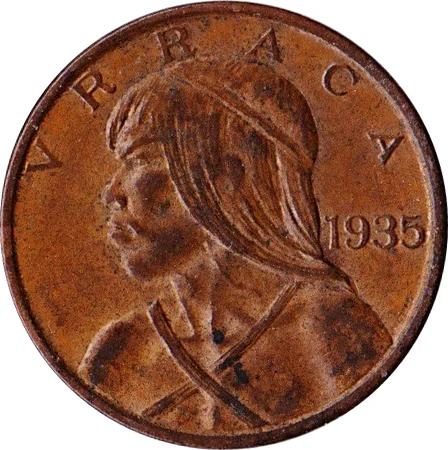
Obverse
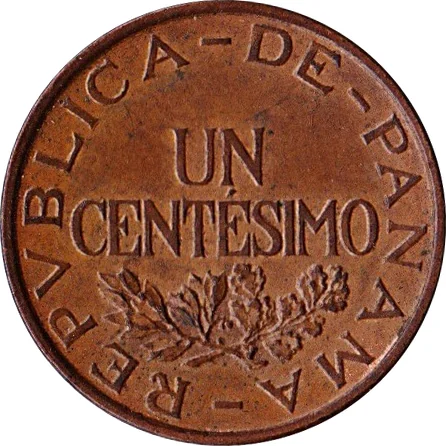
Reverse
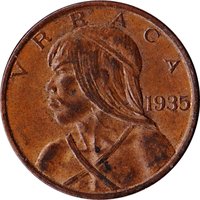
Description:
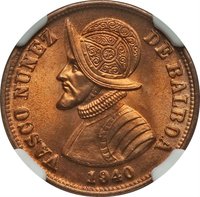
Urraca's head left, name above, date at right shoulder.
Inscription:
VRRACA
1935
1935
Script: Latin
Engraver: William Clark Noble
Edge
Plain
Categories
| Person> Military leader |
| Symbol> Wreath |
Mints
| Name | Mark |
|---|---|
| United States Mint of Philadelphia | — |
Mintings
| Year | Mint Mark | Mintage | Quality | Collection |
|---|---|---|---|---|
| 1935 | — | 200,000 | ||
| 1937 | — | 200,000 |
Historical background
In 1935, Panama’s currency situation was defined by the exclusive use of the US dollar as legal tender, a system established at the country's independence in 1904. This formal dollarization provided monetary stability and facilitated trade, particularly with the United States, which was crucial given the operation of the Panama Canal. However, it also meant Panama had no independent monetary policy or central bank, ceding control over its money supply and interest rates to the US Federal Reserve. The economy was therefore directly vulnerable to shifts in US monetary conditions, especially during the Great Depression.
The global economic climate of the 1930s placed significant strain on this arrangement. While the dollar peg prevented currency crises, Panama suffered from the same deflationary pressures as the US, with falling agricultural export prices and high unemployment. A key concern was the chronic shortage of fractional coinage for everyday transactions, as US minted subsidiary coins often flowed out of the country. To address this, Panama issued its own silver balboa coins, which were minted in the United States and pegged at par to the dollar, circulating alongside US currency.
Thus, the 1935 monetary landscape was one of dependent stability. The system avoided the exchange rate turmoil seen in other Latin American nations but offered no tools for domestic economic stimulus. Discussions about creating a central bank or issuing paper money occasionally arose but gained little traction, as the political and commercial elite largely valued the discipline and predictability of the dollarized system. The arrangement underscored Panama's unique economic integration with the United States, a relationship that provided both security and constraint.
The global economic climate of the 1930s placed significant strain on this arrangement. While the dollar peg prevented currency crises, Panama suffered from the same deflationary pressures as the US, with falling agricultural export prices and high unemployment. A key concern was the chronic shortage of fractional coinage for everyday transactions, as US minted subsidiary coins often flowed out of the country. To address this, Panama issued its own silver balboa coins, which were minted in the United States and pegged at par to the dollar, circulating alongside US currency.
Thus, the 1935 monetary landscape was one of dependent stability. The system avoided the exchange rate turmoil seen in other Latin American nations but offered no tools for domestic economic stimulus. Discussions about creating a central bank or issuing paper money occasionally arose but gained little traction, as the political and commercial elite largely valued the discipline and predictability of the dollarized system. The arrangement underscored Panama's unique economic integration with the United States, a relationship that provided both security and constraint.
🌱 Common