

Obverse
Description:
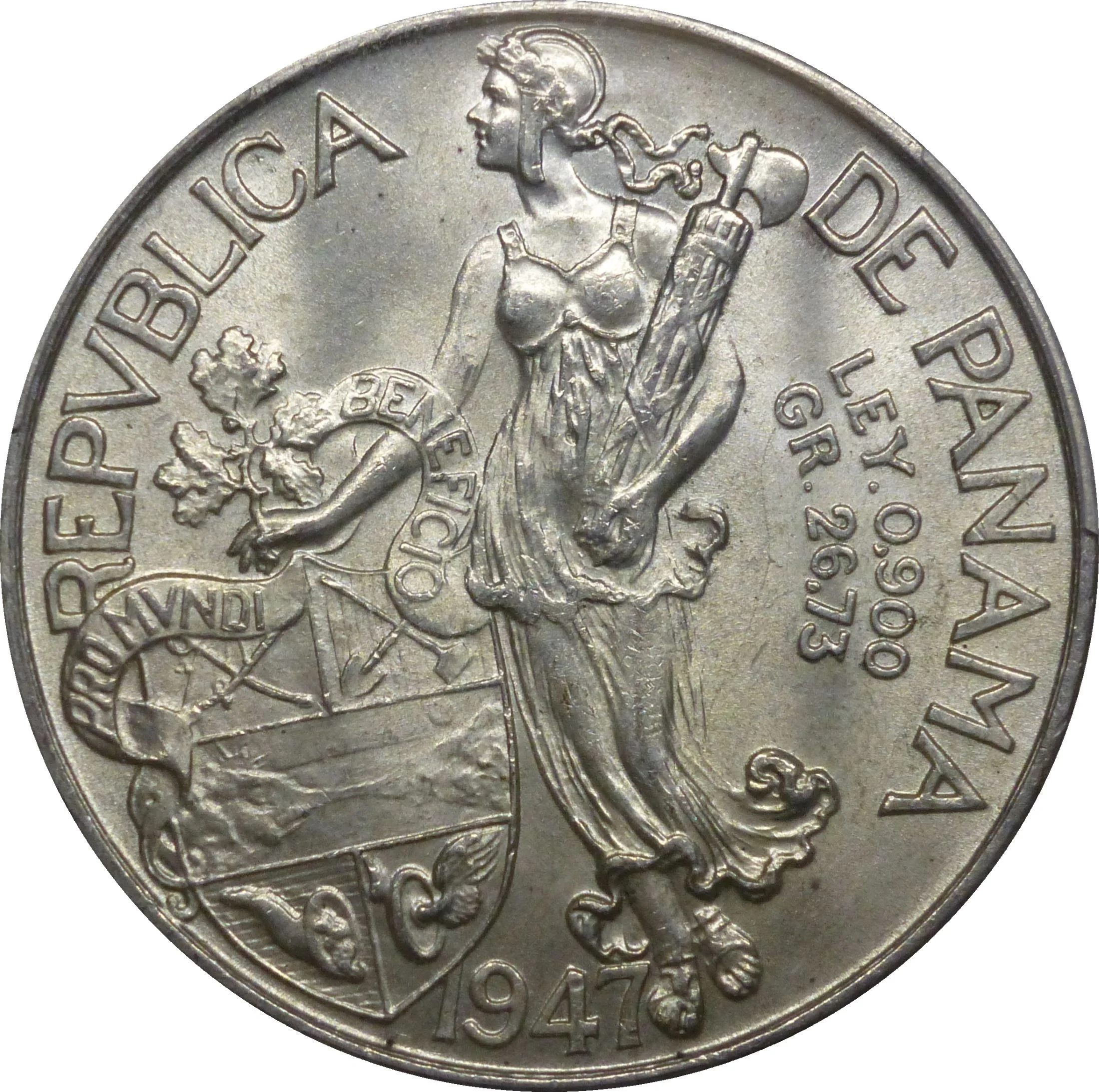
Liberty stands holding a fasces and an oak sprig, her arm resting on Panama's shield. The country name is above, purity and weight to the right, and the date below.
Inscription:
REPVBLICA DE PANAMA
LEY 0.900
GR 26.73
PRO MUNDI BENEFICIO
1947
LEY 0.900
GR 26.73
PRO MUNDI BENEFICIO
1947
Translation:
REPUBLIC OF PANAMA
LAW 0.900
GR 26.73
FOR THE BENEFIT OF THE WORLD
1947
LAW 0.900
GR 26.73
FOR THE BENEFIT OF THE WORLD
1947
Script: Latin
Engraver: William Clark Noble
Reverse
Description:
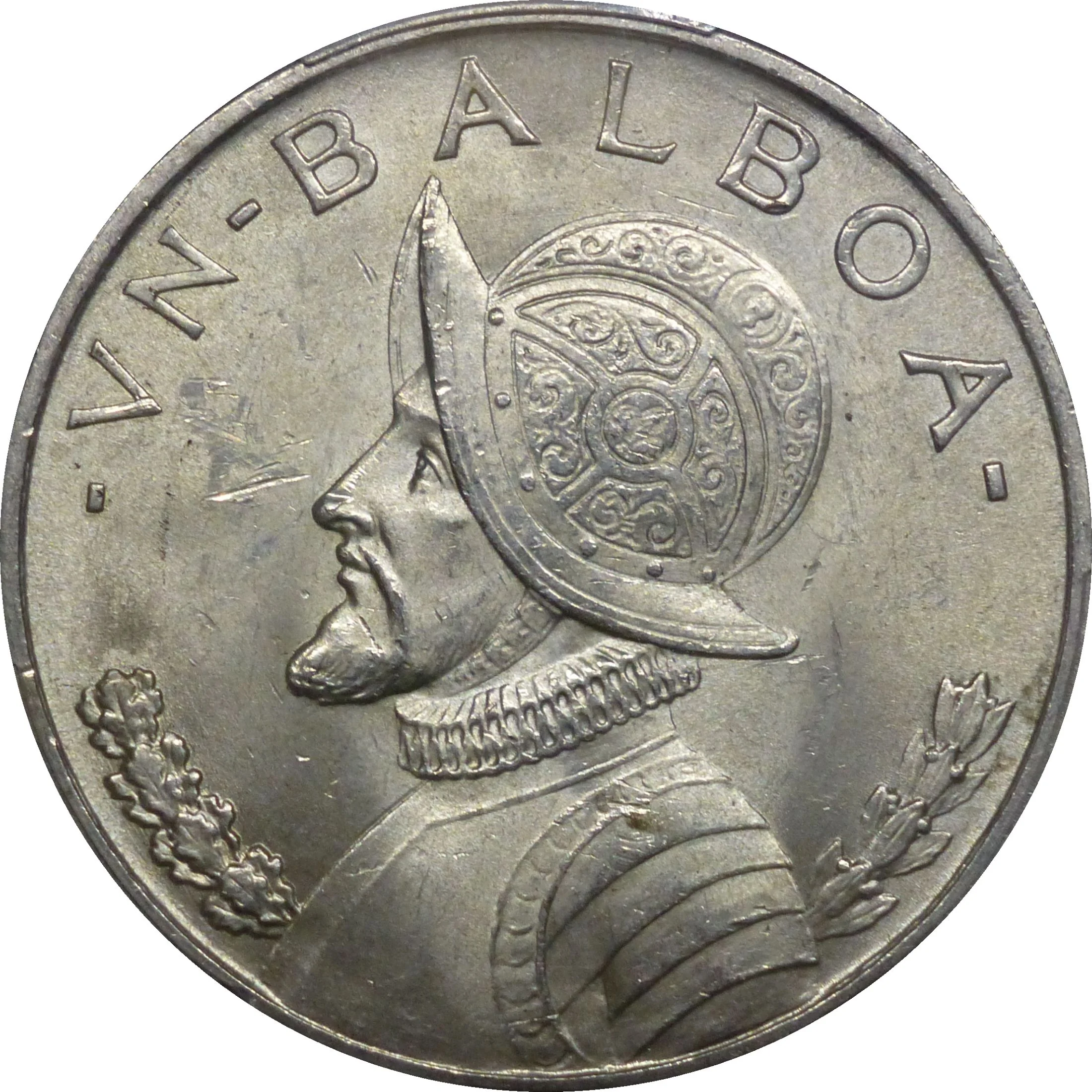
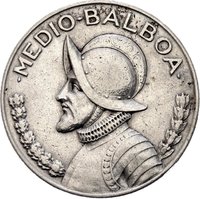
Balboa's armored bust left, wreath below, denomination above.
Inscription:
· VN - BALBOA ·
Translation:
UNITED STATES OF AMERICA · BALBOA ·
Script: Latin
Language: Spanish
Engraver: Roberto Lewis
Edge
Reeded
Mintings
| Year | Mint Mark | Mintage | Quality | Collection |
|---|---|---|---|---|
| 1931 | — | 200,000 | ||
| 1931 | — | 20 | Proof | |
| 1934 | — | 225,000 | ||
| 1947 | — | 500,000 |
Historical background
In 1931, Panama found itself in a precarious currency situation, a direct consequence of its unique monetary system and the global Great Depression. Since its independence in 1903, Panama used the US dollar as its official paper currency but also minted its own fractional silver coinage, the Balboa, pegged at par with the dollar. This system relied entirely on the stability of the United States, but a critical vulnerability emerged: Panama held no central bank or significant gold reserves of its own, leaving its economy externally dependent and ill-equipped for a major financial shock.
The crisis was triggered in early 1931 when a severe drop in global commodity prices devastated Panama's key exports, particularly bananas, and drastically reduced shipping traffic through the Canal. This caused a sharp decline in dollar earnings and led to a panic-driven hoarding of US silver coins, which began to disappear from circulation. As the physical currency supply contracted, a crippling liquidity crisis ensued, making it difficult for businesses to operate and for workers to be paid, pushing the economy toward paralysis.
The Panamanian government, led by President Florencio Harmodio Arosemena, responded with an emergency decree in April 1931. This controversial measure attempted to resolve the shortage by authorizing the issuance of "Panamanian currency notes"—essentially provisional paper scrip in denominations of 1, 5, 10, and 20 Balboas—to supplement the vanished silver. However, lacking public confidence and full backing, these notes quickly depreciated, trading at a discount to the US dollar. This episode starkly revealed the fragility of Panama's dollarized economy and culminated in political upheaval, contributing to Arosemena's overthrow in a coup just weeks after the notes' introduction.
The crisis was triggered in early 1931 when a severe drop in global commodity prices devastated Panama's key exports, particularly bananas, and drastically reduced shipping traffic through the Canal. This caused a sharp decline in dollar earnings and led to a panic-driven hoarding of US silver coins, which began to disappear from circulation. As the physical currency supply contracted, a crippling liquidity crisis ensued, making it difficult for businesses to operate and for workers to be paid, pushing the economy toward paralysis.
The Panamanian government, led by President Florencio Harmodio Arosemena, responded with an emergency decree in April 1931. This controversial measure attempted to resolve the shortage by authorizing the issuance of "Panamanian currency notes"—essentially provisional paper scrip in denominations of 1, 5, 10, and 20 Balboas—to supplement the vanished silver. However, lacking public confidence and full backing, these notes quickly depreciated, trading at a discount to the US dollar. This episode starkly revealed the fragility of Panama's dollarized economy and culminated in political upheaval, contributing to Arosemena's overthrow in a coup just weeks after the notes' introduction.
🌱 Common