

20 Zlotys – Poland
Poland
Context

Material
Weight: 28.28 g
Silver weight: 26.16 g
Shape: Rectangular
Composition: 92.5% Silver
Magnetic: No
Alignment: Medal alignment
flip
References
Y: #Click to copy to clipboard442
Numista: #51894
Value
Exchange value: 20 PLN = $5.60
Bullion value: $76.01
Inflation-adjusted value: 41.97 PLN
Obverse
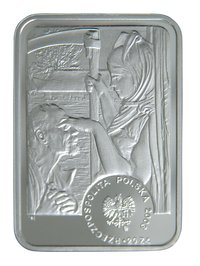
Description:
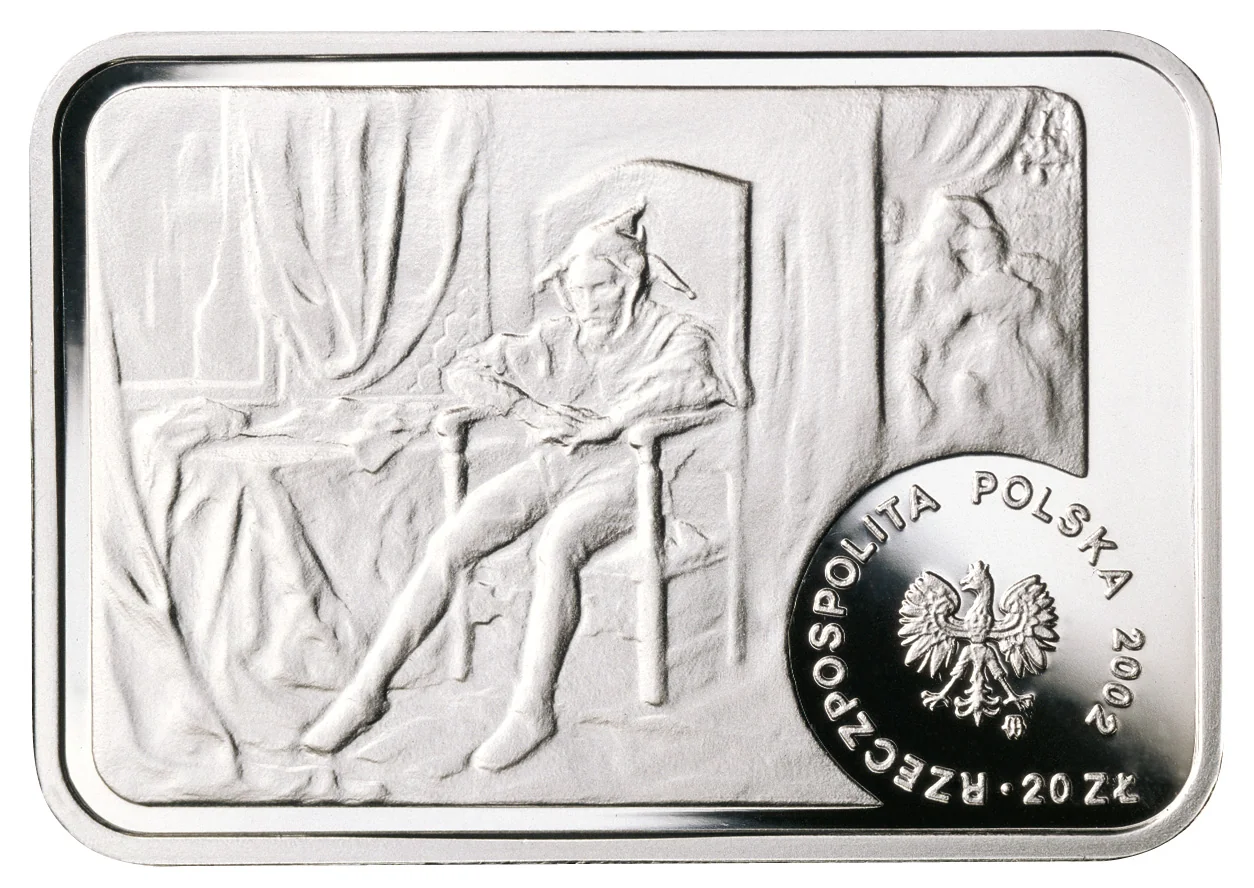
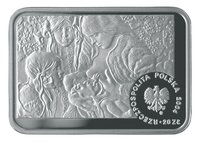
"Stanczyk" depicts the court jester in a moment of somber reflection.
Inscription:
20ZŁ. RZECZPOSPOLITA POLSKA 2002
mw
mw
Translation:
20 ZŁ. REPUBLIC OF POLAND 2002
Script: Latin
Language: Polish
Designer: Ewa Tyc-Karpińska
Reverse
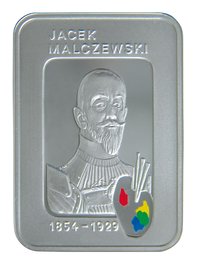
Description:
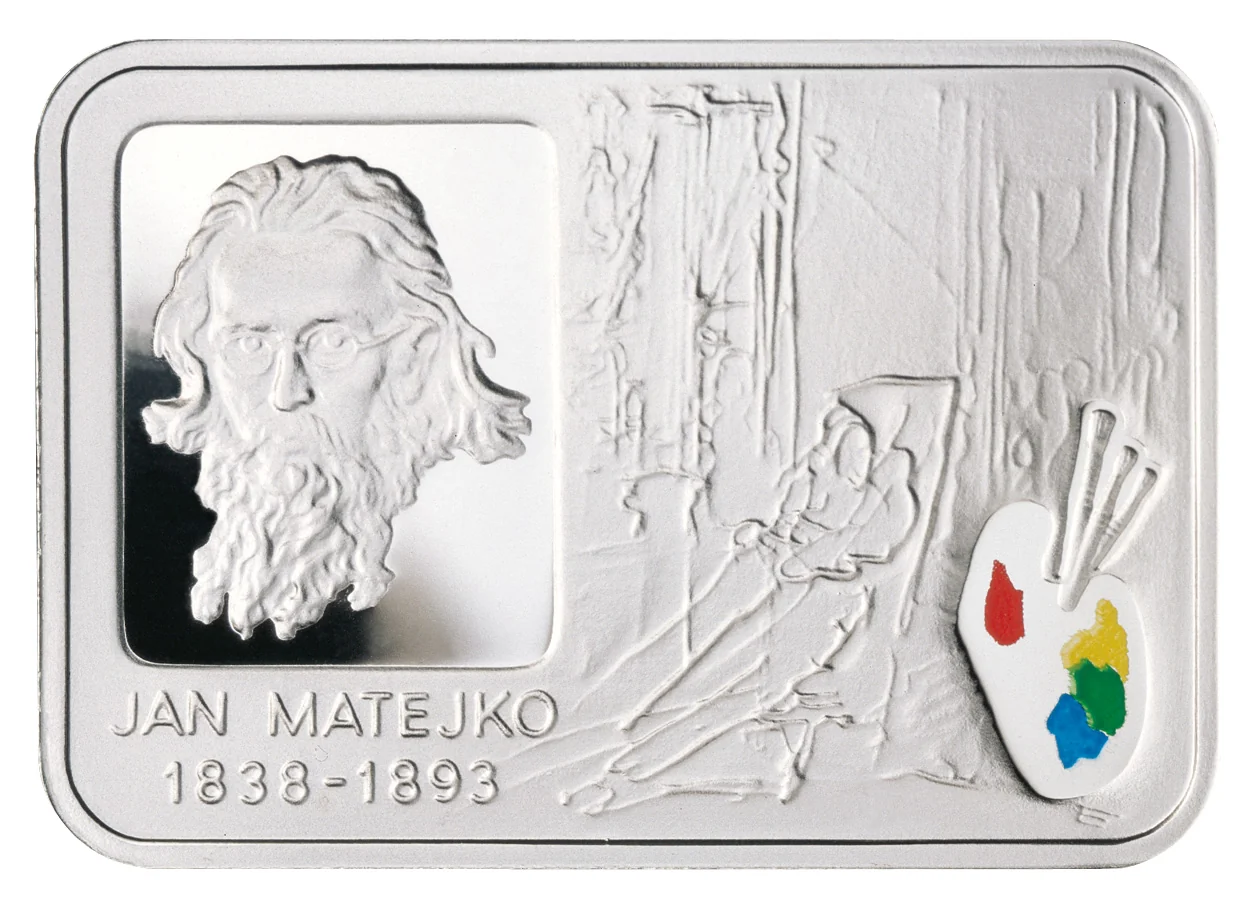
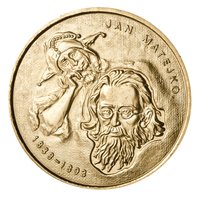
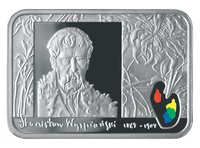
Head with multicolor palette.
Inscription:
JAN MATEJKO
1838-1893
1838-1893
Script: Latin
Designer: Ewa Tyc-Karpińska
Edge
Plain
Mints
| Name | Mark |
|---|---|
| Mint of Poland | (MW) |
Mintings
| Year | Mint Mark | Mintage | Quality | Collection |
|---|---|---|---|---|
| 2002 | MW | 57,000 | Proof |
Historical background
In 2002, Poland was in a period of significant monetary transition, firmly on its path toward European Union accession. The country was operating under a managed floating exchange rate regime for the Polish złoty (PLN), which had been fully convertible since the mid-1990s. However, the central bank, the National Bank of Poland (NBP), still intervened periodically to curb excessive volatility, as the currency remained sensitive to shifts in investor sentiment, domestic political developments, and the broader global economic climate following the 9/11 attacks.
The year was marked by a key strategic focus: preparing for eventual Eurozone membership. While the official target date for adopting the euro was still distant (initially hoped for around 2007), 2002 involved crucial groundwork. Poland was obligated to join the European Exchange Rate Mechanism (ERM II) for at least two years before switching currencies, requiring greater exchange rate stability. Consequently, monetary policy, led by NBP President Leszek Balcerowicz, increasingly aimed at inflation targeting and building credibility, with the strategic goal of aligning the złoty's behavior with the future demands of ERM II participation.
Economically, the period was challenging. Growth had slowed from earlier highs, and unemployment remained stubbornly high at around 18%. This domestic weakness, combined with a global climate of risk aversion, placed downward pressure on the złoty for much of the year. The currency's depreciation was a double-edged sword, boosting export competitiveness but also raising concerns about inflationary imports and the cost of servicing foreign-denominated debt. Thus, the 2002 currency situation encapsulated the tensions of transition—balancing domestic economic pressures with the disciplined, long-term requirements of European integration.
The year was marked by a key strategic focus: preparing for eventual Eurozone membership. While the official target date for adopting the euro was still distant (initially hoped for around 2007), 2002 involved crucial groundwork. Poland was obligated to join the European Exchange Rate Mechanism (ERM II) for at least two years before switching currencies, requiring greater exchange rate stability. Consequently, monetary policy, led by NBP President Leszek Balcerowicz, increasingly aimed at inflation targeting and building credibility, with the strategic goal of aligning the złoty's behavior with the future demands of ERM II participation.
Economically, the period was challenging. Growth had slowed from earlier highs, and unemployment remained stubbornly high at around 18%. This domestic weakness, combined with a global climate of risk aversion, placed downward pressure on the złoty for much of the year. The currency's depreciation was a double-edged sword, boosting export competitiveness but also raising concerns about inflationary imports and the cost of servicing foreign-denominated debt. Thus, the 2002 currency situation encapsulated the tensions of transition—balancing domestic economic pressures with the disciplined, long-term requirements of European integration.
Series: Polish Painters

💎 Very Rare