

1 peseta – Spain
Add to wishlist
Spain
Context
Year: 1987
Issuer: Spain
Ruler: Juan Carlos I
Currency:
(1868—2001)
Demonetization: 1 January 1997
Total mintage: 60,000
Material
References
KM: #
Numista: #51876
Value
Exchange value: 1 ESP
Inflation-adjusted value: 3.22 ESP
Obverse
Description:
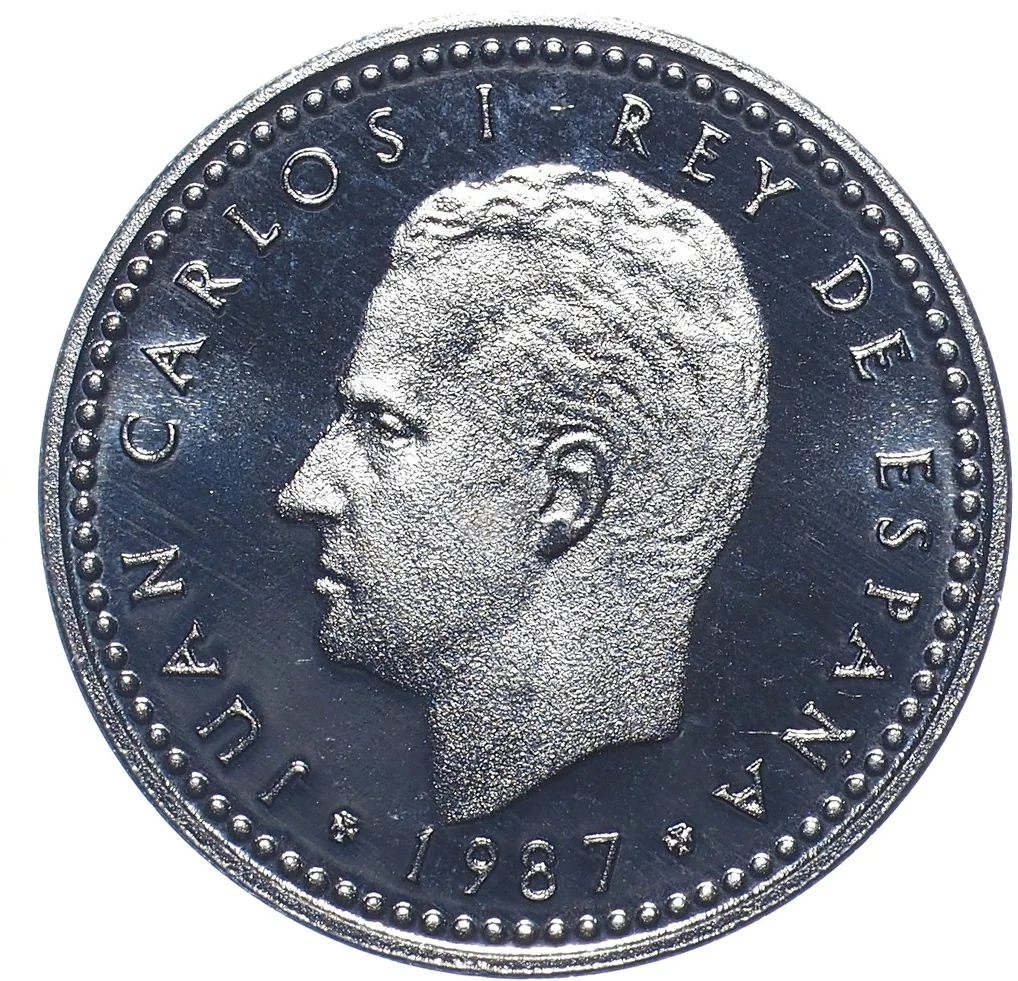
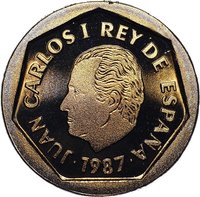
King Juan Carlos I facing left.
Inscription:
JUAN CARLOS I REY DE ESPAÑA
· 1987 ·
· 1987 ·
Translation:
Juan Carlos I King of Spain
· 1987 ·
· 1987 ·
Script: Latin
Language: Spanish
Engraver: Manuel Marín Jimeno
Reverse
Description:
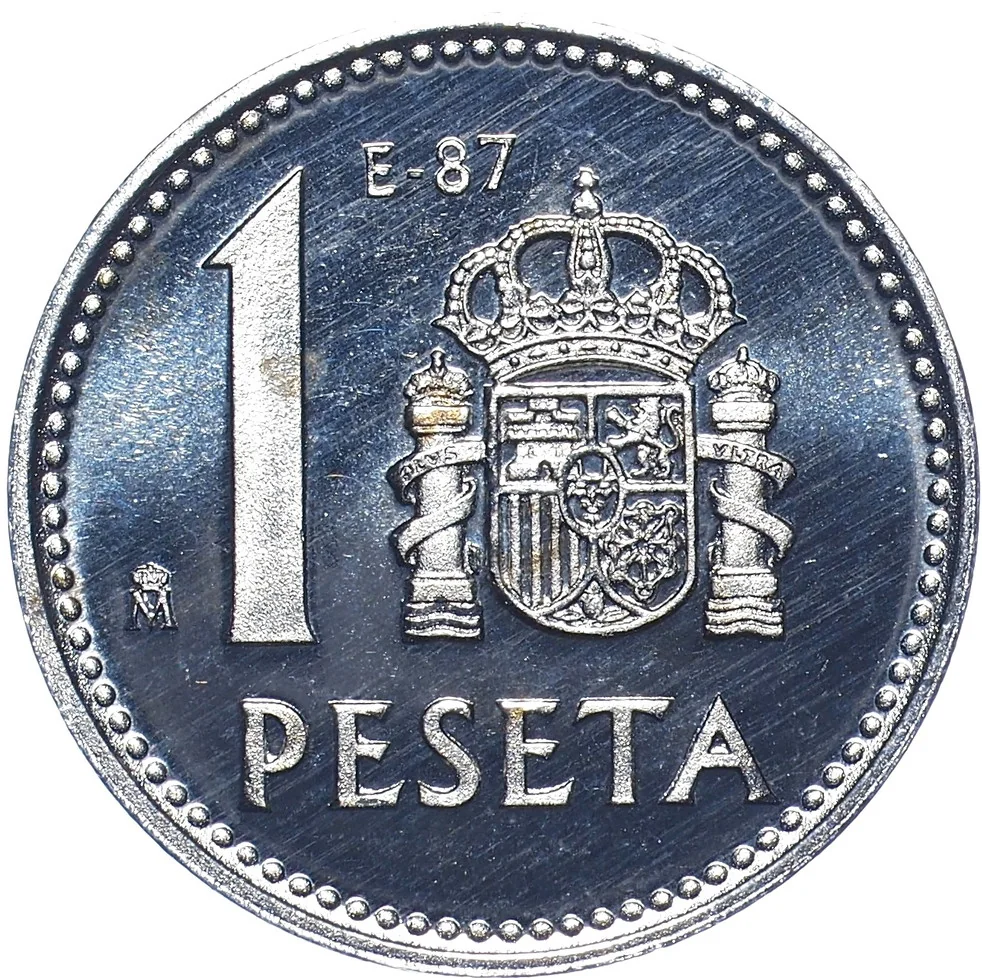
Spanish coat of arms with the Pillars of Hercules.
Inscription:
E-87
1 PESETA
PLVS VLTRA
M
1 PESETA
PLVS VLTRA
M
Translation:
More Beyond
Script: Latin
Language: Latin
Engraver: Manuel Martinez Tornero
Edge
Plain
Categories
| Mythology |
| Symbols> Coat of Arms |
Mints
| Name | Mark |
|---|---|
| Royal Mint of Madrid | (M) |
Mintings
| Year | Mint Mark | Mintage | Quality | Collection |
|---|---|---|---|---|
| 1987 | E-87 | 60,000 | Proof |
Historical background
In 1987, Spain was in a period of significant economic transition and integration, with its currency, the peseta, at the heart of the process. Having joined the European Economic Community (EEC) just two years earlier in 1986, the country was under pressure to modernize its economy and align its monetary policy with European partners. The peseta, however, was not yet part of the European Monetary System's (EMS) Exchange Rate Mechanism (ERM), the framework designed to reduce exchange rate variability and achieve monetary stability in Europe. This left the currency somewhat vulnerable to speculative pressures and devaluations, as Spain grappled with controlling inflation and trade deficits.
Domestically, the economic landscape was characterized by both growth and challenge. The mid-1980s saw a boom driven by foreign investment, rising tourism, and EEC accession, but underlying issues persisted. Inflation, though falling from the highs of the previous decade, remained stubbornly above the European average, and unemployment was alarmingly high, exceeding 20%. The Bank of Spain pursued a policy of a "strong peseta" (peseta fuerte) to combat inflation, maintaining high interest rates. This policy, while successful in curbing price rises, also made Spanish exports more expensive and contributed to a growing current account deficit.
Consequently, by late 1987, tensions were building. The strong peseta policy was becoming unsustainable, creating a clear misalignment with economic fundamentals. International investors and markets began anticipating a necessary correction. This set the stage for the pivotal monetary event of the following year: the devaluation of the peseta in 1988 and its subsequent entry into the ERM in June 1989. The currency situation of 1987 was thus a final chapter of autonomous policy, defined by the difficult balancing act between domestic stability and the inevitable convergence required for deeper European integration.
Domestically, the economic landscape was characterized by both growth and challenge. The mid-1980s saw a boom driven by foreign investment, rising tourism, and EEC accession, but underlying issues persisted. Inflation, though falling from the highs of the previous decade, remained stubbornly above the European average, and unemployment was alarmingly high, exceeding 20%. The Bank of Spain pursued a policy of a "strong peseta" (peseta fuerte) to combat inflation, maintaining high interest rates. This policy, while successful in curbing price rises, also made Spanish exports more expensive and contributed to a growing current account deficit.
Consequently, by late 1987, tensions were building. The strong peseta policy was becoming unsustainable, creating a clear misalignment with economic fundamentals. International investors and markets began anticipating a necessary correction. This set the stage for the pivotal monetary event of the following year: the devaluation of the peseta in 1988 and its subsequent entry into the ERM in June 1989. The currency situation of 1987 was thus a final chapter of autonomous policy, defined by the difficult balancing act between domestic stability and the inevitable convergence required for deeper European integration.

🌟 Uncommon